

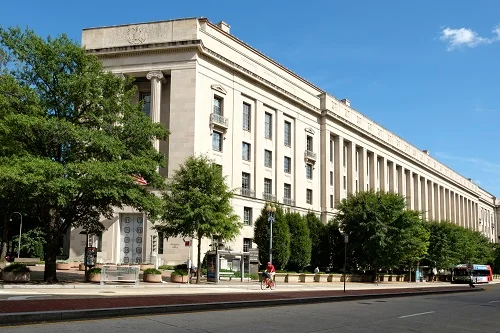
The legal odyssey of Sam Bankman-Fried, the disgraced founder of the collapsed cryptocurrency exchange FTX, has reached a critical inflection point. As the October trial date for his massive fraud case looms, the United States Department of Justice (DOJ) has formally petitioned the court to revoke his bail, arguing that his continued freedom poses an unacceptable risk to the integrity of the judicial process.
The move comes after a series of increasingly aggressive actions by Bankman-Fried, which federal prosecutors characterize as calculated attempts to interfere with potential witnesses and influence public perception ahead of his day in court.
The Core Allegations: Witness Tampering and Strategic Leaks
The DOJ’s request for detention, presented during a high-stakes hearing on July 26, is rooted in the belief that Bankman-Fried’s pattern of behavior has crossed the line from a constitutional exercise of free speech into active witness tampering.
Central to the prosecution’s argument is the recent leak of private diary entries belonging to Caroline Ellison, the former CEO of Alameda Research and Bankman-Fried’s on-again-off-again romantic partner. Ellison, who has entered into a plea agreement with the government, is expected to be a star witness against the FTX founder.
Prosecutors allege that Bankman-Fried provided excerpts of Ellison’s private, deeply personal journals to the New York Times in a deliberate effort to discredit her testimony before it even begins. By framing Ellison as an unreliable or emotionally unstable witness, the defense—or at least its architect—appears to be attempting to sway the narrative before the jury is empaneled.
The DOJ’s filing is unequivocal: "The defendant’s conduct has crossed the line from an exercise of his right to speak in his own defense to an attempt to influence and intimidate a prospective witness."
A Chronology of Collapse and Legal Turmoil
To understand the gravity of the current situation, one must look back at the rapid deterioration of Bankman-Fried’s empire and the subsequent legal fallout.
- November 2022: FTX, once valued at $32 billion, files for Chapter 11 bankruptcy following a liquidity crisis. The collapse sends shockwaves through the global crypto market and exposes massive commingling of customer funds between FTX and Alameda Research.
- December 2022: Bankman-Fried is arrested in the Bahamas at the request of U.S. authorities. Shortly thereafter, he is extradited to the United States.
- December 2022: Upon his arrival in New York, Bankman-Fried is released on a $250 million personal recognizance bond, one of the largest in U.S. history. The conditions of his release include house arrest at his parents’ home in California and strict limitations on his use of encrypted messaging apps.
- January 2023: Bankman-Fried pleads not guilty to all criminal charges, including wire fraud, conspiracy to commit commodities fraud, and money laundering.
- February 2023: Judge Lewis Kaplan tightens bail conditions after it is discovered that Bankman-Fried used a Virtual Private Network (VPN) to access the internet, citing concerns over potential evidence tampering.
- July 2023: The DOJ files its motion to revoke bail, citing the leaking of the Ellison diary and a broader pattern of "extrajudicial statements" that the government argues could prejudice the jury.
Supporting Data and Evidence: Why the DOJ is Pushing Back
The prosecution’s argument rests on the principle that a defendant’s right to a defense is not absolute when it infringes upon the rights of others or the sanctity of the trial. The government’s filings highlight a recurring theme: Bankman-Fried’s inability to refrain from communicating about his case, despite repeated warnings from the bench.
The DOJ contends that Bankman-Fried has used his massive social media reach and contacts with legacy media to maintain a "counter-narrative." By leaking documents that were provided to the defense during the discovery process, prosecutors argue that he is violating the spirit, if not the letter, of protective orders intended to keep evidence under seal.
Furthermore, the government’s filing suggests that the defendant’s behavior is not merely an isolated incident but a strategic effort to "tarnish the reputation" of witnesses. The potential impact on the jury pool is a significant concern for the court. In the age of digital media, information leaked to the press can permeate the consciousness of potential jurors, making it difficult to seat an impartial panel.
The Defense’s Perspective and the Judge’s Warning
Bankman-Fried’s legal team has countered the DOJ’s motion with vigor. They argue that revoking bail would be an extreme measure that would severely hamper their ability to prepare for the upcoming October trial. Defense attorneys maintain that Bankman-Fried has a constitutional right to tell his side of the story and that his interactions with the media do not constitute criminal intimidation.
During the July 26 hearing, Judge Lewis Kaplan did not immediately grant the DOJ’s request for detention, providing the defense with a brief window to argue against the revocation. However, the tone from the bench was unmistakably stern. Judge Kaplan warned Bankman-Fried to "take this seriously," emphasizing that he was skating on thin ice.
In a move to mitigate further damage, the court has directed both the prosecution and the defense to collaborate on a comprehensive gag order. This order, which is expected to be finalized by August 3, will likely restrict all parties from making public statements that could be construed as witness intimidation or jury tampering.
The Broader Implications: Justice and the Crypto Industry
The outcome of this bail dispute holds significant implications for both the immediate trial and the broader regulatory environment surrounding digital assets.
For the Trial
If Bankman-Fried is remanded to jail, the dynamics of his defense will shift fundamentally. Access to legal counsel, the ability to review thousands of pages of discovery, and the psychological toll of incarceration will all become factors that could influence his strategy. Conversely, if he remains on house arrest, he will continue to operate under a metaphorical microscope, where every tweet, email, or interview could trigger a new motion for detention.
For the Crypto Industry
The "FTX Saga" remains the defining moment of the "crypto winter." As the legal process moves toward a verdict, the industry continues to grapple with the fallout. A trial characterized by witness tampering or judicial warnings only serves to reinforce the narrative of a sector lacking in transparency and maturity.
For regulators, the case is a test of the efficacy of the U.S. legal system in handling white-collar crimes involving complex digital financial instruments. Whether Bankman-Fried is ultimately found guilty or innocent, the trial will set a precedent for how prosecutors approach the intersection of celebrity, digital influence, and corporate malfeasance.
Conclusion: A High-Stakes Legal Chess Match
The motion to revoke Sam Bankman-Fried’s bail is more than just a procedural dispute; it is a battle over the control of the narrative. As the DOJ attempts to insulate its witnesses and the integrity of the proceedings from the influence of the defendant, Bankman-Fried is fighting to maintain his liberty and his ability to shape public opinion.
As August approaches and the potential for a new gag order looms, all eyes are on Judge Kaplan’s courtroom. The judiciary has signaled that it will not tolerate gamesmanship that undermines the rule of law. For a man who once sat at the center of the financial world, the coming months will determine whether his final act is played out in a courtroom as a free man or from behind the bars of a federal detention center. The message from the DOJ is clear: the trial of the century will be decided by evidence, not by the leaks of a disgraced executive.
