

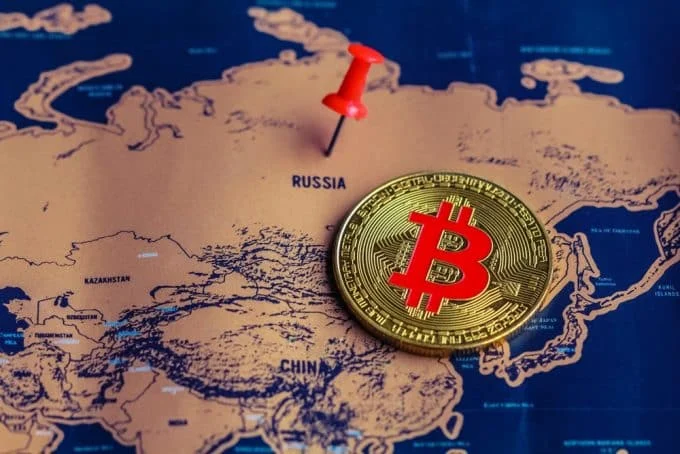
The global cryptocurrency market, once heralded as an uncorrelated "digital gold" hedge against traditional financial volatility, has found itself increasingly tethered to the whims of geopolitical instability and regulatory crackdowns. As of Thursday, the digital asset sector is reeling from a confluence of fears: the specter of a Russian military invasion of Ukraine and the looming possibility of a total cryptocurrency ban within the Russian Federation.
The market response has been swift and unforgiving. Bitcoin (BTC), the industry bellwether, has retreated to the $43,352 level, a significant descent from the $47,000 threshold it briefly touched on January 1. Ethereum (ETH), the world’s second-largest cryptocurrency by market capitalization, has mirrored this bearish sentiment, sliding 2.14% to trade at $2,873. Across the board, the total market capitalization of the cryptocurrency sector has witnessed a staggering $200 billion evaporation in a single 24-hour period, leaving investors and institutional analysts questioning whether the current asset class can truly withstand the pressure of conventional geopolitical shocks.
Chronology of a Market Meltdown
To understand the current state of the crypto markets, one must track the rapid acceleration of events that have unfolded over the past several weeks.
In early January, the market began to show signs of fragility, retreating from the highs observed at the turn of the year. This initial pullback was compounded by growing unease regarding the mobilization of over 100,000 Russian troops along the Ukrainian border. By mid-January, the discourse shifted from diplomatic posturing to active warnings of imminent military action.
The turning point for investor sentiment arguably arrived on Monday, when United States President Joe Biden held an hour-long telephonic consultation with Ukrainian President Volodymyr Zelensky. The conversation, intended to project solidarity, inadvertently signaled to the markets that the U.S. intelligence community viewed the threat of a kinetic conflict as a high-probability event. Shortly thereafter, U.S. National Security Adviser Jake Sullivan intensified the rhetoric, warning of a potential invasion that could occur at any moment.
As these headlines dominated the news cycle, the crypto market experienced a sharp sell-off, with both Bitcoin and Ethereum plummeting over 9% to reach six-month lows. This decline was not isolated; it rippled through global equity markets, with the Nasdaq Composite index reflecting similar anxiety, though the crypto sector’s sensitivity to these risks proved significantly more pronounced than its traditional market counterparts.
Supporting Data: Volatility and Market Cap Erosion
The quantitative data behind the current slump paints a grim picture for short-term holders. According to BuyBitcoinWorldwide’s volatility index, Bitcoin’s 30-day volatility metrics have fluctuated significantly. While the current 30-day volatility has seen a reduction of 3.35% compared to the 2021 average of 4.56%, this statistic masks the underlying panic driving the price action.
Current data from TradingView indicates that Bitcoin’s total market capitalization has contracted to approximately $817.952 billion. When viewed in the context of the broader industry, the total crypto market cap has plummeted to $1.8 trillion, a loss of $200 billion in just one day.
Despite these losses, some analysts point to a strange paradox: the market’s relative calmness in the face of such high stakes. While the fear is palpable, trading volume remains somewhat consistent with previous periods of consolidation. Investors are effectively caught in a tug-of-war between the long-term "digital gold" thesis and the immediate, crushing reality of macroeconomic and geopolitical risk. It is important to note that despite the recent downturn, Bitcoin remains above its mid-January lows of $32,950, suggesting that while the "dip" is severe, the long-term support levels have not yet been fully breached.
The Regulatory Front: Russia’s Proposed Ban
Compounding the geopolitical anxiety is the sudden and aggressive stance taken by the Bank of Russia. In a move that caught many industry participants off guard, Russian regulators have suggested a blanket ban on both the trading and mining of cryptocurrencies.
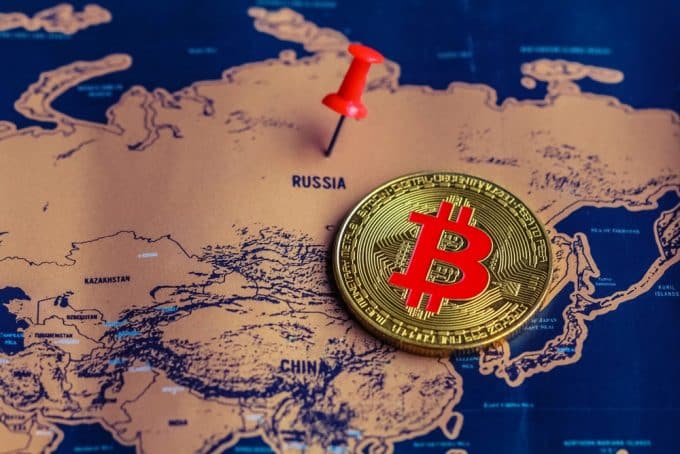
The implications of this move are monumental. Russia is currently one of the world’s most significant processing hubs for Bitcoin transactions, accounting for approximately 10% of the global mining hash rate. A total ban would necessitate the relocation of massive amounts of mining infrastructure, potentially creating short-term network instability and forcing miners to seek more hospitable jurisdictions.
The Russian central bank’s assessment, which frames cryptocurrency as a threat to financial sovereignty and monetary policy, reflects a growing skepticism toward decentralized finance among authoritarian and semi-authoritarian regimes. This regulatory hostility has been exacerbated by the government’s desire to prevent capital flight and maintain control over the domestic financial system. Furthermore, the Russian government has hinted at plans to impound unlawfully acquired cryptocurrencies, adding a layer of legal risk for any entity currently holding digital assets within the country’s borders.
Official Responses and Diplomatic Friction
The diplomatic impasse between Moscow and the West has reached a fever pitch. The Kremlin has consistently rejected Western warnings of an invasion, characterizing the narratives emanating from Washington and Brussels as "hypocrisy" and "war-mongering."
This geopolitical friction has turned the cryptocurrency market into a bellwether for global stability. Because Bitcoin is a global, borderless asset, it acts as a thermometer for international risk appetite. When investors fear that an invasion will trigger a cascade of sanctions, including the potential disconnection of Russia from the SWIFT payment system, they move quickly to liquidate risk-on assets—a category in which institutional investors still largely place Bitcoin and other major altcoins.
Implications for the Future of Finance
The current market environment invites a broader question: Is cryptocurrency a store of value or just another risk-on asset?
The Case for Interconnectivity
The vast majority of market specialists currently believe that the cryptocurrency market is inextricably linked to the broader global financial system. As institutional adoption has grown, so too has the correlation between Bitcoin and high-growth technology stocks. When the Nasdaq suffers, crypto suffers. When geopolitical tensions threaten to disrupt global energy and supply chains, the liquidity in the crypto market dries up as traders move to cash or government-backed bonds.
The Institutional Perspective
Institutional players, who now control a significant portion of the market, are historically averse to uncertainty. While they may believe in the underlying technology of blockchain, they are bound by fiduciary duties that mandate the avoidance of extreme volatility during times of war. Consequently, as the threat of a Russian invasion grows, institutional desks are likely trimming their crypto exposure to maintain liquidity.
Long-term Outlook
Despite the current turmoil, proponents of the crypto-asset class argue that the underlying value proposition of Bitcoin—censorship resistance, transparency, and decentralization—becomes even more relevant during times of geopolitical conflict. If the conflict escalates and traditional banking systems are disrupted, the utility of decentralized, globalized assets may undergo a stress test unlike any they have faced since the asset class’s inception.
For now, the market remains in a state of high alert. Investors are advised to watch two key metrics: the continued movement of Russian troops on the Ukrainian border and the finalized legislative language coming out of Moscow regarding the proposed crypto ban. Until these two variables are resolved, the cryptocurrency market is likely to remain in a state of heightened volatility, reflecting the fragile state of the world order itself.
The road ahead is undoubtedly treacherous, yet for those who have weathered past cycles, the current contraction serves as a stark reminder that the digital asset revolution is still in its infancy, subject to the same historical cycles of conflict and regulation that have defined financial markets for centuries. Whether this serves as a buying opportunity or a warning to exit remains the central debate of the year.
