

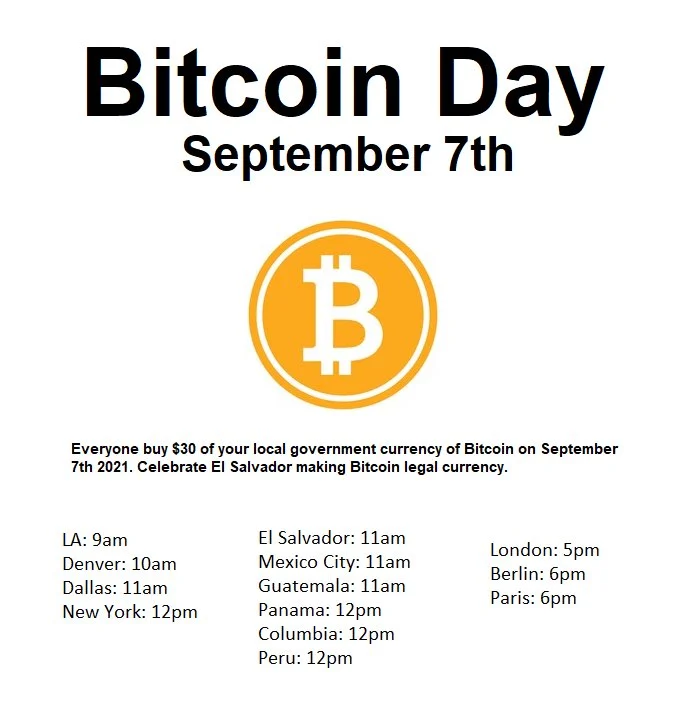
The financial world stands at a historic precipice. Today marks the dawn of a new era in monetary history as El Salvador officially implements its landmark "Bitcoin Law," becoming the first sovereign nation to adopt the world’s most prominent cryptocurrency as legal tender. As the clock ticks down toward this unprecedented economic experiment, the global Bitcoin community—often referred to as "the plebs"—has mobilized in a grassroots display of solidarity, coordinating a decentralized buying campaign to commemorate the occasion.
Main Facts: The Genesis of the "Thirty Dollar" Movement
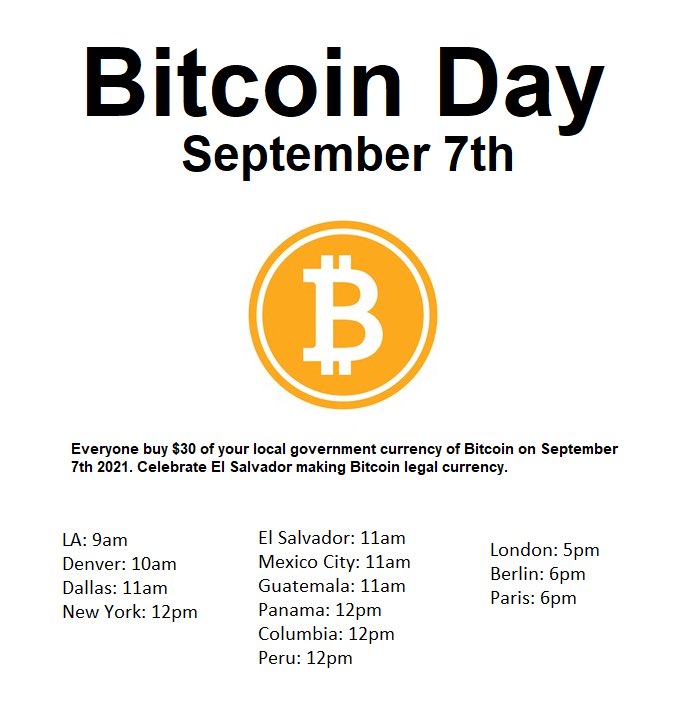
The movement, which has swept across digital forums and social media platforms, centers on a simple, symbolic gesture: a collective purchase of $30 worth of Bitcoin. The figure is not arbitrary; it is a nod to the small, accessible nature of the initiative, designed to encourage widespread participation without the intent of artificially manipulating market prices.
The campaign originated from a humble thread on the subreddit /r/Bitcoin, where a user posed a straightforward question: "So… We all buying $30 worth of Bitcoin on Tuesday?" The response was overwhelming. Within a short period, the post garnered over 8.9K upvotes and thousands of comments, effectively acting as a catalyst for a global synchronized event.
While critics have argued that such coordination bears the hallmarks of a "pump," proponents maintain that the scale of the purchase is too insignificant to move the dial on global BTC liquidity. Instead, the initiative serves as a powerful signal of support for the Salvadoran people as they navigate the transition to a dual-currency system involving the U.S. Dollar and Bitcoin.
Chronology of a Grassroots Revolution
The journey toward this day began months ago when President Nayib Bukele announced the legislative intent to integrate Bitcoin into the national economy. However, the specific "buy" campaign followed a distinct timeline:
- Initial Conception: The idea emerged on Reddit as a way for international supporters to show solidarity with the Salvadoran population.
- Viral Expansion: Within 48 hours, the initiative transcended the borders of Reddit, infiltrating "Bitcoin Twitter" and Telegram channels. Memetic culture played a significant role, with users creating digital art and viral videos linking the event to pop-culture references like the film Trading Places.
- Institutional Engagement: The movement gained unexpected momentum when high-profile figures, including MicroStrategy CEO Michael Saylor, began amplifying the narrative to their massive followings.
- Global Harmonization: By the eve of the implementation, the movement had reached non-English speaking communities. Korean and Brazilian Bitcoin enthusiasts were seen translating the call to action, linking the event to their own local contexts—such as Brazil’s Independence Day, which coincides with the September 7th launch.
Supporting Data and Market Sentiment
The financial implications of this day are being analyzed through the lens of both technical charts and historical precedent. As of the pre-launch window, the market showed signs of high volatility, with traders closely monitoring the $70.2% retracement levels.
Market analysts have expressed mixed sentiments. While some view the coordinated buying as a bullish indicator of retail adoption, others have voiced concerns regarding market manipulation. "Everyone needs to be aware that this could possibly be leading the sheep to their death," one skeptical trader remarked on a public forum. "These narratives are often used to create liquidity for larger players to offload their positions before a major correction."
However, the "Satoshi Nakamoney" persona and other prominent community figures have doubled down, declaring that the primary "massive buy" would be timed for 3:00 PM El Salvador time. This focus on a specific, synchronized moment has created a unique psychological anchor for the market, though whether it manifests in significant price appreciation remains a subject of intense debate.
Official Responses and The Role of Leadership
The silence—and conversely, the vocal support—from institutional leaders has been a defining feature of this transition. Michael Saylor, whose firm MicroStrategy maintains one of the largest corporate Bitcoin treasuries, has acted as an unofficial cheerleader for the event. His vocal support has provided a layer of legitimacy to the movement, though it has also invited scrutiny from those who suspect that corporate entities might be using the hype to facilitate exits.
Despite the skepticism, Saylor has remained firm, publicly stating that MicroStrategy has no intention of liquidating its holdings. This transparency is a cornerstone of the Bitcoin ethos; in a decentralized, transparent ledger, any movement of large assets is immediately verifiable. If the "whales" attempt to dump on the retail investors participating in today’s $30 buy, the community will have the receipts to hold them accountable.
Implications: The Macroeconomic Experiment
The implementation of the Bitcoin Law carries profound implications that extend far beyond a single day of coordinated buying.
1. The Remittance Revolution
El Salvador relies heavily on remittances from citizens working abroad. By utilizing the Bitcoin network, the government aims to drastically reduce the fees associated with these transfers, which currently consume a significant portion of the capital flowing into the country.
2. Financial Inclusion
A large segment of the Salvadoran population remains unbanked. By providing a digital wallet—the Chivo wallet—the government is attempting to bring these individuals into the global financial fold, allowing them to participate in commerce without the need for traditional banking infrastructure.
3. Geopolitical Precedent
If El Salvador succeeds, it risks a domino effect across emerging markets. Central banks worldwide are observing the volatility and the logistical hurdles of this transition. Success would provide a blueprint for other nations—particularly those plagued by hyperinflation—to adopt "hard money" standards, potentially challenging the hegemony of traditional fiat currencies.
4. Regulatory Pushback
The move has not been without opposition. International bodies, including the IMF and various global financial watchdogs, have raised concerns regarding the volatility of Bitcoin and its potential for use in illicit activities. The Salvadoran government’s ability to manage these external pressures while maintaining domestic stability will be the true test of the law’s viability.
A Cultural Phenomenon
Perhaps the most compelling aspect of today is not the price action, but the social cohesion. As Tomer Strolight noted in a widely shared post, "Have you ever felt such benevolence to strangers from different nations, religions, and other affiliations as you do toward bitcoiners?"
The $30 movement has evolved into a global, borderless community event. It represents a shift from the traditional model of finance—where decisions are made behind closed doors by central planners—to a bottom-up model where the users themselves determine the value and the trajectory of their monetary systems.
Conclusion: The Horizon
As we move past the initial hours of this historic transition, the focus will shift from the symbolism of the $30 buy to the long-term sustainability of the Bitcoin Law. The world is watching to see how the Salvadoran infrastructure handles the influx of transactions and how the population adapts to the inherent volatility of a decentralized asset.
Regardless of whether the price surges or retraces in the coming days, the event has already achieved something remarkable: it has unified a diverse, international group of individuals around a shared vision of financial sovereignty. For the Bitcoin community, this is not just about the price of an asset; it is about the assertion of a new, decentralized paradigm. Today is not just Legal Tender Day; it is the day the narrative changed.
Disclaimer: This article is for informational purposes only and does not constitute financial advice. The cryptocurrency market is subject to high volatility, and potential investors should conduct their own research before engaging in market activities.
