

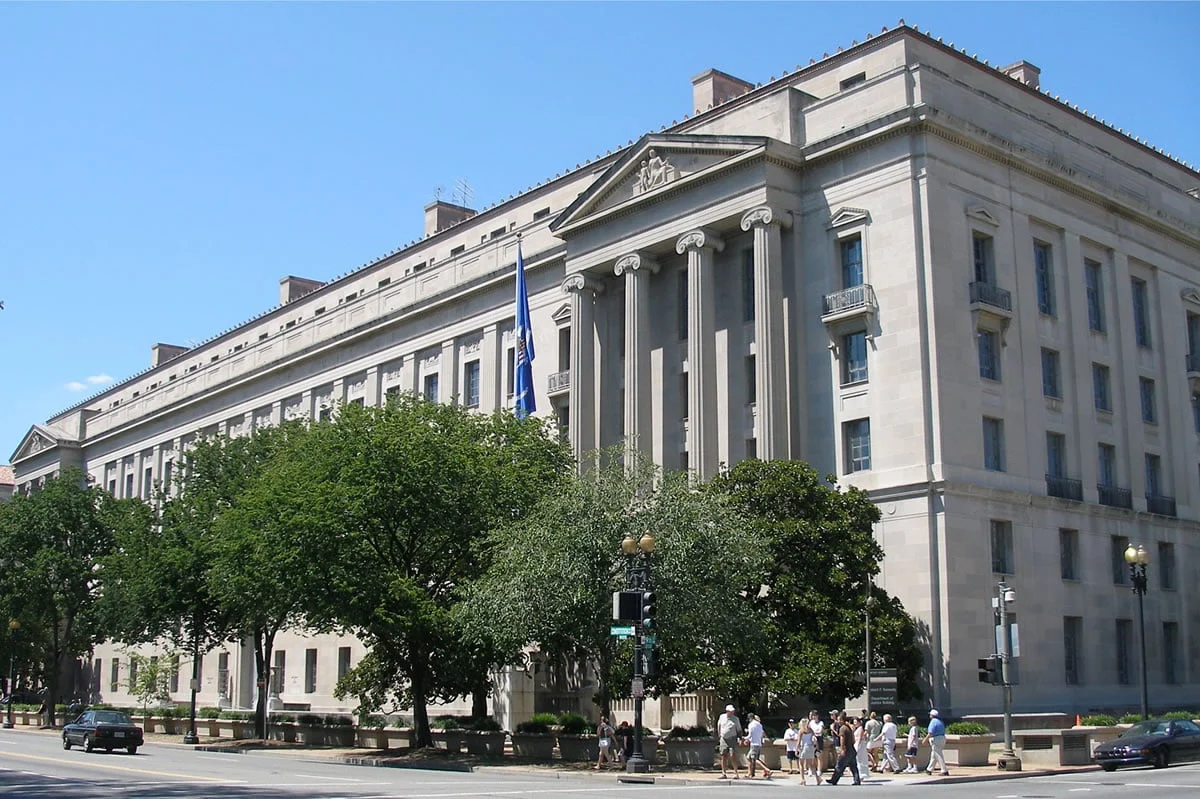
In a significant development for federal regulators and the broader cryptocurrency industry, Rodney Burton—a prominent social media figure known to his followers as "Bitcoin Rodney"—has officially pleaded guilty to conspiracy charges linked to the massive HyperFund cryptocurrency fraud scheme. The plea, confirmed by the U.S. Department of Justice (DOJ), marks a pivotal victory in the government’s ongoing effort to dismantle the sophisticated networks of promoters who facilitated one of the most egregious investment frauds of the recent market cycle.
Burton’s admission of guilt regarding his role in operating an unlicensed money-transmitting business serves as a stark reminder of the legal risks inherent in promoting high-yield crypto investment programs. As federal prosecutors continue to peel back the layers of the HyperFund onion, the case underscores a shift in enforcement strategy: regulators are no longer just chasing the architects of these schemes; they are systematically targeting the influencers who provided the necessary social capital to ensnare retail investors.
The Genesis of the Scheme: What Was HyperFund?
HyperFund, which operated under various monikers, marketed itself to the public as a cutting-edge decentralized finance (DeFi) opportunity. At its core, the platform promised investors astronomical returns, ostensibly generated through cryptocurrency mining operations and high-frequency trading.
For many, the promise was too enticing to ignore. In an era where crypto-assets were reaching unprecedented valuations, HyperFund utilized the complex, opaque terminology of blockchain technology to cloak what authorities describe as a classic, large-scale Ponzi structure. By promising "guaranteed" daily rewards, the scheme leveraged the growing public appetite for passive income, effectively incentivizing existing members to recruit new capital through a tiered referral system.
However, behind the polished marketing presentations and the veneer of technological sophistication, the reality was far more mundane. There was no actual mining operation capable of sustaining the promised returns. Instead, the "yields" paid out to early investors were funded almost exclusively by the capital poured into the system by new participants.
Chronology of a Collapse
The downfall of HyperFund was not an overnight occurrence, but rather a slow, painful unraveling that spanned several years.
- Early 2020 – 2021: HyperFund gains significant traction through online seminars, social media influencers, and YouTube personalities. The platform successfully taps into the speculative frenzy of the crypto bull market.
- Late 2021: Reports of withdrawal issues begin to surface. Users complain of arbitrary delays, "system maintenance" periods, and difficulties converting internal tokens into liquid assets.
- 2022: As the broader crypto market faces a correction, the liquidity crisis within HyperFund deepens. The scheme begins to stall, with many investors realizing that the "daily rewards" have ceased to exist.
- January 2024: The U.S. Department of Justice unseals an indictment charging multiple individuals associated with HyperFund, including its primary promoters, with conspiracy to commit securities fraud, wire fraud, and money laundering.
- November 2024: Rodney Burton, having faced intense scrutiny for his role in the platform’s marketing, enters a guilty plea in federal court.
The Role of the Influencer: Why "Bitcoin Rodney" Mattered
The case against Rodney Burton is particularly illustrative of the "promoter problem" that continues to plague the digital asset space. Burton did not create HyperFund, nor was he the lead developer behind its smart contracts. Instead, he occupied a role that was arguably more critical to the scheme’s survival: the trusted face.
By cultivating an online persona as "Bitcoin Rodney," Burton built a base of followers who viewed him as an insider—someone who could separate legitimate projects from "vaporware." When he began to tout HyperFund to his audience, he effectively laundered the reputation of a fraudulent enterprise.
In the eyes of the DOJ, Burton acted as an unlicensed money transmitter, facilitating the flow of investor funds into the HyperFund ecosystem. His guilty plea highlights the legal reality that influencers who receive compensation to market unregistered investment vehicles are not merely "sharing their opinion"—they are participating in the business operations of those entities. If the business is fraudulent or unlicensed, the promoter inherits that liability.
Supporting Data: The Scale of the Damage
While the exact total of the losses is still being aggregated by federal investigators, HyperFund is widely considered one of the largest investment frauds in the history of the cryptocurrency sector.
According to court documents, the scheme raised millions of dollars from thousands of victims globally. Unlike institutional hacks or protocol exploits, where the victim is often a liquidity pool, the victims of HyperFund were largely retail investors—teachers, retirees, and first-time crypto buyers—who lost life savings under the impression that they were participating in a "revolutionary" financial ecosystem.
The DOJ’s enforcement efforts are focused on tracing these funds, which were often layered through multiple wallets and shell companies to obfuscate their origins. Burton’s plea is a strategic milestone for prosecutors, as it provides a roadmap of the solicitation tactics used to acquire capital and the mechanics of the payout structure that kept the scheme afloat for as long as it did.
Official Responses and Legal Implications
The Department of Justice has been clear in its messaging: the era of "wild west" crypto promotion is drawing to a close.
"The defendant used his social media platform to lure investors into a fraudulent scheme with promises of guaranteed returns," a DOJ representative noted following the plea. "This case demonstrates that those who facilitate and profit from investment fraud will be held accountable, regardless of the medium they use to reach their victims."
From a legal standpoint, this case has significant implications for future prosecutions:
- Strict Liability for Promoters: The case sets a precedent that promoters cannot claim ignorance of a scheme’s operations if they are actively soliciting funds on its behalf.
- Focus on Money Transmission: By charging Burton with operating an unlicensed money-transmitting business, the government has bypassed the more complex hurdles of proving securities fraud, providing a clearer path to conviction.
- Cross-Border Cooperation: The investigation has necessitated coordination with international authorities, signaling that the U.S. government is increasingly capable of tracking crypto flows that cross sovereign boundaries.
What Investors Should Learn
For the casual observer and the serious crypto investor alike, the "Bitcoin Rodney" saga offers several vital lessons:
1. Yield is Not Free
In any market, high yield is almost always a function of high risk. If an investment promises consistent, double-digit monthly returns with "no risk," it is almost certainly a Ponzi scheme. Financial gravity eventually asserts itself; if the money coming in is the only source of the money going out, the structure will eventually collapse.
2. Verify, Don’t Trust
The crypto industry is built on the ethos of "don’t trust, verify." However, many retail investors have replaced this with "trust the influencer." Followers must understand that influencers are often compensated to promote specific projects. Their incentives are rarely aligned with the investor’s financial well-being.
3. The "Institutional" Facade
HyperFund used professional-looking websites, glossy brochures, and complex "crypto-speak" to gain credibility. Investors should be wary of any project that uses "tech-babble" to mask a lack of transparency. If a project cannot clearly explain its revenue model without using circular logic, walk away.
Conclusion: The Long Road to Accountability
The guilty plea of Rodney Burton is not the end of the HyperFund story, but it is a critical chapter. As federal authorities continue to work through the backlog of fraud cases born out of the 2020–2021 market boom, the legal system is proving that it has the teeth to bite back.
The lasting impact of this case will be the chilling effect it has on the "pump and dump" culture that dominated the previous cycle. By making an example of prominent promoters, the DOJ is signaling to the industry that the age of unchecked influence and unregulated solicitation is ending. For investors, the message is equally clear: in the digital age, skepticism remains the best defense against those who would use the promise of innovation to facilitate the oldest crimes in history.
As we move forward, the regulatory framework surrounding digital assets will continue to harden. While this may dampen the "get rich quick" atmosphere that defined the recent past, it is a necessary evolution for the industry to reach a state of maturity. For the thousands who lost their savings to HyperFund, this plea offers a small measure of justice—a confirmation that their losses were not a market accident, but the result of a calculated, criminal deception.
