

Executive Summary
Recent data from blockchain analytics firm CryptoQuant has illuminated a shift in the underlying mechanics of the Bitcoin market. While the broader cryptocurrency landscape grappled with significant price corrections throughout the second quarter, bringing Bitcoin (BTC) valuation beneath the critical $60,000 threshold, one specific venue—Gate.io—recorded a counter-intuitive surge in activity. According to the latest reports, the Bitcoin whale share on Gate.io has tripled to reach 16% and, perhaps more importantly, has maintained that elevated presence throughout the recent market drawdown.
This development offers a compelling case study for institutional and retail traders alike: while price charts reflect the "what" of market movement, on-chain flow data provides the necessary context to understand the "who." As $79.3 million in whale inflows hit the exchange over the last 30 days—an 11.6% increase compared to the previous period—analysts are left to debate whether this signifies strategic accumulation or a looming wave of distribution.
The Chronology of Q2 Market Turbulence
The second quarter of the year has been characterized by a pervasive sense of trepidation. Following the post-halving anticipation that drove Bitcoin to record highs earlier in the year, the market entered a phase of cooling that tested the conviction of even the most seasoned investors.
The Breakdown of the $60,000 Floor
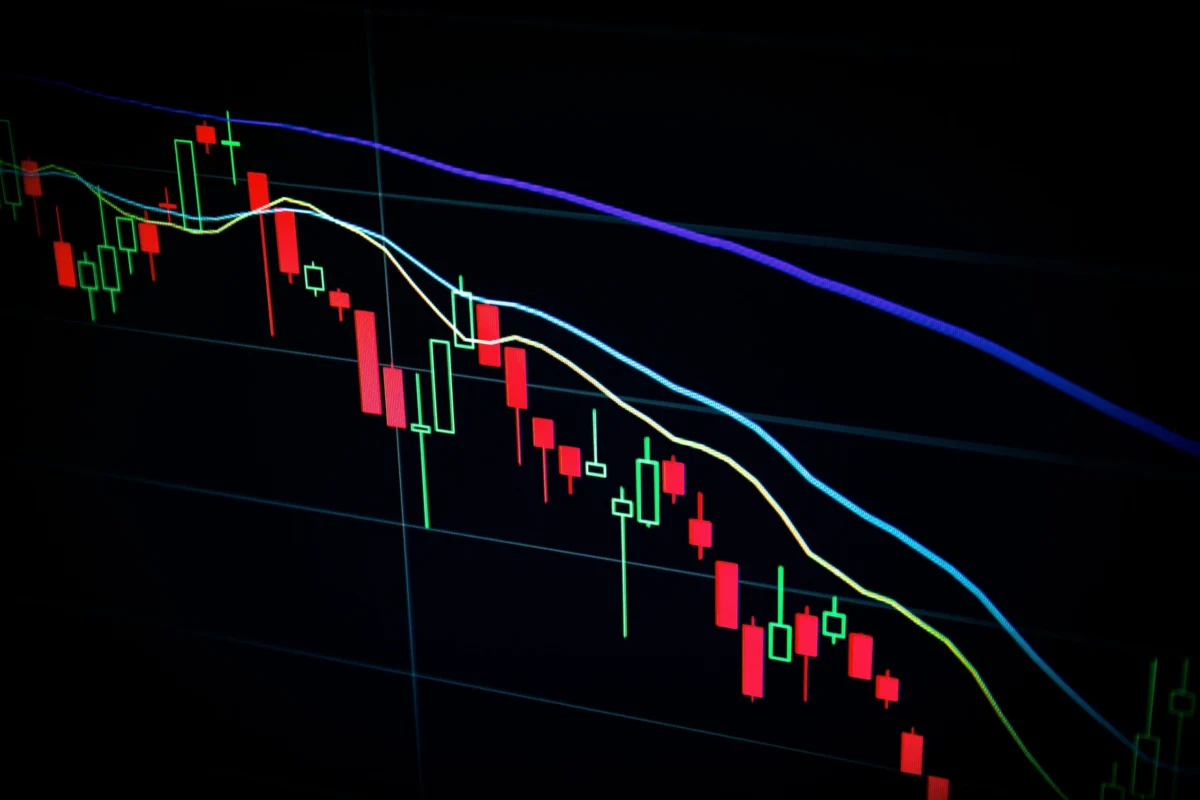
As the calendar turned toward the mid-year point, Bitcoin faced mounting macro-economic headwinds, including uncertainty regarding central bank interest rate policies and a general reduction in risk-on sentiment across global markets. The breach of the $60,000 support level was not merely a technical event; it served as a psychological breaking point for many retail participants. Throughout this period of volatility, the market witnessed a classic "shakeout" pattern, where weaker hands exited their positions in response to cascading liquidations and negative sentiment.
The Emergence of the Whale Signal
Against this backdrop of retail retreat, CryptoQuant’s monitoring tools detected a divergence. While typical exchange activity across the industry showed varying degrees of stagnation, Gate.io experienced a sustained uptick in high-volume transactions. The data reveals that the "whale share"—defined as the proportion of total exchange volume attributed to large-wallet addresses—did not merely fluctuate; it underwent a structural shift, tripling to 16%. This shift occurred in direct correlation with the price dip, suggesting that large-scale market participants were not retreating from the exchange, but rather increasing their footprint at a time when the broader market was fleeing to safety.
Supporting Data: The Anatomy of Inflows
To understand the significance of the 16% whale share, one must look closely at the quantitative evidence provided by CryptoQuant.
Quantifying the Whale Movement
The data confirms that the last 30 days saw a total of $79.3 million in whale inflows directed toward Gate.io. An 11.6% increase in these inflows compared to the prior window is statistically significant, particularly in an environment where total trading volume across the industry has faced downward pressure.
- Total Whale Inflow (30-day window): $79.3 Million
- Whale Share of Exchange Activity: 16% (a 3x increase)
- Growth over prior period: 11.6%
The Context of "Whale" Behavior
In the lexicon of cryptocurrency trading, a "whale" typically refers to an entity—individual or institutional—holding a significant portion of the circulating supply. When these entities move their assets into an exchange during a drawdown, the implications are rarely neutral. The $79.3 million inflow represents a deliberate decision by large capital allocators to move their assets from cold storage or private wallets into a liquid environment, signaling that these players are readying themselves for a move—whether that move is to buy the dip, hedge against further downside, or facilitate an arbitrage opportunity.
Interpreting the Signal: Accumulation vs. Distribution
The primary challenge for market analysts is the dual-nature of exchange inflows. Traditionally, an increase in exchange inflows is viewed as a bearish signal, as it suggests that holders are preparing to sell their assets into the market, thereby increasing sell-side pressure.
The Case for "Smart Money" Accumulation
Proponents of the "smart money" theory argue that institutional players often utilize periods of intense market fear to accumulate assets at a discount. By moving large amounts of capital into exchanges like Gate.io during a dip, these entities may be positioning themselves to absorb liquidity from retail panic-sellers. In this scenario, the rise in whale share is a bullish precursor, suggesting that the "bottom" is being supported by institutional appetite.
The Case for Distribution and Risk Transfer
Conversely, skeptics warn that high inflows during a drawdown could indicate a "distribution" phase, where large players are offloading their holdings to unsuspecting buyers who believe they are catching a bottom. If whales are utilizing the exchange to exit positions, the current price stability may be fragile, susceptible to further drops if the incoming supply exceeds the market’s current absorption capacity.
The Middle Ground: Liquidity Provision
A third, often overlooked, possibility is that these whale movements represent professional market makers adjusting their balances. In highly volatile markets, market makers must constantly shift capital to provide liquidity and maintain spreads. The increased whale activity could therefore be a byproduct of increased institutional demand for derivative hedging, rather than a directional bet on the price of spot Bitcoin.
Official Perspectives and Market Implications
While there is no single "official" consensus on what this specific Gate.io signal entails, industry experts are closely monitoring the interaction between these inflows and broader price structure.
Why Context Matters
Market analysts emphasize that this data point should not be utilized as a standalone trading system. Instead, it serves as a "contextual layer." When combined with other metrics—such as funding rates, open interest in the futures market, and the movement of stablecoins—the picture becomes clearer.
As CryptoQuant experts have noted, the fact that larger wallets did not disappear during the Q2 drawdown is the most critical takeaway. In previous cycles, a drop below $60,000 might have seen a total exodus of capital. The resilience of these whale flows suggests that the current market structure is more robust than it appears on the surface, with institutional participants remaining engaged despite the lack of immediate upward price momentum.
Looking Forward: What Bitcoin Needs Next
For the market to confirm a reversal, traders are looking for two specific conditions:
- Price Stabilization: Bitcoin must reclaim and hold key psychological levels. Without a floor being established, continued inflows run the risk of being interpreted as "catching a falling knife," which could lead to further panic.
- Increased Spot Demand: The whale inflows must be met with consistent spot market buying. If the Gate.io whale activity is followed by a reduction in exchange balances (meaning coins are being withdrawn back into long-term storage), it would provide the "clean confirmation" that the market is currently seeking.
The Road Ahead
If the price continues to languish, the 16% whale share will become an increasingly tense point of focus. If price falls further while inflows continue to rise, the market may reach a tipping point where the "absorption" narrative fails, forcing a capitulation event. However, should the price begin to recover, the Gate.io data will likely be looked back upon as the first signal that the "smart money" was already positioned for the rebound.
In conclusion, the data from CryptoQuant serves as a reminder that Bitcoin is no longer a retail-dominated asset. The movements of whales, even on specific venues, have the power to define the trajectory of the entire market. As we move through the next phase of the cycle, the activity on platforms like Gate.io will remain a vital barometer for the health and intent of the industry’s largest stakeholders.
Disclaimer: This article is for informational purposes only and does not constitute financial, investment, or trading advice. Cryptocurrency markets are inherently volatile; investors should conduct their own research and consult with a professional advisor before making any financial decisions.
