

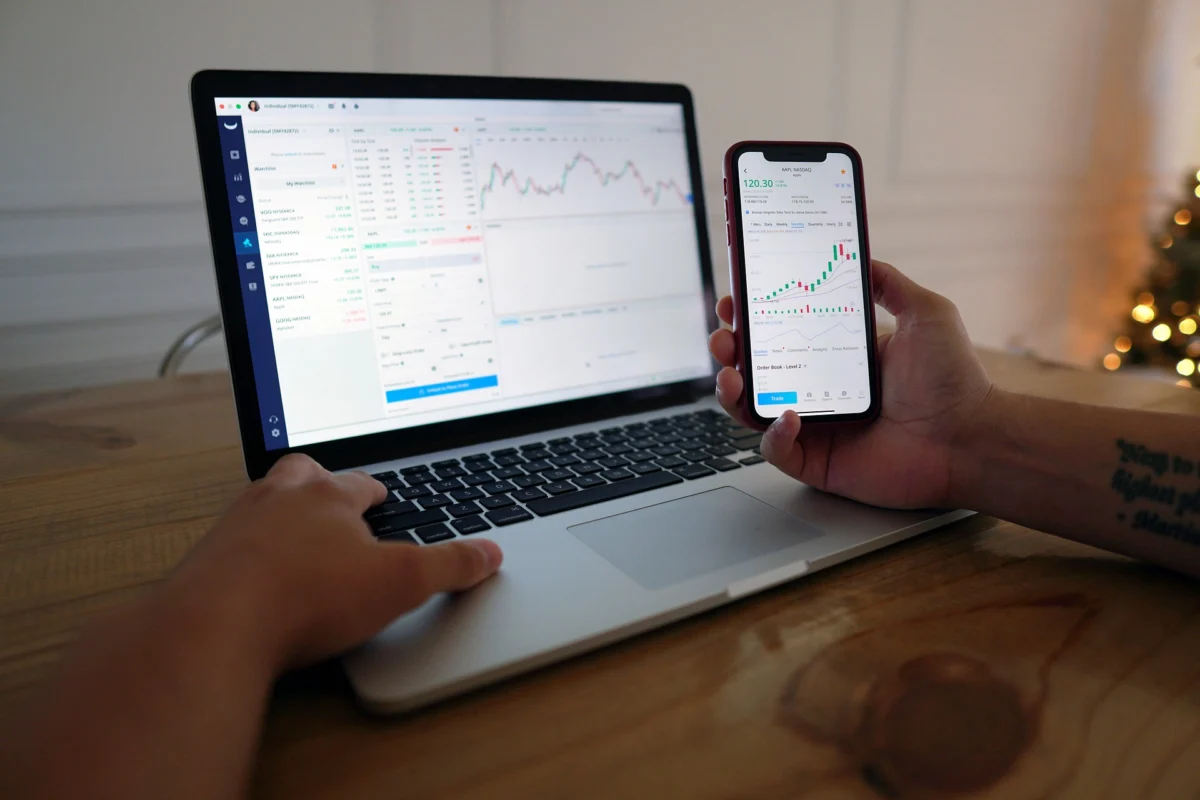
Despite Bitcoin’s recent price stabilization, a cloud of uncertainty hangs over the digital asset market. While bulls may celebrate the asset’s resilience following a period of intense downward pressure, new data from the blockchain analytics firm CryptoQuant suggests that the market is far from out of the woods. A significant uptick in exchange deposit activity—across Bitcoin, Ethereum, and a broad spectrum of altcoins—has sounded an alarm for traders, indicating that the market is entering a phase of heightened sensitivity and potential volatility.
As the crypto ecosystem recalibrates, understanding the underlying movement of assets is critical. This report examines why exchange inflows are acting as a "caution flag" for investors and why the current recovery, while promising, remains fraught with structural risk.
The Core Phenomenon: Understanding Exchange Inflows
The primary driver of the current market apprehension is a noticeable spike in exchange deposit activity. In the world of on-chain analytics, the movement of digital assets from private, "cold" storage into the custodial wallets of centralized exchanges (CEXs) is rarely a neutral event.
When investors hold assets in cold storage, they are generally signaling a long-term "HODL" mentality. Conversely, when those same assets are transferred to an exchange, the liquidity profile of the market changes instantly. Assets held on exchanges are primed for action—they can be liquidated into fiat, traded for other altcoins, or deployed as collateral for high-leverage derivative positions.
CryptoQuant’s latest insights suggest that the volume of Bitcoin flowing into exchanges has increased, a pattern that historically precedes sharp price fluctuations. While these deposits do not guarantee an immediate market crash, they do indicate that participants are positioning themselves for a rapid change in market direction.
Chronology of the Recent Market Shift
To understand the current state of the market, one must look at the recent sequence of events:
- The Correction Phase: Following a period of sustained pressure, Bitcoin experienced a sharp correction that tested key support levels. During this time, sentiment was largely bearish, characterized by liquidations and panic selling.
- The Stabilization: In the days following the dip, Bitcoin showed remarkable resilience, clawing back lost ground and establishing a range that gave bulls a sense of renewed hope.
- The On-Chain Warning: As the price began to stabilize, on-chain metrics began to shift. CryptoQuant analysts identified a steady, consistent increase in the volume of Bitcoin and altcoins being moved onto exchanges. This activity suggests that even as prices held steady, the underlying "supply pressure" was being quietly refilled.
- Current Status: We are now in a "wait-and-see" period. The price is currently holding above recent lows, but the exchange order books are becoming increasingly dense with incoming supply, creating a divergence between current spot price and the potential for future selling pressure.
Supporting Data: Why "Deposits" Are Not Just Numbers
It is a common misconception that all exchange deposits are synonymous with selling. To interpret this data effectively, analysts distinguish between different types of flow:
- Spot Selling: This occurs when investors move coins to exchanges to sell them for stablecoins or fiat. If the volume of these deposits overwhelms the current buy-side liquidity, price slippage occurs, leading to a downward move.
- Derivatives Positioning: Many traders move Bitcoin to exchanges to use as margin for futures or options contracts. An increase in deposits can signify that traders are preparing to "hedge" their existing portfolios. While this doesn’t necessarily mean the price will drop, it does mean the market is preparing for a "move"—potentially a volatile one in either direction.
- Market Making: Large institutional players and market makers often shift assets to ensure they have sufficient liquidity to manage order books. During periods of uncertainty, these entities often increase their exchange-held balances to handle expected spikes in retail trading activity.
Regardless of the intent, the sheer volume of these inflows creates a "volatility overhang." When supply on exchanges is high, the market is structurally primed for a swift reaction to any macro-economic news or shifts in trader sentiment.
Macro-Economic Factors and Market Sentiment
The CryptoQuant warning is particularly salient because it arrives at a time when Bitcoin is facing a lack of clear direction from traditional macro-economic indicators.
The current landscape is defined by "uneven" ETF flows. Institutional interest, which served as a primary tailwind for Bitcoin throughout much of the year, has recently shown signs of fatigue. When ETF inflows are inconsistent, the burden of maintaining price stability falls on the spot market—a market that is now contending with the aforementioned rise in exchange deposits.
Furthermore, altcoins remain in a fragile state. Historically, when Bitcoin shows weakness or volatility, altcoins tend to suffer disproportionately. The fact that the current surge in exchange activity is not limited to Bitcoin, but is also affecting Ethereum and smaller cap assets, suggests that the sentiment shift is broad-based and systematic, rather than isolated to a single asset class.
Official Responses and Expert Interpretation
The prevailing consensus among analysts is one of "cautious observation." Experts at CryptoQuant emphasize that while the deposit spikes are a significant signal, they should not be treated as a definitive sell signal in isolation.
"The market is being primed for movement," notes the research team. "We are seeing a transition from a state of accumulation to a state of preparation. The critical question for the coming week is not whether the price will move, but how the market will absorb this influx of exchange-ready supply."
If Bitcoin can successfully consolidate and hold its current support levels despite the higher exchange supply, it would demonstrate a healthy, mature market capable of absorbing sell pressure. This would be a major bullish indicator, signaling that the "weak hands" have been shaken out and that the market possesses enough underlying demand to counteract the influx of exchange-held supply.
Implications: What Should Traders Do?
For the average trader or investor, the implications of this data are clear: avoid reading the current price bounce in a vacuum.
When the market looks stable on the surface, it is easy to become complacent. However, the current on-chain data suggests that beneath the surface, the "plumbing" of the market is being rearranged. Traders should consider the following strategies:
- Monitor Funding Rates: In addition to exchange deposits, keep an eye on funding rates for perpetual futures. If deposits are rising and funding rates are becoming overly optimistic, it creates a dangerous environment for a "long squeeze."
- Watch ETF Flows: Use institutional data to gauge whether the "smart money" is currently net-buying or net-selling. ETF flows provide the best proxy for institutional demand, which can act as a shock absorber against exchange-based sell pressure.
- Prioritize Risk Management: Given the heightened potential for volatility, now is not the time for aggressive, over-leveraged positioning. Ensuring that your portfolio can withstand a sharp, short-term move is the most prudent strategy until the exchange-deposit trend reverses or stabilizes.
- Look for "Absorption" Signs: If the price remains steady for a few more days while deposits continue to climb, watch for "buy walls" on exchanges. If those walls hold, it suggests that the market is absorbing the supply efficiently.
Conclusion: A Caution Flag, Not a Panic Button
Bitcoin’s recent bounce is a testament to its current strength, but it is not a signal to disregard the fundamental mechanics of the market. The rise in exchange deposits is a classic "caution flag." It serves as a reminder that liquidity is dynamic and that the market is currently in a state of high readiness for its next major move.
As we look toward the coming weeks, the interplay between exchange inflows and institutional demand will determine the path of least resistance. For now, the most vital lesson is to remain vigilant. By combining on-chain data with traditional macro-analysis, investors can navigate this period of uncertainty with a clearer understanding of the forces at play, rather than falling victim to the sudden, sharp volatility that appears to be on the horizon.
As always, the market is a complex machine, and in the current climate, it is the informed, cautious, and prepared trader who will survive the volatility to capture the next sustained leg of the cycle.
