

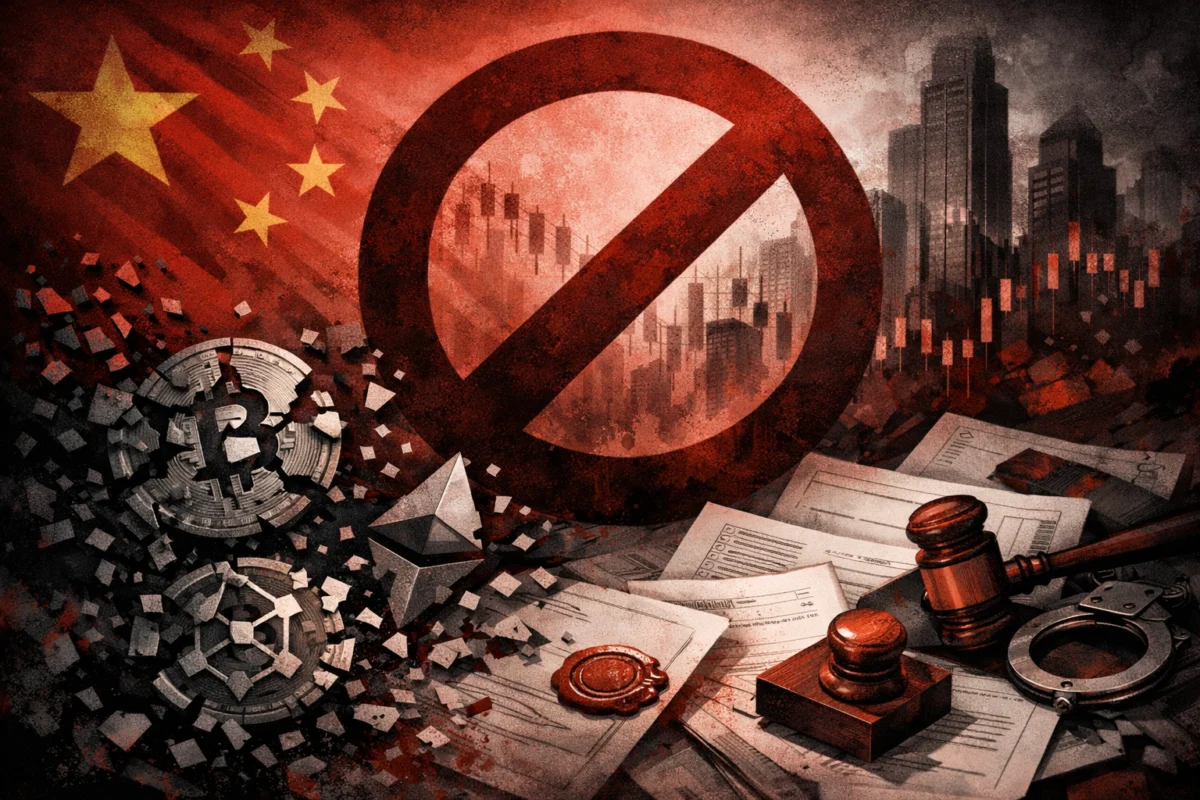
BEIJING — In one of the most comprehensive and definitive regulatory actions targeting the digital finance sector to date, Chinese authorities have officially classified the tokenization of real-world assets (RWA) as an illegal financial activity.
A coordinated directive issued by seven of the country’s most powerful financial industry associations places RWA tokenization squarely in the crosshairs of Beijing’s strict prohibition on cryptocurrencies, stablecoins, and crypto mining. The sweeping move dismantles any remaining ambiguity surrounding whether tokenized assets might find a legal loophole through future regulatory sandboxes, pilot programs, or offshore structures.
Instead, the policy draws an unyielding line in the sand. It targets not only the issuers of tokenized products, but also the entire ancillary Web3 service chain, extending the long arm of mainland enforcement into Hong Kong-linked operations and foreign-registered entities that maintain operational footprints or personnel within mainland China.
Main Facts
The regulatory directive was jointly promulgated by a formidable coalition of China’s top financial governance bodies:
- The China Internet Finance Association
- The China Banking Association
- The China Securities Association
- The China Asset Management Association
- The China Futures Association
- The China Association of Listed Companies
- The China Payment and Clearing Association
Core Components of the Crackdown:
- Total Prohibition of RWA Tokenization: The associations explicitly stated that tokenized real-world assets—encompassing physical property, commodities, debt instruments, and equity mapped onto digital tokens—possess no legal foundation under existing Chinese law.
- Elimination of "Pilot" Claims: Regulators firmly dismissed assertions by various Web3 projects that their RWA operations were part of authorized trial phases, local government test zones, or pending official registrations. Authorities clarified that no Chinese financial regulator has ever approved any form of RWA tokenization.
- Cross-Border and Extra-Territorial Reach: The mandate explicitly targets projects that attempt to circumvent mainland prohibitions via overseas compliance frameworks, foreign asset-anchoring narratives, or technology exports. Furthermore, domestic securities brokerages have been instructed to immediately halt any involvement in RWA tokenization activities based in Hong Kong.
- Whole-Chain Liability: Legal accountability is no longer confined to project founders and core executives. The policy introduces a strict liability standard encompassing technology outsourcing firms, marketing agencies, social media influencers, payment gateway providers, and even individual operational staff members residing within mainland China.
Chronology: The Escalation Toward Total Ban
To understand the weight of this latest directive, it is necessary to examine the systematic progression of China’s defensive posture against decentralized digital assets over the past decade.
- September 2017 (The Initial ICO Crackdown): The People’s Bank of China (PBOC) and six other ministries formally banned Initial Coin Offerings (ICOs), classifying them as unauthorized public financing that disrupted economic and financial stability. This marked the beginning of China’s aggressive stance against speculative digital tokens.
- September 2021 (The Comprehensive Crypto Ban): Ten Chinese government agencies, led by the PBOC, issued a joint notice declaring all cryptocurrency-related transactions illegal. Crypto mining was subsequently outlawed due to high energy consumption and financial risk, prompting a mass exodus of mining operations and blockchain enterprises from the mainland.
- Late 2023 to 2024 (The RWA Gray Area): As global financial institutions began heavily exploring Real-World Asset tokenization—bridging traditional finance (TradFi) with blockchain technology to tokenize Treasury bonds, real estate, and private credit—some entrepreneurs and offshore entities attempted to market RWA products to mainland investors under the guise of "technological innovation" or "regulated cross-border trade."
- January 2026 (The Unified Association Notice): The seven major financial industry associations deliver the definitive blow, closing the RWA loophole. By framing RWA tokenization not as fintech innovation, but as a sophisticated vehicle for illegal financial operations, authorities effectively criminalized the entire sector.
Supporting Data and Legal Framework
Legal observers have characterized the joint announcement as a textbook example of high-level, cross-industry bureaucratic coordination—a tactical maneuver traditionally reserved for moments when Beijing seeks to neutralize systemic financial threats before they can take root in the retail market.
The directive directly maps RWA activities to severe violations codified under the Criminal Law of the People’s Republic of China and the Securities Law:
- Illegal Fundraising: Public token issuance coupled with capital accumulation from retail investors is prosecuted under statutes governing illegal absorption of public deposits.
- Unauthorized Securities Offerings: Facilitating the distribution, issuance, or secondary trading of tokens representing ownership stakes or debt without explicit state authorization constitutes an illegal public securities offering.
- Illegal Futures and Speculative Trading: Trading models involving leverage, margin, perpetual contracts, or betting mechanics tied to tokenized values fall squarely under illegal futures and commodities business operations.
The Breakdown of Underlying Collateral Claims
A foundational argument frequently used by RWA proponents globally is that tokenization reduces risk because every digital token is backed by tangible, audited, real-world collateral (such as commercial real estate or government bonds).
Chinese regulators flatly rejected this premise. According to the notice, token structures fail to guarantee secure ownership rights or reliable liquidation mechanisms under Chinese property and contract law. Authorities argue that even when project teams present verifiable proof of transparency or genuine collateral, the structural opacity of distributed ledgers introduces uncontrollable risk spillovers that can easily reach the broader banking system.
Hong Kong and Offshore Routes Under Fire
For years, the special administrative region of Hong Kong has positioned itself as a progressive virtual asset hub, establishing a regulated licensing regime for crypto exchanges and exploring institutional tokenization pilots. This dichotomy created a popular playbook for Web3 startups: register a legal entity in Hong Kong or an offshore tax haven, build the product on global public blockchains, but retain engineering, marketing, and operational teams cheaply within mainland tech hubs like Shenzhen, Beijing, or Shanghai.
The January 2026 notice systematically dismantles this operational model.
The Extraterritorial Mandate
- Brokerage Restrictions: China’s securities watchdog has actively urged mainland-backed brokerages and financial institutions to sever ties with RWA initiatives operating out of Hong Kong.
- The "Knew or Should Have Known" Standard: The directive establishes a rigorous liability standard for service providers. Any institution, corporate entity, or individual who knew or should have known they were providing support services—ranging from legal counsel and server hosting to liquidity provision and public relations—to an RWA or virtual currency venture can be held criminally accountable.
- Targeting Mainland Staff: The warning emphasizes that employing even a single operational or technical worker within mainland China is sufficient to expose an offshore-registered RWA project to severe domestic enforcement actions. This effectively forces international Web3 companies to choose between accessing the Chinese talent pool or participating in the global RWA market.
Web3 Service Chain Impact and Broader Implications
The enforcement scope signals a paradigm shift in how Beijing polices financial technology. Rather than merely punishing founders or issuing cease-and-desist orders to exchange platforms, the state is targeting the entire ecosystem that enables decentralized projects to function.
The Expanded Target List
- Technology Outsourcers: Software development firms that write smart contracts or maintain blockchain infrastructure for tokenized projects face immediate exposure.
- Marketing and Media Agencies: Influencers, KOLs (Key Opinion Leaders), media outlets, and PR agencies promoting RWA yields or token sales to Chinese audiences are now classified as accomplices to financial fraud.
- Payment Gateways: Fintech intermediaries processing fiat-to-crypto conversions or facilitating settlement for tokenized assets face heightened regulatory audits and potential license revocations.
Protecting the Digital Yuan (e-CNY)
The timing of this aggressive crackdown is deeply intertwined with Beijing’s broader macroeconomic strategy. While clamping down on private, decentralized, and tokenized financial assets, the Chinese state is actively accelerating the internationalization of its own central bank digital currency (CBDC), the digital yuan (e-CNY).
Recent initiatives—including the establishment of a specialized hub in Shanghai dedicated to cross-border payments and blockchain-based trade settlement—demonstrate that Beijing is not inherently opposed to blockchain technology. Rather, the state insists upon a strict monopoly over currency issuance, monetary policy, and settlement infrastructure. Private stablecoins and RWA tokenization models present a direct structural challenge to this state-controlled monetary paradigm by offering alternative liquidity rails outside the purview of the PBOC.
Conclusion
With this definitive joint notice, China has effectively slammed the door on real-world asset tokenization within its jurisdiction. For global Web3 startups, the message is unequivocal: any operational tie to the mainland while engaging in RWA tokenization abroad is a direct violation of Chinese law. As Beijing solidifies its state-backed digital currency architecture, the regulatory walls surrounding its financial ecosystem have grown higher and more impenetrable than ever before.
