

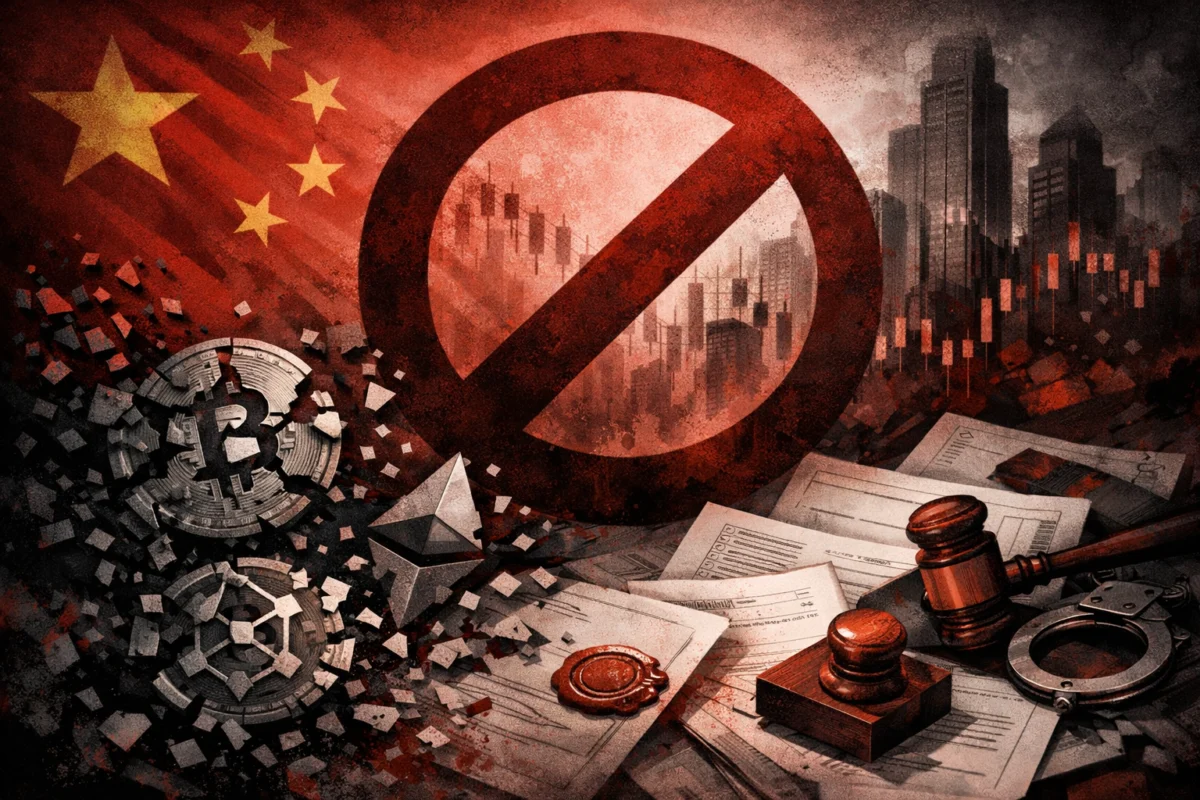
In a sweeping move that effectively shutters the door on the domestic Web3 sector’s remaining avenues for growth, China has officially classified the tokenization of Real-World Assets (RWA) as an illegal financial activity. This definitive stance, delivered through a rare, multi-agency directive, places RWA tokenization alongside cryptocurrencies, stablecoins, and mining—all of which have been subjected to rigorous state-led prohibitions over the past several years.
By categorizing RWA tokenization as a prohibited financial practice, Beijing has eliminated any lingering ambiguity that had previously allowed some startups to operate under the assumption that they were participating in "regulatory sandboxes" or pending pilot programs. The crackdown represents a significant escalation in China’s efforts to maintain absolute control over its financial ecosystem, prioritizing the state-backed digital yuan (e-CNY) while viewing private, decentralized finance as an existential threat to economic stability.
A Coordinated Regulatory Strike
The directive was issued with unprecedented alignment, featuring the signatures of seven major industry associations: the China Internet Finance Association, the China Banking Association, the China Securities Association, the China Asset Management Association, the China Futures Association, the China Association of Listed Companies, and the China Payment and Clearing Association.
The involvement of such a broad coalition of regulatory bodies signals that this is not merely a localized crackdown, but a systemic, top-down mandate. By pooling the authority of these seven organizations, Beijing is ensuring that no loophole—whether in banking, securities, or futures trading—can be exploited by RWA project developers. The message to the market is stark: there is no legal basis for tokenized assets in China, and any entity claiming to have obtained "regulatory approval" for such projects is engaging in fraudulent misrepresentation.
Chronology of China’s Digital Finance Restrictions
To understand the gravity of the current RWA ban, one must view it as the latest chapter in a long-standing series of restrictive measures aimed at the digital asset sector.
- 2013–2017: Initial warnings against Bitcoin and the prohibition of Initial Coin Offerings (ICOs), as regulators sought to protect retail investors from rampant speculation.
- 2021: The "Great Crypto Ban." The People’s Bank of China (PBOC) and other agencies issued a comprehensive ban on all cryptocurrency-related transactions, effectively outlawing exchanges and mining operations within the mainland.
- 2022–2024: A period of uncertainty for the Web3 sector, during which some developers attempted to pivot toward "tokenizing" assets—such as real estate, debt, or commodities—believing that the physical backing of these tokens might exempt them from the 2021 ban.
- January 2026: The current directive, which formally closes the RWA loophole, equating the tokenization of physical assets with the illicit issuance of private securities and illegal fundraising.
Defining the Illegal: A Breakdown of Legal Breaches
The seven-agency notice provides a precise legal framework for how RWA activities violate existing Chinese law. Regulators have identified three primary categories of legal infringement:
1. Illegal Fundraising
The directive stipulates that the public issuance of tokens to raise capital—regardless of the underlying asset—constitutes illegal fundraising. Because these tokens often serve as investment vehicles, the act of soliciting funds from the public without a state-sanctioned license is viewed as a direct challenge to the central government’s control over capital flows.
2. Unauthorised Securities Offerings
By labeling RWA tokenization as a form of securities offering, the government has essentially declared that any entity facilitating these trades is operating as an unlicensed exchange. Under Chinese Securities Law, the issuance of financial products to the public requires strict compliance, vetting, and oversight, none of which can be replicated in a decentralized blockchain environment.
3. Illegal Futures and Derivatives
Many RWA projects utilize leverage or betting mechanisms to attract users. The regulators have explicitly linked these features to "illegal futures business operations," warning that any platform offering speculative trading on tokenized assets is subject to immediate criminal prosecution.
The Extraterritorial Reach: Hong Kong and Offshore Entities
Perhaps the most significant aspect of this new policy is its reach beyond the borders of mainland China. The government is aggressively targeting projects that attempt to "launder" their operations by moving to Hong Kong or registering offshore while maintaining significant staff or technical infrastructure within the mainland.
China’s securities regulator has issued a stern warning to domestic brokerages, ordering them to cease all participation in RWA activities involving Hong Kong. This effectively forces a choice upon international firms: continue serving the Chinese market and risk total exclusion from the mainland, or abandon the RWA model entirely.
Furthermore, the directive introduces an "objective liability" standard. This means that if a service provider—such as a developer, a marketing firm, or even a payment interface—knew or should have known that their services were supporting an illegal RWA operation, they are liable for prosecution. This standard effectively shreds the "offshore registration" defense that many startups previously relied upon to operate with impunity.
The Web3 Service Chain: Who is at Risk?
The crackdown is not merely targeting the heads of tokenization platforms. It is designed to dismantle the entire support ecosystem. The notice makes it clear that legal exposure extends to:
- Technology Outsourcers: Those who write the smart contracts or manage the blockchain infrastructure.
- Marketing Agencies and Influencers: Individuals or firms tasked with promoting tokenized assets to Chinese retail investors.
- Operational Staff: Even a single employee based in China working for an overseas project can serve as a conduit for law enforcement to seize assets, freeze bank accounts, and prosecute the organization’s leadership.
The Rationale: Why Now?
Regulators argue that the rise of RWA tokenization has been accompanied by a surge in fraudulent schemes. They point to the proliferation of projects using "tokenization" as a buzzword to mask pyramid schemes, valueless stablecoins, and high-risk speculative vehicles.
Beyond the immediate goal of consumer protection, the timing of this crackdown is inextricably linked to the geopolitical and economic strategy of the Chinese state. As the People’s Bank of China accelerates the internationalization of the digital yuan (e-CNY), it faces competition from private, decentralized alternatives. By outlawing RWA tokenization, Beijing is clearing the field for its own digital infrastructure, ensuring that no alternative, blockchain-based financial system can challenge the state’s monopoly on currency issuance and capital control.
Implications for Global Fintech
The implications for the global fintech sector are profound. Startups that have built their business models on the premise of tokenizing global assets—ranging from U.S. Treasury bills to real estate—must now reckon with the loss of one of the world’s largest potential markets.
For many firms, the cost of compliance with China’s new, absolute prohibition will outweigh the potential gains of the Chinese market. We are likely to see a "great migration" of talent and technology out of the region as companies move to jurisdictions with more favorable regulatory frameworks. However, the shadow of China’s enforcement is long; for any project with Chinese staff or significant Chinese user bases, the threat of legal action will remain a persistent, high-level risk.
As the dust settles, the message from Beijing is unambiguous: the future of finance in China will be digital, but it will be strictly centralized, state-managed, and entirely devoid of the decentralized, tokenized innovation that has captivated the rest of the world.
