

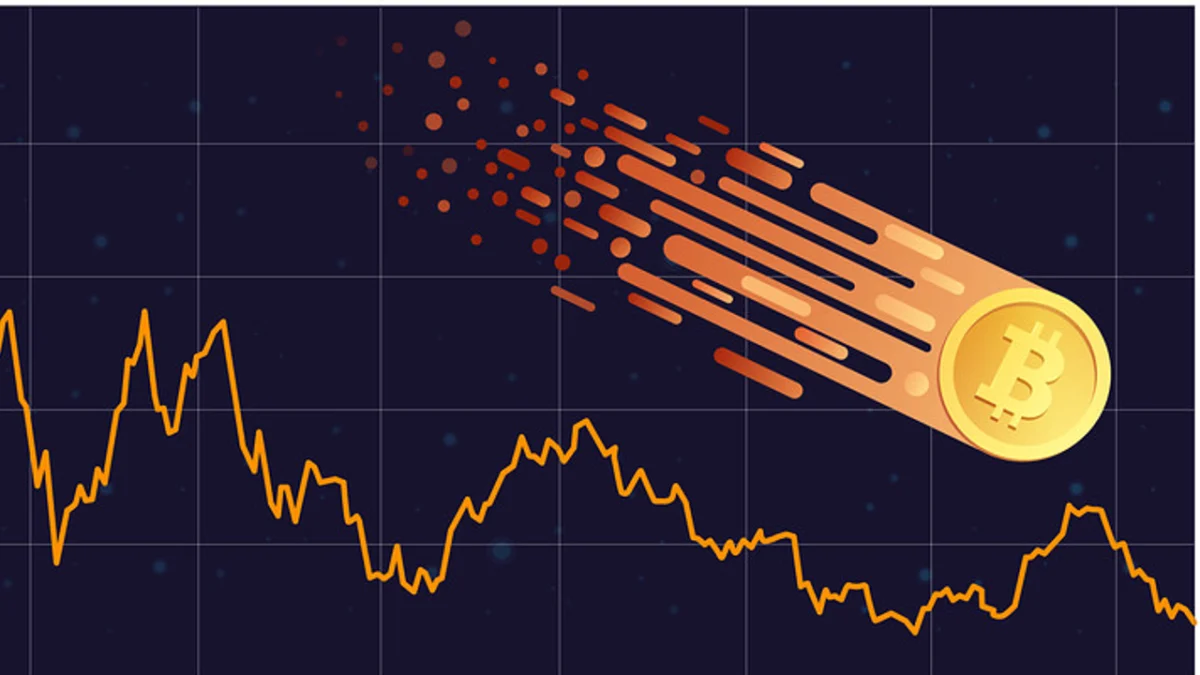
The global cryptocurrency market is currently grappling with a potent cocktail of bearish technical indicators and heightened geopolitical instability. As the new trading week commenced, Bitcoin (BTC), the world’s leading digital asset, extended its losing streak to six consecutive days, shedding approximately 12% of its value over the past week. This downward trajectory has left investors on edge as the asset tests critical support levels that have not been breached since early February.
The Main Facts: A Sustained Downtrend
The primary driver behind the current market malaise is a significant retreat in buying pressure. BTC/USD struggled to maintain momentum after hitting a weekend high of $39,394.44, plummeting to an intraday low of $37,358.00 as market participants rushed to the exits. This decline represents a significant departure from the localized optimism observed just days prior.
Bitcoin is currently trading roughly 45% below its all-time high, a statistic that underscores the "tepid" demand currently plaguing the ecosystem. On-chain data corroborates this sentiment; daily active entities on the Bitcoin network have stalled at approximately 275,000. This figure is a far cry from the peak levels recorded during the height of the bull market, signaling a lack of fresh capital inflows and a diminishing appetite from retail investors.
Chronology of the Decline
The week began with a sense of déjà vu for crypto traders. Having seen a brief, surprise recovery to $38,607 in the late hours of Monday—a momentary reprieve from a mid-February dip toward the $37,000 mark—hopes for a sustained breakout were quickly dashed.
By Tuesday, the selling pressure resumed with vigor. Bitcoin’s inability to consolidate above the $38,000 psychological barrier led to a systematic breakdown. As of this report, BTC is trading at $37,792.12, reflecting a 1.57% decline on the day. Technical analysts are now closely watching the $37,200 support zone. A breach of this level could invite further downside volatility, potentially opening the door for bears to test the $35,000 territory, a narrative that has gained traction among institutional analysts who cite mounting macro headwinds.
Supporting Data: Liquidation and Technical Oversold Conditions
The volatility was exacerbated by a wave of forced liquidations. In a single hour on Tuesday, more than $30 million in long positions were liquidated, marking the third-highest hourly liquidation volume in nearly a month. These "long squeezes" create a cascading effect; as leveraged positions are force-closed by exchanges, the resulting sell orders further depress the price, triggering additional liquidations in a classic "death spiral" mechanic.
Technical indicators paint a similarly grim picture. The 14-day Relative Strength Index (RSI) for Bitcoin has fallen to 39—its lowest level in over three weeks. While an RSI reading below 30 typically signals an "oversold" condition that might entice bargain hunters, the current reading of 39 suggests that the asset is in a "neutral-to-bearish" zone, where momentum remains firmly skewed toward the downside without being technically "cheap" enough to guarantee an immediate reversal.
Furthermore, the lack of market depth is complicating the recovery. Resistance levels are now stacked tightly above current prices. Should a relief rally materialize, Bitcoin must first clear the immediate $37,800 hurdle, followed by a more significant resistance zone at $38,200. Only a sustained move above $39,500 would likely signal a shift in the current bearish trend.
The Ethereum Conundrum
The bearish sentiment is not isolated to Bitcoin. Ethereum (ETH), the second-largest cryptocurrency by market capitalization, has mirrored the downward trend with even greater intensity. Trading over 9% lower than its Monday opening, ETH/USD dipped to an intraday low of $2,585.95, a price level not seen since February 3.
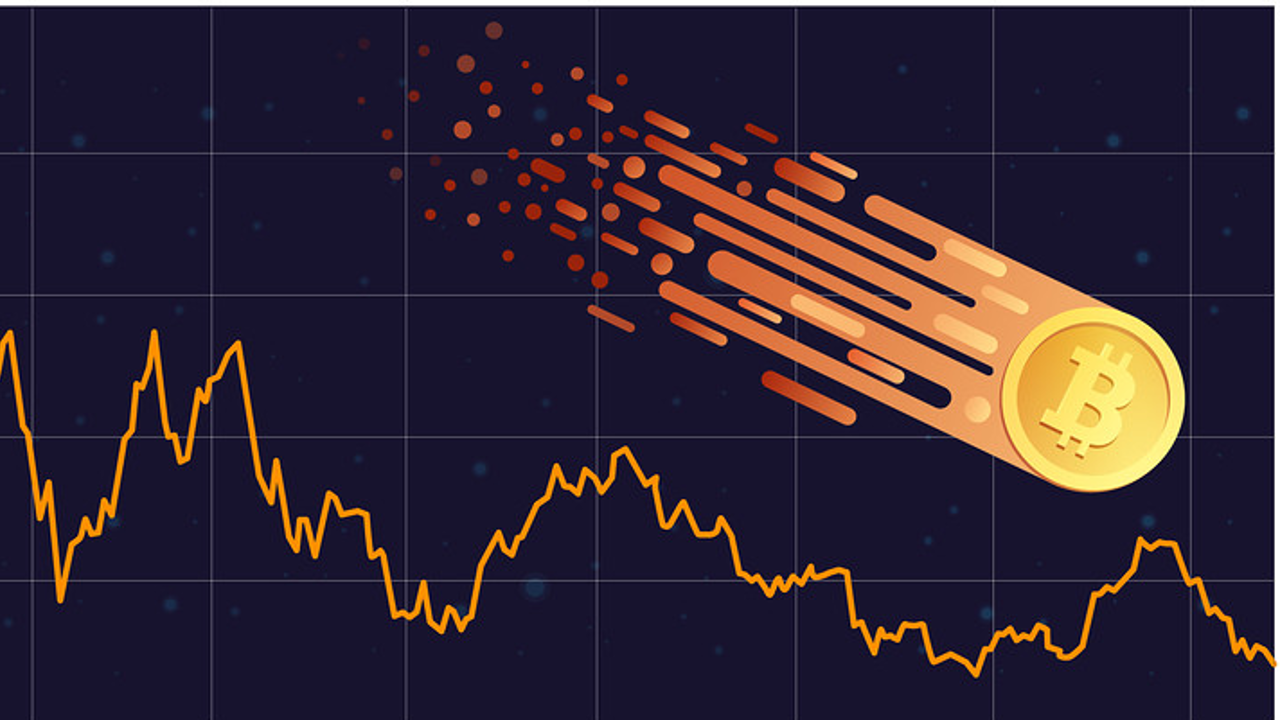
The technical outlook for Ethereum is particularly concerning. Analysts had been monitoring the 10-day and 25-day moving averages for a potential "golden cross" that would signal renewed bullish momentum. However, the recent price action has effectively delayed this signal, suggesting that the "recovery wave" many hoped for has been stifled by the broader market exodus. To regain its footing, Ethereum faces a steep climb, with immediate resistance at $2,680, followed by a major hurdle at $2,750. A breakout above this level is required to propel the asset toward the $2,880 mark.
Geopolitical Implications: The Russia-Ukraine Factor
The most significant catalyst for the recent market rout is the escalating conflict between Russia and Ukraine. As Russian President Vladimir Putin announced the deployment of forces into separatist-held regions in eastern Ukraine, global markets reacted with profound risk-off sentiment.
Cryptocurrencies, which were once touted by proponents as "digital gold" or a hedge against geopolitical instability, have instead functioned as "risk-on" assets, trading in high correlation with tech stocks and other speculative instruments. When uncertainty spikes, institutional and retail investors alike tend to liquidate assets perceived as risky to preserve capital.
The crypto community has been quick to interpret these signals as a warning. The prospect of severe economic sanctions against Russia and the potential for a wider European conflict has created a "fear-heavy" environment. In this climate, the utility of blockchain technology is overshadowed by the immediate need for liquidity. Investors are effectively "de-risking," moving out of volatile digital assets and into cash or traditional safe-haven assets.
Future Outlook and Expert Perspectives
Financial analysts remain divided on the near-term outlook for digital assets. Some firms, such as Stifel, have recently pointed to three major macroeconomic factors—inflationary pressures, shifting central bank policies, and geopolitical fragility—that could theoretically drag Bitcoin toward the $10,000 range in a worst-case scenario. While such a prediction remains an outlier, it highlights the fragility of the current market structure.
On the other hand, proponents argue that the current price dip represents a long-term buying opportunity. The decrease in daily active entities is interpreted by some as a "cleansing" of the market, where weak hands are shaken out, setting the stage for a more sustainable accumulation phase.
However, for the time being, the market remains trapped in a cycle of volatility. The combination of sustained liquidations, a lack of institutional buying conviction, and the overshadowing threat of war creates a challenging environment for bulls. Until the geopolitical dust settles or a major positive catalyst emerges to drive renewed retail interest, the crypto market is likely to remain in a defensive posture.
Investors are advised to monitor the $37,200 support level for Bitcoin closely. A failure to hold this line would likely confirm the bearish thesis that dominated the market throughout February, leading to further price compression and a test of lower support zones. Conversely, a stabilization in global political tensions could provide the necessary relief for crypto assets to decouple from traditional market volatility and resume their role as independent stores of value. As the week progresses, all eyes will be on the daily close to see if the market can find a bottom or if further downside is in the cards.
