

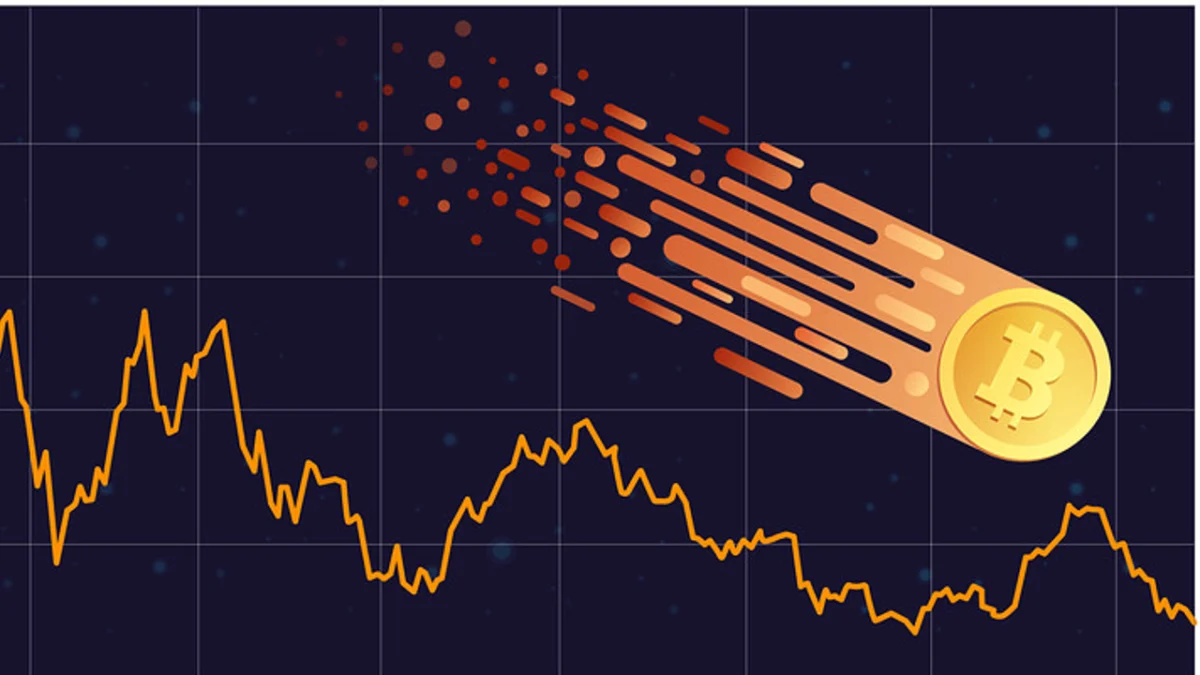
The cryptocurrency market is currently navigating a period of intense volatility and bearish pressure. As of Tuesday, Bitcoin (BTC) has recorded its sixth consecutive day of losses, shedding approximately 12% of its value over the past week. This downward trajectory reflects a broader exodus from risk-on assets as global investors grapple with the deteriorating geopolitical landscape in Eastern Europe.
The State of the Market: A Six-Day Slide
The trading week began on a somber note for Bitcoin enthusiasts. After touching a weekend high of $39,394.44 on Sunday, BTC/USD plummeted to a low of $37,358.00 as markets opened. This decline pushed the world’s leading digital asset to its lowest valuation since February 4, bringing it dangerously close to critical long-term support at the $37,200 mark.
Technical indicators suggest that the current sell-off is not merely a minor correction. The 14-day Relative Strength Index (RSI), a key gauge of momentum, has tracked down to 39—the lowest reading in over three weeks. This indicates that the asset is approaching fully oversold territory, a condition that typically invites either a capitulation or a sharp, reflexive bounce.
While the asset attempted a brief recovery in the late hours of Monday, reaching $38,607, the momentum was short-lived. By Tuesday, the price had retreated again, trading at $37,792.12, representing a 1.57% decline for the day. Bitcoin is now trading roughly 45% below its all-time high, a stark reminder of the "tepid" demand currently plaguing the ecosystem.
Chronology of the Decline: A Week of Liquidations
The pressure on Bitcoin prices has been exacerbated by a wave of sustained liquidations. Market data reveals that in a single hour on Tuesday, over $30 million in long positions were wiped out. This represents the second-highest hourly liquidation volume in four days and the third-highest in nearly a month, underscoring the severity of the market shakeout.
Timeline of Recent Movements:
- February 21: Bitcoin attempted to find footing near the $37,000 level. Late-night buying interest provided a temporary cushion, lifting the price to $38,607.
- Early Tuesday: Markets opened with renewed selling pressure as global uncertainty intensified.
- Mid-Tuesday: Bitcoin breached its short-term stability levels, forcing massive liquidations of leveraged long positions, effectively flushing out weaker hands.
- Ongoing: The market remains locked in a battle between support at $37,200 and resistance zones starting at $37,800.
Supporting Data: Network Activity and Investor Sentiment
Beyond price action, on-chain metrics paint a cautious picture. Network activity, a reliable proxy for organic demand, has stagnated. Data from Tuesday indicated approximately 275,000 daily active entities on the Bitcoin network. Compared to the dizzying heights seen during the 2021 bull market, this figure is markedly lower, suggesting a significant cooling in interest from new retail and institutional participants.
The lack of new "on-chain" entrants, combined with the flight to safety, has left Bitcoin hovering around the $38,000 psychological barrier. Without a surge in new addresses or renewed institutional inflows, analysts suggest the asset remains vulnerable to further downside, with some market experts pointing to the potential for a deeper correction toward the $35,000 range.
Geopolitical Implications: The Russia-Ukraine Factor
The primary catalyst for the current market malaise is undeniably the escalating crisis between Russia and Ukraine. As Russian President Vladimir Putin formally authorized the deployment of forces into two rebel-held regions of Ukraine, global financial markets reacted with predictable trepidation.
For the crypto market, this conflict acts as a "double-edged sword." While proponents have long argued that Bitcoin could act as a hedge against fiat currency instability, current market behavior suggests that, in the short term, Bitcoin is being treated strictly as a "risk-on" asset. When global geopolitical tensions spike, institutional and retail investors alike tend to rotate out of speculative assets and into traditional safe-havens like the U.S. Dollar, gold, or government bonds.
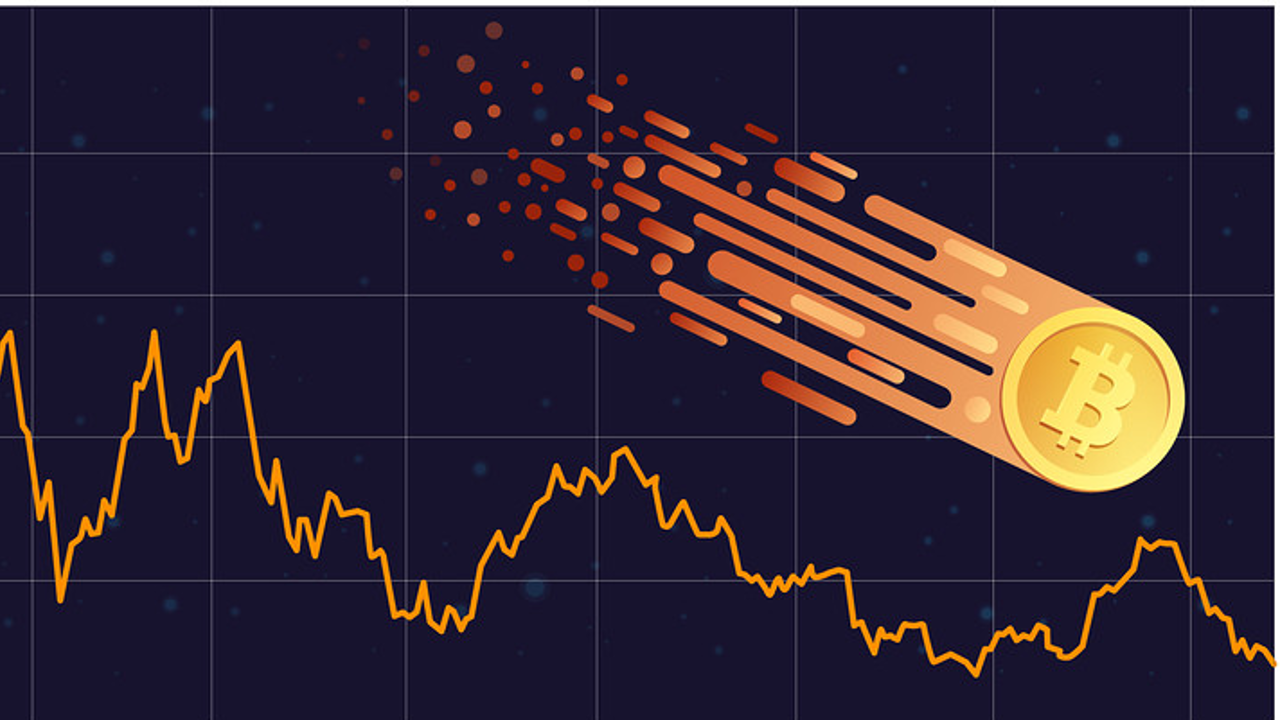
The fear gripping the market is palpable. Investors are unloading digital assets to safeguard portfolios against the threat of broader sanctions, supply chain disruptions, and the unpredictable economic fallout of a potential full-scale conflict in Europe.
Ethereum’s Struggles and the "Fall Cross"
The bearish sentiment is not confined to Bitcoin. Ethereum (ETH), the world’s second-largest cryptocurrency, has mirrored the downward trend, trading more than 9% lower than its Monday valuation. ETH/USD hit an intraday low of $2,585.95, marking its lowest point since February 3.
Technical analysts are particularly concerned about the impending "fall cross" of Ethereum’s 10-day and 25-day moving averages. This indicator, which had recently suggested a potential reversal into bullish momentum, has now been nullified by the current sell-off.
If Ethereum manages a recovery, it faces significant resistance at the $2,680 level. Beyond that, the $2,750 zone remains a major hurdle for bulls. Failure to hold the current support levels could see Ethereum sliding toward the $2,500 psychological floor.
Looking Ahead: Technical Resistance and Macro Forecasts
As the market attempts to find a bottom, traders are closely watching specific technical levels to determine the next major move. For Bitcoin, the path to recovery is obstructed by multiple resistance layers.
- Immediate Resistance: $37,800. This is the first level that bulls must overcome to stabilize the daily chart.
- Secondary Resistance: $38,200. Breaking through this level is essential to negate the bearish pressure built up over the last 48 hours.
- Target Upside: $39,500. Should the market sentiment shift—perhaps due to a diplomatic breakthrough in Eastern Europe—this is the zone where a trend reversal could be confirmed.
Conversely, some institutional voices remain extremely cautious. Reports from firms like Stifel have highlighted three key macro factors—inflation, monetary policy tightening by the Federal Reserve, and geopolitical instability—that could theoretically push Bitcoin to prices as low as $10,000. While such a scenario remains speculative, it serves as a stark warning of the risks involved in the current environment.
Conclusion: A Period of Caution
The cryptocurrency market is currently in a state of flux, caught between its long-term potential and the harsh realities of short-term macroeconomics. With Bitcoin testing the $37,000 support level and Ethereum struggling to maintain its moving averages, the coming days will be critical.
Investors are advised to exercise extreme caution. The interplay between technical oversold conditions and heightened geopolitical risk creates a high-stakes environment where volatility is expected to remain elevated. Whether the market finds a floor in the coming days or faces further capitulation will depend largely on how the situation in Ukraine develops and whether risk appetite returns to global markets. For now, the "tepid" demand and the ongoing liquidation of long positions suggest that the bears are firmly in control of the narrative.
