

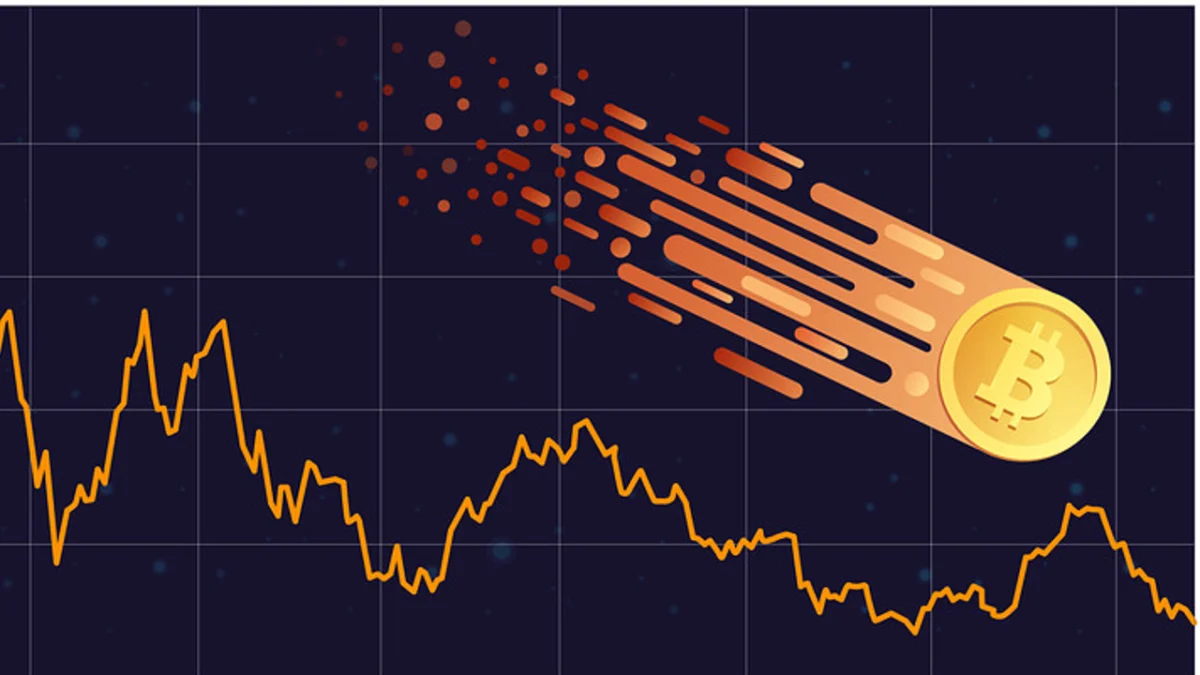
The global cryptocurrency market is facing a harrowing start to the week as a "perfect storm" of bearish technical indicators and heightening geopolitical instability sends prices into a tailspin. Bitcoin (BTC), the market’s bellwether, has extended its losing streak to six consecutive days, leaving investors grappling with a market sentiment that has turned decidedly cautious, if not fearful.
As of Tuesday, Bitcoin is trading approximately 12% lower than its valuation at the same time last week, struggling to maintain critical support levels. The broader digital asset space, led by Ethereum (ETH), is mirroring this decline, as the "risk-off" sentiment takes hold of global financial markets.
The Chronology of the Slide
The downward trajectory began in earnest following a failed rally attempt over the weekend. On Sunday, Bitcoin managed to reclaim a high of $39,394.44, providing a flicker of hope for bulls. However, that momentum was short-lived. By the time trading opened on Monday, the market had shifted, and BTC/USD began a steady decline.
By Tuesday, the asset hit an intraday low of $37,358.00, marking its lowest valuation since February 4. This rapid descent has forced analysts to re-evaluate the near-term floor for the world’s leading cryptocurrency. While a brief, surprising bounce late Monday saw the price trade momentarily at $38,607, the recovery proved fragile, and the bears quickly regained control, pushing the asset back toward the $37,000 threshold.
The situation for Ethereum has been similarly grim. The world’s second-largest cryptocurrency shed over 9% compared to Monday’s closing figures. ETH/USD touched an intraday low of $2,585.95, a level not seen since early February. This slump has effectively neutralized the potential "golden cross" of the 10-day and 25-day moving averages, which had previously suggested a shift toward bullish momentum.
Supporting Data: An Oversold Market
Technical indicators are painting a bleak picture for short-term recovery. Bitcoin’s 14-day Relative Strength Index (RSI)—a key momentum indicator—is currently tracking at 39. This is the lowest level recorded in over three weeks, signaling that the asset is deep in "oversold" territory. While an oversold reading can sometimes invite bottom-fishers, the current macro environment is preventing the typical reflexive bounce.
Furthermore, on-chain data reveals a significant cooling of interest. Network activity has dropped sharply, with only approximately 275,000 daily active entities recorded on the Bitcoin blockchain as of Tuesday. This figure stands in stark contrast to the activity levels seen during the height of the bull market, confirming a noticeable decline in demand from both retail and institutional newcomers.
The market is currently experiencing "tepid" demand, with the asset fluctuating around the $38,000 mark—a staggering 44.97% drop from its all-time high. This lack of buying pressure has left the market vulnerable to the "sustained liquidations" that have plagued traders over the last 96 hours.
Sustained Liquidations and Market Volatility
The volatility has dealt a heavy blow to leveraged traders. In a single hour on Tuesday, more than $30 million in long positions were liquidated. This represents the second-highest hourly liquidation volume in four days and the third-highest in nearly a month.
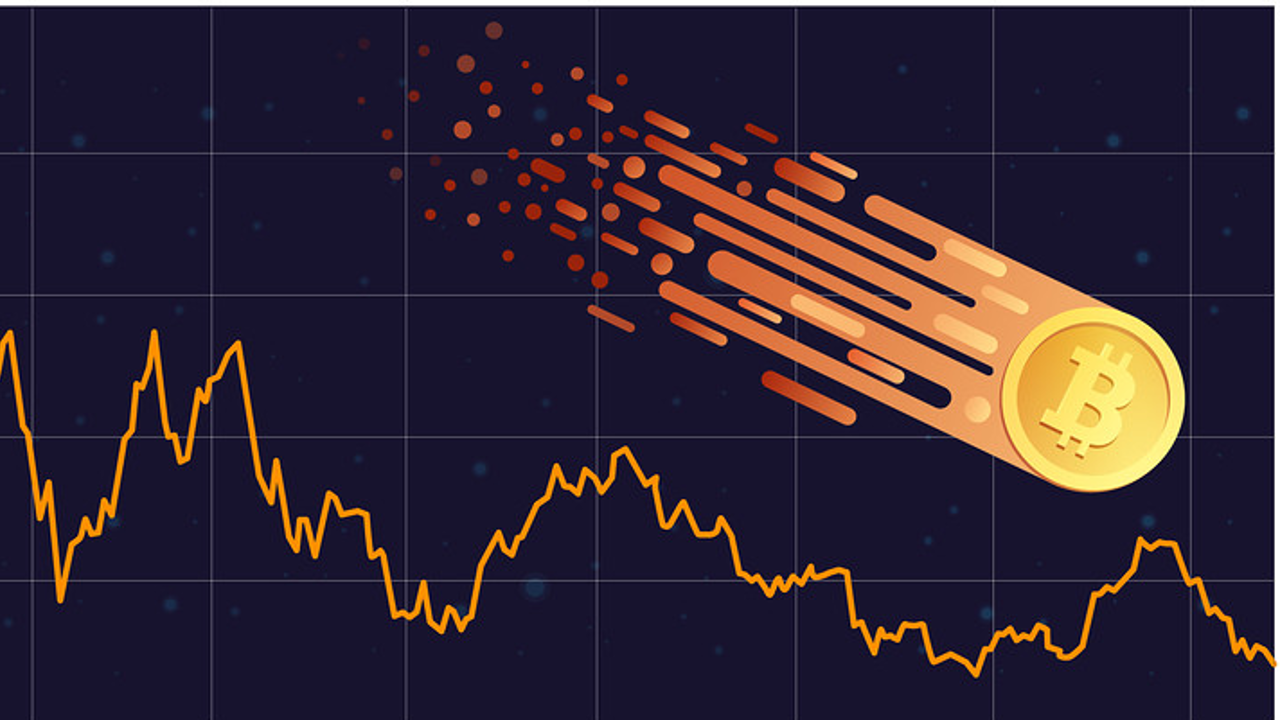
These forced liquidations act as a feedback loop: as prices drop, stop-loss orders are triggered, causing further selling pressure and leading to deeper price slides. Analysts are now closely watching the $37,200 support level. If this long-term floor fails to hold, the path to $35,000 becomes increasingly likely, as noted by market observers monitoring the current bear cycle.
On the upside, the path to recovery is obstructed by a series of stiff resistance zones. Bitcoin faces initial resistance near $37,800. Should it break through that barrier, the next hurdle lies at $38,200. Only a decisive move above this level would open the door to a return toward the $39,500 psychological resistance zone. For Ethereum, the recovery path is similarly arduous, with immediate resistance located at $2,680, followed by a more significant technical barrier at $2,750.
Geopolitical Implications: The Russia-Ukraine Crisis
While technical indicators provide the "how" of the current crash, the "why" is rooted firmly in the escalating conflict between Russia and Ukraine. The crypto market has long been touted as a hedge against traditional market failures, but in recent months, it has increasingly moved in lockstep with equity markets, reacting sharply to macroeconomic and geopolitical shocks.
Tuesday’s market carnage followed the news that Russian President Vladimir Putin had authorized the deployment of forces into two rebel-held regions of Ukraine. This development sparked immediate global condemnation and signaled an end to the diplomatic stalemate that had kept markets on edge for weeks.
As the threat of war looms, global investors have rushed to "safe-haven" assets, fleeing from anything perceived as high-risk. Because cryptocurrencies are still categorized by traditional institutions as speculative, high-risk assets, they are often the first to be liquidated when global uncertainty rises. The crypto community, fearing further regulatory crackdowns and liquidity crunches, has been aggressive in offloading their holdings to safeguard portfolios, further exacerbating the sell-off.
Expert Analysis and Future Outlook
The prevailing sentiment is one of extreme caution. Financial institutions, including Stifel, have recently warned that a combination of macro factors—rising interest rates, inflation, and geopolitical instability—could potentially drag Bitcoin prices significantly lower, with some bearish projections reaching as low as $10,000.
While such extreme forecasts are debated, the current trend is undeniable. The "risk-on" environment that fueled the massive crypto gains of 2020 and 2021 has been replaced by a "risk-off" reality. The correlation between Bitcoin and the S&P 500 remains high, suggesting that until the geopolitical situation stabilizes and interest rate policies from the Federal Reserve become more predictable, the crypto market may struggle to decouple from broader financial volatility.
For investors, the coming days will be critical. The market is waiting for a catalyst—either a de-escalation in Eastern Europe or a massive inflow of institutional buying to defend current support levels. Until then, the "fear" in the Fear & Greed index is likely to remain elevated, and the market will likely remain in a state of high sensitivity to any news emanating from the Russia-Ukraine border.
As the crypto industry matures, this period of volatility serves as a stress test. Whether the market can reclaim its reputation as a resilient asset class or continues to drift lower alongside equities remains the defining question for the remainder of the first quarter. For now, the charts suggest that the bears are firmly in the driver’s seat, and the "crypto winter" shows no immediate signs of thawing.
