

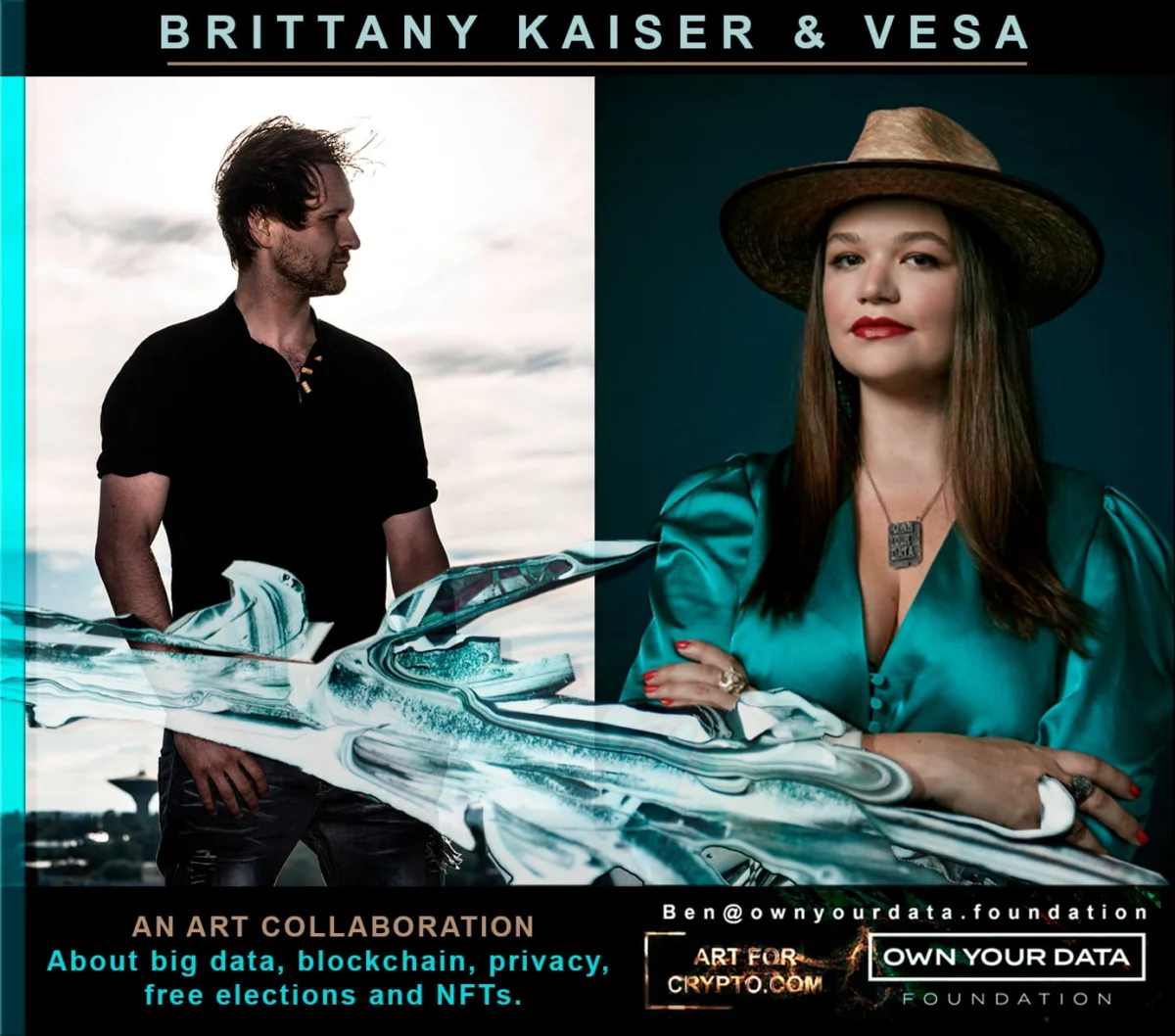
In an era where personal information has become the world’s most valuable commodity, the intersection of big data, blockchain technology, and fine art is emerging as a powerful medium for social commentary. Brittany Kaiser, the world-renowned whistleblower who exposed the mechanics of Cambridge Analytica, is spearheading a unique artistic initiative alongside crypto-artist VESA. Together, they are crafting a series of physical and NFT (Non-Fungible Token) artworks designed to challenge how society perceives data ownership and privacy in the digital age.
The Convergence of Whistleblowing and Fine Art
Brittany Kaiser is perhaps best known for her pivotal role in bringing the Cambridge Analytica scandal to the global stage—a story famously documented in the Netflix original The Great Hack. Her journey from a data-mining insider to a fierce advocate for digital human rights has made her a central figure in the conversation surrounding information security.
As Kenn Bosak noted in a collaborative podcast launch featuring Kaiser and VESA, it would be difficult for anyone active in the tech or political spheres to be unaware of Kaiser’s impact. Her philosophy is clear: "If we want protection, we need to start thinking of our data as our property, because, if no one has noticed, property is held up and protected legally."
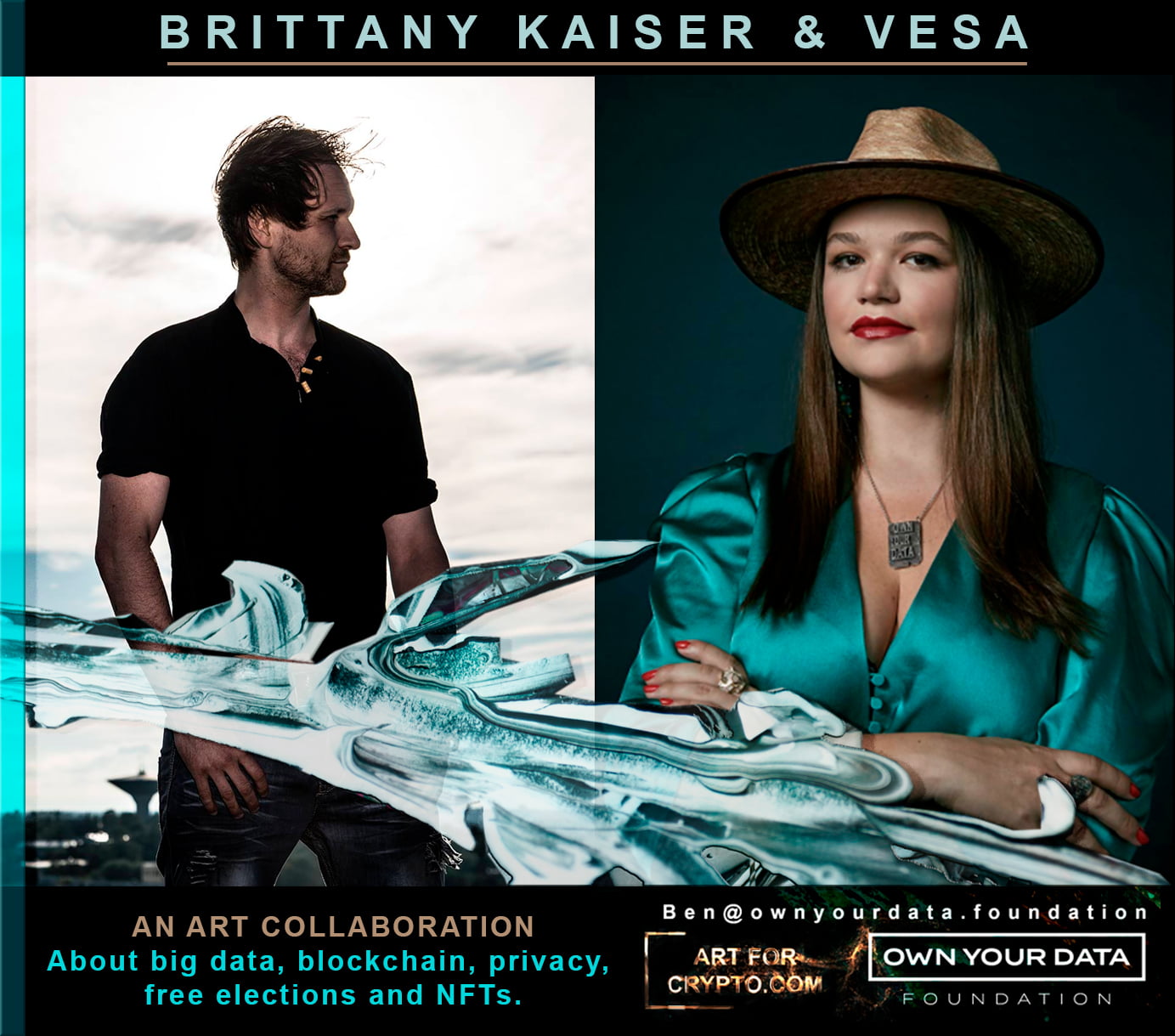
This core belief serves as the foundation for her collaboration with VESA, a pioneer in the "Artevo" movement. By tokenizing artistic expressions of data strip-mining and surveillance, the duo aims to reach an audience beyond the typical technical demographic, using visual storytelling to translate complex digital concepts into tangible assets.
Chronology of a Digital Movement
The timeline of this collaboration reflects the rapid evolution of the crypto-art space:
- The Catalyst: Following the massive success of The Great Hack—which earned critical acclaim, including BAFTA and Oscar nominations and over 100 million views—Kaiser shifted her focus toward structural reform. She co-founded the Own Your Data Foundation, an organization dedicated to providing education and resources to individuals regarding their digital footprints.
- The Partnership: Recognizing the power of visual media, Kaiser aligned with VESA, a crypto-artist known for his work bridging the gap between traditional art and blockchain technology.
- The Helsinki Initiative (January 2021): The artists began an intensive collaborative period in Helsinki, where they worked on mixed-media physical pieces that were later digitized for the blockchain.
- The Spring Launch: The project was designed for a multi-pronged release: a high-profile red carpet debut in London, a simultaneous metaverse launch in the Crypto Voxels virtual environment, and a subsequent physical auction in New York.
Data Sovereignty: The Implications of Ownership
At the heart of this collaboration lies a fundamental question: Who owns the digital trail we leave behind?

The "data strip-mining" described by Kaiser refers to the systematic extraction of personal data from social media users, often without explicit or informed consent. By packaging this critique into art, the project seeks to force a dialogue about "Data Sovereignty." In the view of the artists, if data is property, it must be protected by the same legal and ethical frameworks that govern land or intellectual property.
The use of blockchain technology to "tokenize" these artworks is not merely an aesthetic choice; it is a symbolic one. Blockchain offers a transparent, immutable ledger—the exact opposite of the opaque, centralized databases used by entities like Cambridge Analytica. By minting their work as NFTs, Kaiser and VESA are utilizing the very technology they advocate for as a solution to the privacy crisis.
Supporting Data and Industry Context
The relevance of this project is bolstered by the current state of digital privacy. According to industry reports, the global big data market is projected to reach unprecedented valuations in the coming decade. However, public trust in centralized data repositories is at an all-time low.
The success of The Great Hack serves as a primary indicator of public interest in this subject. With over 100 million views, the documentary demonstrated that the average consumer is deeply concerned about their digital autonomy. By moving this conversation into the art world, the Own Your Data Foundation is attempting to achieve what regulatory lobbying often fails to do: capture the collective imagination of the public.
Official Responses and Strategic Alliances
The project has garnered attention for its unique fusion of activism and commerce. Benjamin Leff, the Director of Communications at the Own Your Data Foundation, has served as the point of contact for parties interested in sponsorship and visibility opportunities. The foundation emphasizes that this is not merely a profit-driven art project, but a strategic campaign to influence public discourse through high-impact visual media.
For VESA, this project is a natural progression of his career. Having collaborated with high-profile figures such as Bollywood actress Veena Malik and having his work featured in outlets like VICE and The Independent, VESA has established himself as a bridge-builder between the crypto-enthusiast community and the global art market. His work, which explores the "Ikigai" (a Japanese concept meaning ‘a reason for being’) of the blockchain community, aims to make the abstract nature of decentralized finance feel human and relatable.
Future Prospects and The Role of the Metaverse
The decision to launch in Crypto Voxels was a strategic move to address the global nature of the data privacy issue. By placing the work in a virtual world, the creators ensured that the exhibition was accessible to anyone with an internet connection, bypassing the geographical limitations of a physical gallery in London or New York.
This "phygital" approach—combining physical art with digital tokens—represents the future of fine art. It allows collectors to hold a physical manifestation of a social movement while simultaneously participating in the decentralized economy of the future.
As the project continues to evolve, the focus remains on education. Through the Own Your Data Foundation, the team continues to produce resources for those looking to regain control of their digital identities. Whether through a digital asset or a traditional painting, the goal remains the same: to ensure that the individual, not the corporation, remains the steward of their own information.

Conclusion
The collaboration between Brittany Kaiser and VESA is more than a series of art auctions; it is a cultural intervention. By utilizing the power of the blockchain to fight the ills of big data, they have created a blueprint for how art can serve as a vehicle for advocacy. As society grapples with the implications of artificial intelligence and the further digitalization of daily life, the call to "Own Your Data" will likely grow louder. Through this project, the message is clear: our digital footprints are not just data points to be sold, but personal property to be defended.
Disclaimer: This article is for educational and informational purposes only. It does not constitute financial advice, nor does it represent the official opinions of NewsBTC on whether to buy, sell, or hold any assets. Investing in digital art and blockchain-related projects carries significant risk. Readers are encouraged to conduct their own due diligence before participating in any investment opportunities.
