


The global financial landscape is currently grappling with a dual-threat scenario that has sent shockwaves through the cryptocurrency sector. As tensions on the Russia-Ukraine border reach a fever pitch and domestic regulatory pressure mounts within the Russian Federation, the digital asset market has experienced a significant retreat. Bitcoin (BTC), the world’s leading cryptocurrency, has seen its value slide, shedding 0.7% to trade at approximately $43,352 on Coingecko, a marked decline from the $47,000 threshold observed at the dawn of the year. Ethereum (ETH), the industry’s primary smart-contract platform, has mirrored this downward trend, slipping 2.14% to $2,873.
The confluence of these factors—geopolitical instability and the threat of a blanket ban on digital assets in a major global mining hub—has triggered a broader market correction, resulting in a staggering $200 billion evaporation of market capitalization within a single 24-hour window.
The Chronology of Escalation: From Border Tension to Market Jitters
The current market volatility is not an isolated event but rather the culmination of weeks of escalating friction. The narrative began with the massing of over 100,000 Russian troops along the Ukrainian border, a move that prompted urgent diplomatic interventions from the West.
January and Early February Developments
On January 1, Bitcoin opened the year with a sense of optimism, hovering near $47,000. However, as the geopolitical temperature rose, that sentiment quickly soured. By late January, reports of a potential military incursion led to a sharp decline, with both Bitcoin and Ethereum dropping over 9%—hitting their lowest levels in six months.
The diplomatic front saw U.S. President Joe Biden holding an intensive hour-long discussion with Ukrainian President Volodymyr Zelensky on a Monday, aimed at de-escalating the crisis. Despite these high-level talks, U.S. National Security Adviser Jake Sullivan continued to sound the alarm, reiterating the imminent risk of an invasion. These public warnings acted as a catalyst for risk-off behavior among investors, who shifted capital away from volatile assets like cryptocurrencies in favor of traditional safe havens.
Supporting Data: Volatility and Market Realities
To understand the severity of the current downturn, one must examine the underlying metrics of the market. According to data from BuyBitcoinWorldwide, Bitcoin’s 30-day volatility index is showing a contraction, losing 3.35% of its value. While this might seem counterintuitive during a period of stress, it reflects a broader exhaustion in the market. In 2021, the average volatility stood at 4.56%; current levels suggest that while the market remains jittery, it has not yet reached the extremes of the previous year’s price swings.
Furthermore, the daily charts on TradingView depict a sobering reality: Bitcoin’s total market capitalization has retracted to approximately $817.952 billion. When considering the wider crypto ecosystem, the total market cap has slumped toward the $1.8 trillion mark. This downward pressure is exacerbated by the fact that crypto assets have become increasingly correlated with tech-heavy indices, such as the Nasdaq Composite, which saw a 0.9% drop in December. The "risk-on" nature of crypto means that whenever geopolitical jitters shake Wall Street, the digital asset market often bears a disproportionate brunt of the sell-off.
Russia’s Regulatory Stance: The Mining Hub Paradox
Perhaps the most significant factor contributing to the current market malaise is the ongoing debate within the Russian Federation regarding the legal status of cryptocurrencies. Russia is not a peripheral player in the crypto ecosystem; it is a vital cog in the machine, accounting for approximately 10% of the world’s total Bitcoin mining capacity.
The Proposed Blanket Ban
Reports have emerged indicating that the Central Bank of Russia is actively considering a comprehensive ban on the mining and trading of cryptocurrencies. The reasoning provided by the central bank centers on concerns regarding financial stability, monetary sovereignty, and the potential for crypto to facilitate illicit activity.
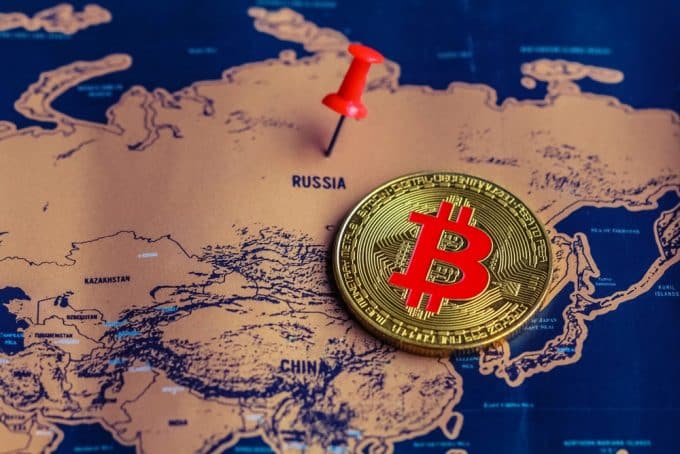
This regulatory hostility is being met with international skepticism. Industry analysts argue that such a move would be counterproductive, potentially driving the crypto industry underground rather than eliminating it. Furthermore, the Russian government has recently signaled its intention to impound unlawfully acquired cryptocurrencies, adding a layer of legal uncertainty for holders within the country.
Russia’s official rhetoric—labeling Western concerns of an invasion as "hypocrisy"—further complicates the economic outlook. For investors, the combination of a potential war and the potential loss of a major mining jurisdiction has created a "perfect storm" of negative sentiment.
Implications for the Future of Digital Finance
The interplay between geopolitical conflict and crypto-regulation carries profound implications for the future of digital assets.
1. The Interdependency of Markets
The current market behavior reinforces the thesis that cryptocurrencies are no longer the "decoupled" assets they were once theorized to be. Instead, Bitcoin and its counterparts are deeply integrated into the global financial system. When international relations falter, institutional investors—who now hold significant portions of their portfolios in crypto—are quick to liquidate these assets to cover margin calls or reduce risk exposure in their traditional portfolios.
2. Mining Decentralization
Should Russia move forward with a total ban on mining, the industry would face a significant short-term shock as 10% of the network’s hashrate is forced to migrate. While the Bitcoin network is designed to adjust its difficulty level—ensuring that the blockchain continues to function regardless of how many miners remain active—a rapid exodus from Russia would cause localized disruption and could lead to further price volatility as the network rebalances.
3. Regulatory Precedent
The situation in Russia is being closely monitored by regulators worldwide. Other nations, particularly those with emerging economies or centralized banking systems, may view Russia’s proposed ban as a blueprint for their own policies. Conversely, if Russia finds that a total ban is unenforceable or economically damaging, it might pivot toward a more regulated, state-sanctioned approach—a possibility that would provide a long-term boost to institutional confidence.
Conclusion: Navigating the Uncertainty
As the world watches the Ukrainian border with bated breath, the cryptocurrency market remains in a state of suspended animation. The price action seen in recent days is a reflection of a market that is deeply uncomfortable with the unknown.
For the long-term investor, the current dip from the $47,000 range may be viewed as a temporary setback in a broader maturation process. However, the short-term reality is stark: Bitcoin is struggling to maintain its position as a "digital gold" hedge against inflation and political chaos. Until the geopolitical climate stabilizes and clarity is provided on the regulatory front in major jurisdictions like Russia, the market is likely to remain tethered to the headlines.
The $200 billion loss in market value serves as a reminder that the crypto industry, while technologically revolutionary, remains susceptible to the oldest pressures in history: war, political rivalry, and the heavy hand of state regulation. Investors are advised to maintain a focus on long-term fundamentals, acknowledging that in times of extreme global tension, volatility is not just a possibility—it is the status quo.
