

The cryptocurrency landscape is currently gripped by a peculiar duality. On one hand, the market is basking in a wave of institutional-grade optimism, fueled by high-profile Bitcoin spot ETF filings and a resurgence in prices that has seen Bitcoin breach the $30,000 threshold. On the other hand, the foundational metrics of the industry—liquidity, regulatory clarity, and macroeconomic headwinds—suggest a market that may be decoupling from reality. As sentiment indices swing toward “greed,” observers are left questioning whether the current rally is a structural breakout or a speculative mirage.
The Institutional Pivot: A Double-Edged Sword
The catalyst for the recent 20% surge in Bitcoin’s value over the last three weeks is almost exclusively linked to the “institutional stamp of approval.” When financial giants like BlackRock and Fidelity—the titans of the traditional asset management world—formally filed for spot Bitcoin ETFs, the market interpreted this as a watershed moment.
Coupled with the launch of EDX Markets, a new crypto exchange backed by Schwab, Citadel Securities, and Fidelity, the narrative shifted rapidly. The message was clear: TradFi (traditional finance) is moving into digital assets, and the legitimization of Bitcoin seems closer than ever.
The SEC’s "Inadequate" Stance
However, the path to approval is proving treacherous. Reports from the Wall Street Journal indicate that the Securities and Exchange Commission (SEC) has labeled initial ETF filings as “inadequate,” specifically citing a lack of detail regarding “surveillance-sharing agreements.” These agreements are designed to prevent market manipulation, and the SEC’s insistence on them highlights the regulator’s lingering distrust of the crypto ecosystem. While the CBOE and Nasdaq have moved to refile with more robust documentation, the process underscores the regulatory friction that remains. Previous rejections, including Fidelity’s own failed attempt in early 2022, serve as a stark reminder that institutional pedigree is not a guarantee of regulatory success.
Chronology of Recent Market Events
To understand the current volatility, one must look at the timeline of events that shaped the second quarter of 2023:
- Early June: The SEC launches simultaneous, high-profile lawsuits against Binance and Coinbase. The Binance suit alleges a wide array of operational offenses, while the Coinbase suit focuses on the fundamental classification of crypto tokens as securities.
- Mid-June: Despite the regulatory onslaught, BlackRock files for a Bitcoin spot ETF, triggering a massive wave of buying pressure.
- Late June: Bitcoin hits the $30,000 mark, with Ethereum tracking closely behind, approaching the $2,000 level.
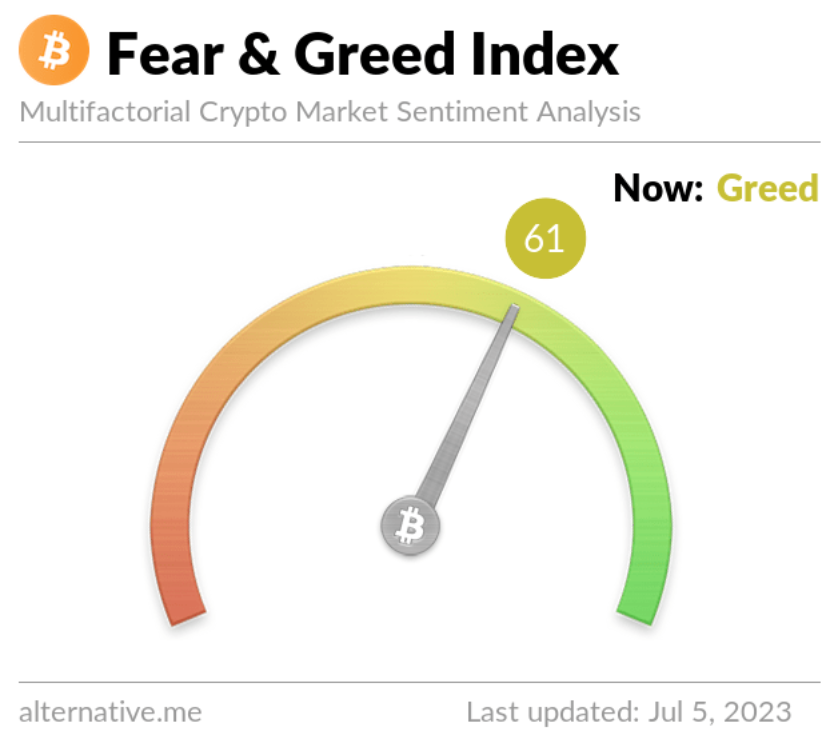
- Early July: Market sentiment indices, such as the Fear and Greed Index, register a score of 61, signaling that the market has decisively pivoted into “greed” territory.
- Ongoing: The Federal Reserve maintains a hawkish posture, with futures markets pricing in an 86% probability of a 25-basis-point rate hike in the coming weeks.
Liquidity: The "Under the Hood" Reality Check
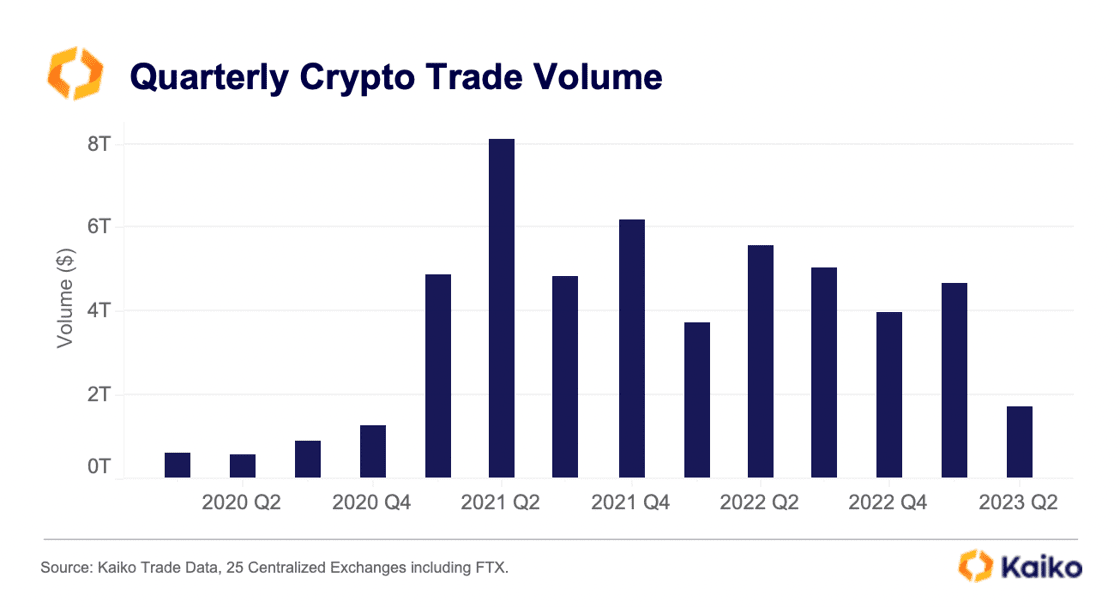
While price action suggests strength, the underlying plumbing of the crypto market—liquidity—is in a state of decay. Data provided by Kaiko reveals a sobering trend: trading volumes on centralized exchanges have plummeted to their lowest levels since 2020.
The Stablecoin Exodus
Perhaps the most alarming indicator is the massive contraction in stablecoin balances held on exchanges. Over the last six months, we have witnessed an outflow of approximately $26 billion in stablecoins—a staggering 60% decline. Stablecoins are the primary "fuel" for crypto trading; their absence indicates that retail and institutional participants alike are retreating to the sidelines, potentially leaving the market vulnerable to erratic, low-liquidity price swings.
Interestingly, while spot markets are suffering from a liquidity drought, derivatives markets have shown surprising resilience, with volumes consistently higher than in the latter half of 2022. This suggests that the current price action is being driven by speculative betting rather than actual adoption or organic inflow.
Regulatory Implications and the "Security" Debate
The regulatory crackdown is no longer a distant threat; it is an active force reshaping the industry. The lawsuit against Coinbase is particularly pivotal. It places the SEC in an awkward position: having allowed Coinbase to proceed with an IPO in 2021, the regulator is now attempting to characterize the very assets traded on that exchange as unregistered securities.
This creates a paradox for investors. Despite the SEC naming various tokens as securities, these same tokens have seen their values rise alongside Bitcoin. This disconnect suggests that the market is currently ignoring regulatory risks, choosing instead to focus on the long-term potential of ETF-driven inflows. This “crypto-will-be-crypto” mindset, while historically profitable for those who bet on volatility, ignores the potential for long-term legal ramifications that could permanently alter the landscape for altcoins.
The Macroeconomic Backdrop
The current crypto rally is occurring in a macroeconomic environment that remains fundamentally hostile to risk assets. The Federal Reserve’s recent "pause" in interest rate hikes was widely misinterpreted by some as a policy pivot. However, Fed Chair Jerome Powell was explicit: the pause was a tactical delay, not a change in strategy.
The Impact of "Higher for Longer"
With a 25-basis-point hike now overwhelmingly expected by the market, the cost of capital remains high. We are currently living through one of the most aggressive tightening cycles in modern financial history. Monetary policy typically operates with a significant lag; the full impact of these rate hikes has yet to be fully felt by the broader economy.
When layering this macroeconomic reality over the crypto sector, the picture becomes increasingly murky. A high-interest-rate environment typically discourages investment in volatile, speculative assets. The fact that Bitcoin has managed an 83% year-to-date gain despite these headwinds is a testament to its unique resilience, but it also increases the risk of a sharp correction if the "ETF optimism" fails to materialize into a concrete approval.
Synthesis: A Market at a Crossroads
In summary, the current crypto market is a study in contradictions. We have seen:
- Price appreciation fueled by the anticipation of institutional adoption.
- Regulatory pressure that threatens the core business models of the industry’s largest players.
- Liquidity depletion that makes the current price levels fragile and susceptible to "flash" movements.
- Macroeconomic headwinds that suggest the era of "easy money" is far from returning.
For market participants, the recent "greed" in the sentiment index should serve as a warning rather than an invitation. The gap between the hopeful narrative of Bitcoin ETFs and the stark reality of retreating liquidity and rising interest rates is widening.
As we move into the second half of 2023, the market will likely be defined by which force wins: the gravitational pull of traditional macroeconomic constraints or the institutional momentum represented by the ETF filings. Until there is greater regulatory clarity and a return to healthier liquidity levels, the current price surge should be viewed with a healthy degree of professional skepticism. The road ahead remains long, and the structural vulnerabilities under the hood suggest that the volatility which characterizes this asset class is far from over. Investors would do well to balance their enthusiasm with a clear-eyed assessment of the risks that continue to lurk in the shadows of the current rally.
