

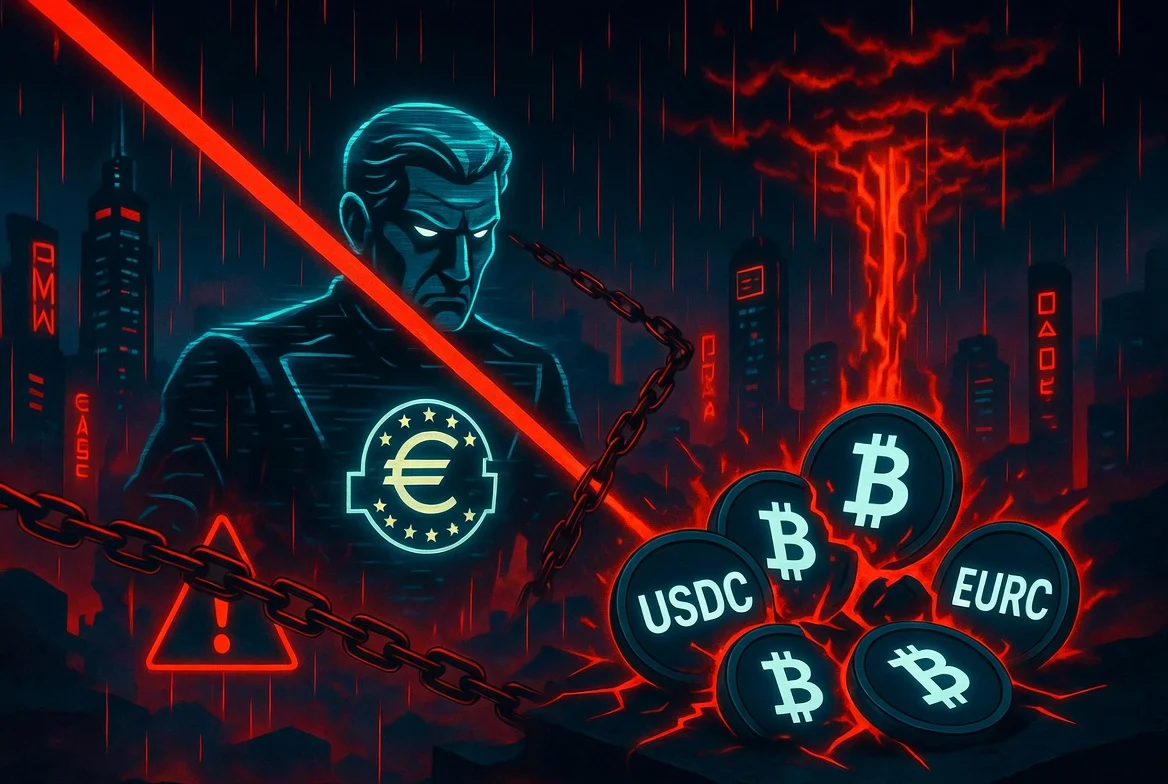
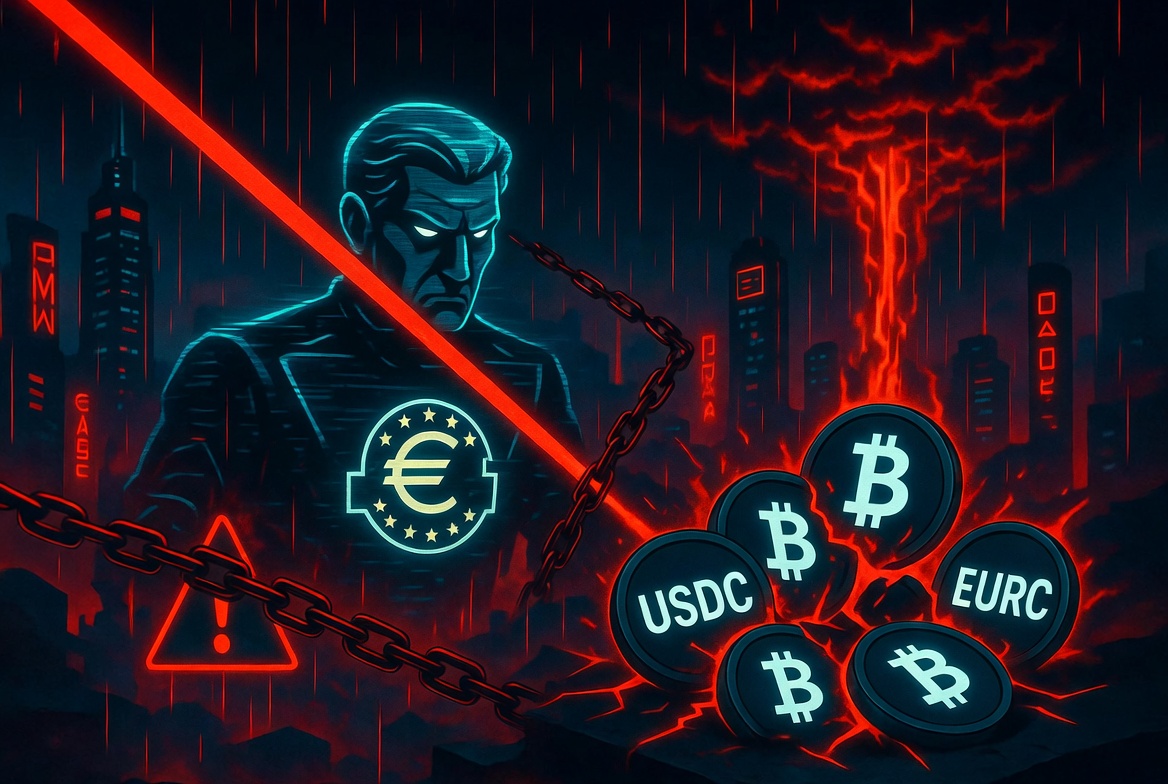
In a development that highlights the ongoing tension between transaction privacy and regulatory compliance in the digital asset sector, multi-chain liquidity protocol Symbiosis Finance has launched private USDT swaps and transfers involving the TRON network.
The integration introduces a dedicated privacy-focused layer to one of the global crypto economy’s most heavily utilized stablecoin corridors. By implementing this feature at the decentralized application (dApp) level rather than proposing changes to the underlying blockchain, Symbiosis aims to provide users with transactional discretion while leaving the core TRON settlement layer unaltered.
This move arrives at a critical juncture for the stablecoin industry. While dollar-pegged assets have emerged as the undisputed "killer app" of the Web3 ecosystem—facilitating billions of dollars in daily global settlements—their transparent nature on public ledgers has sparked a debate over user privacy. The Symbiosis implementation seeks to address these concerns, but it also places the protocol directly in the crosshairs of global regulators, who are increasingly vigilant about the obfuscation of dollar-denominated on-chain flows.
Main Facts: The Architecture of Symbiosis’s TRON Privacy Layer
The newly launched feature is not an upgrade to the TRON protocol itself, but rather a specialized routing mechanism built on top of it. Symbiosis Finance utilizes a non-custodial framework to facilitate cross-chain and same-chain swaps, now extended to support private transfers of Tether (USDT) on TRON.
[Sender Wallet] ──(USDT)──> [Symbiosis dApp Layer] ──(MPC / TSS Routing)──> [Recipient Wallet]
                                    │
                        (Obfuscates Transaction Link)
                                    │
                                    ▼
                        [TRON Settlement Layer]
                   (Unchanged Base Ledger Infrastructure)
According to technical documentation released by Symbiosis Finance, the privacy architecture relies on two primary cryptographic pillars:
- Multi-Party Computation (MPC) Routing: A subfield of cryptography that allows multiple parties to jointly compute a function over their inputs while keeping those inputs private. In this context, MPC is used to distribute the transaction routing process across multiple nodes, ensuring that no single entity possesses the complete transaction path or mapping data.
- Threshold Signature Schemes (TSS): A variant of cryptography for digital signatures where a transaction requires a threshold of independent nodes to sign off before completion. This ensures that funds cannot be unilaterally redirected or intercepted, maintaining the non-custodial nature of the transfer.
By deploying these technologies, Symbiosis reduces the visible link between the sender’s and the recipient’s wallet addresses on public block explorers. When a user initiates a private USDT transfer, the transaction is routed through the Symbiosis liquidity network, effectively breaking the direct, easily traceable on-chain connection that typically exists when transferring assets directly from Address A to Address B on the TRON network.
Chronology: The Evolution of Stablecoin Privacy
To understand the significance of Symbiosis’s launch, it is necessary to examine how the intersection of stablecoins and privacy tools has evolved over the past decade.
2014–2018: Early Stablecoin Era
  │   • Launch of Tether (USDT).
  │   • Transactions are fully transparent, mimicking Bitcoin's public ledger model.
  ▼
2019–2021: The Rise of Mixers & Protocol-Level Privacy
  │   • Tornado Cash and other smart-contract mixers gain widespread adoption.
  │   • Privacy is treated as an all-or-nothing protocol state.
  ▼
2022: The Regulatory Crackdown
  │   • US OFAC sanctions Tornado Cash, signaling a zero-tolerance policy for immutable mixers.
  │   • Protocols begin seeking alternative, compliant privacy architectures.
  ▼
2023–2024: The Rise of dApp-Level Obfuscation
  │   • Shift toward non-custodial MPC, Threshold Signatures, and stealth addresses.
  │   • Focus turns to practical, transactional privacy for everyday businesses.
  ▼
Present: Symbiosis Integrates Private TRON Routing
      • Private USDT routing goes live on TRON, targeting the world's largest retail stablecoin rail.
The Early Era of Transparency (2014–2018)
In the early years of the stablecoin market, assets like USDT were primarily used by traders to move between volatile crypto assets without exiting to fiat. These transactions were entirely transparent, inheriting the public-ledger characteristics of Bitcoin (via Omni Layer) and later Ethereum (ERC-20). Privacy was rarely discussed, as liquidity and stability were the primary objectives.
The Rise of Mixers and Protocol-Level Privacy (2019–2021)
As stablecoins began to find product-market fit outside of speculative trading—particularly in emerging markets and cross-border commerce—users demanded financial discretion. This led to the rise of privacy-preserving protocols like Tornado Cash on Ethereum. These systems pooled user funds in a smart contract and allowed withdrawals to new addresses using zero-knowledge proofs, completely severing the transaction history.
The Regulatory Crackdown (2022)
The landscape changed permanently in August 2022 when the U.S. Department of the Treasury’s Office of Foreign Assets Control (OFAC) sanctioned Tornado Cash, alleging its use by illicit actors, including state-sponsored hacking groups. This action sent shockwaves through the industry, establishing a precedent that immutable, smart-contract-based mixing services would face severe regulatory penalties.
The Shift to dApp-Level Obfuscation (2023–Present)
In the wake of the Tornado Cash sanctions, the developer community pivoted. Instead of building decentralized mixers that completely anonymize funds, developers began focusing on dApp-level routing, MPC, and stealth-address technologies. These methods aim to protect ordinary user privacy—such as hiding account balances from public view during routine payments—without creating completely untraceable black boxes that attract immediate regulatory action. Symbiosis Finance’s integration of private TRON routing represents the latest milestone in this phase.
Supporting Data: TRON’s Dominance as a Stablecoin Rail
The decision by Symbiosis to focus its privacy-routing features on TRON is highly strategic. While Ethereum remains the hub for decentralized finance (DeFi) TVL (Total Value Locked), TRON has quietly established itself as the dominant global rail for USDT transactions.
Data from on-chain analytics platforms and Tether’s official transparency reports emphasize the scale of TRON’s stablecoin ecosystem:
| Metric | TRON (TRC-20) | Ethereum (ERC-20) |
|---|---|---|
| Circulating USDT Supply | ~$60 Billion | ~$50 Billion |
| Average Transaction Fee | < $2.00 (Often < $1.00) | $3.00 – $15.00+ (Gas dependent) |
| Daily Transaction Volume | 1.5M – 2.5M Txns | 100K – 200K Txns |
| Primary Use Cases | Remittances, Retail Payments, Cross-Border Trade | DeFi Collateral, Institutional Settlement |
TRON’s low-fee environment has made it the network of choice for users in developing economies, particularly across Latin America, Southeast Asia, and parts of Africa, where Ethereum’s gas fees can easily exceed the value of the transaction itself.
By adding a privacy-preserving routing option to this specific network, Symbiosis is targeting the most active transactional stablecoin user base in the world. However, this high volume also means that any privacy tool deployed on TRON will immediately process significant transactional value, raising the stakes for both the protocol developers and compliance observers.
Official Responses and the Regulatory Landscape
As of publication, neither Tether (the issuer of USDT) nor the TRON DAO has issued official statements directly endorsing or condemning Symbiosis Finance’s new feature. This silence is typical of the delicate line that major infrastructure providers must walk when third-party developers build privacy tools on top of their networks.
Historically, Tether has maintained a highly cooperative stance with international law enforcement agencies, including the FBI and the U.S. Secret Service. The stablecoin issuer possesses the native ability to freeze USDT tokens at the smart-contract level on both Ethereum and TRON.
                               ┌──────────────────────────┐
                               │   Tether (USDT Issuer)   │
                               └─────────────┬────────────┘
                                             │
                                  Can Freeze Funds Globally
                                             │
                                             ▼
  ┌────────────────────────┐    ┌────────────────────────┐    ┌────────────────────────┐
  │   Symbiosis Protocol   │    │     TRON Blockchain    │    │  Regulators (OFAC/EU)  │
  │                        │    │                        │    │                        │
  │ Uses MPC/TSS to route  │    │ Settles transactions   │    │ Monitor for sanctions  │
  │ transactions privately │    │ transparently on-chain │    │ evasion & compliance   │
  └────────────────────────┘    └────────────────────────┘    └────────────────────────┘
The introduction of dApp-level privacy tools presents a unique challenge for regulators and compliance officers:
- The FATF "Travel Rule": The Financial Action Task Force (FATF) requires virtual asset service providers (VASPs) to share sender and recipient information for transactions exceeding certain thresholds. dApp-level privacy routing directly complicates the collection of this data by exchanges and custodians.
- The European Union’s MiCA Regulation: Under the Markets in Crypto-Assets (MiCA) framework, European regulators have taken a strict stance against privacy coins and tools that deliberately obfuscate transaction paths, raising questions about how European-regulated entities can interact with protocols utilizing Symbiosis’s private routing.
- FinCEN and OFAC Standards: In the United States, FinCEN’s anti-money laundering (AML) guidelines require institutions to conduct transaction monitoring. While Symbiosis itself is a non-custodial protocol and may not fit the traditional definition of a financial institution, centralized exchanges that accept USDT deposits originating from Symbiosis’s private routes may flag those transactions as "high risk."
Industry compliance analysts suggest that because Symbiosis utilizes MPC routing rather than an anonymous pool (like Tornado Cash), it may occupy a regulatory gray area. The transactions remain settled on TRON’s public ledger, meaning that while the direct linkage is obscured to casual observers on block explorers, sophisticated chain-analysis tools (such as Chainalysis or TRM Labs) may still be able to infer patterns using advanced metadata and heuristic analysis.
Implications: The Future of Stablecoin Infrastructure
The launch of Symbiosis Finance’s private USDT routing on TRON has broad implications for several segments of the cryptocurrency ecosystem.
For Everyday Users and Businesses
For legitimate merchants and individuals, the tool offers a way to conduct business without exposing their entire financial history to the public. In a traditional banking setup, a merchant does not see their customer’s bank account balance upon receiving a payment. On a public blockchain like TRON, however, receiving a payment from a wallet allows the recipient to view that wallet’s history and balance. Symbiosis’s tool addresses this asymmetry, providing a level of business confidentiality that is standard in the traditional financial world.
For Protocol Developers
Symbiosis’s dApp-level approach may serve as a blueprint for other cross-chain protocols. By building privacy features at the routing layer rather than attempting to launch native privacy chains (which face widespread exchange delistings), developers can offer privacy-preserving features while utilizing the liquidity and network effects of established, highly liquid blockchains like TRON and Ethereum.
For Centralized Exchanges and Custodians
The deployment of these tools will force centralized exchanges to refine their risk-scoring algorithms. If an exchange receives USDT that has been routed through Symbiosis’s private MPC contracts, the compliance department must decide whether to treat the deposit with the same level of suspicion as a mixer deposit or to recognize it as a standard cross-chain swap. This decision will dictate the practical utility of the tool for users who rely on fiat on- and off-ramps.
The Long-Term Tension
Ultimately, the Symbiosis launch underscores the fundamental tension at the heart of the Web3 economy. As stablecoins evolve into critical global financial infrastructure, the demand for transaction privacy will grow in tandem with the demand for regulatory oversight.
Whether dApp-level privacy routing can successfully bridge this gap—offering users transactional discretion without triggering a regulatory crackdown—remains one of the most critical questions for the future of decentralized finance.
