

Executive Summary: The Changing Landscape of SOL
Solana (SOL), widely considered one of the most resilient and high-performing Layer-1 blockchain ecosystems, is currently facing a subtle but significant shift in its underlying investor composition. According to recent data-driven analysis shared by crypto analyst Ali Martinez, the network has experienced a 3.6% decline in "whale" wallet counts—defined as addresses holding substantial quantities of SOL—since May.
This metric has ignited a fresh debate among institutional traders and retail investors alike. As Solana navigates a period of price consolidation, the departure of over 200 large-scale wallets from the network’s top-tier holder list prompts a critical question: Is this a sign of weakening conviction among the "smart money," or is it merely a strategic rotation of assets? While the decline does not serve as an absolute harbinger of a market collapse, it serves as a necessary reality check for a project that has historically functioned as a high-beta asset in the broader crypto market.
Chronology: Tracking the Whale Movement
To understand the significance of this decline, one must look at the timeline of the current market cycle.
- Pre-May Stability: Heading into the second quarter of the year, Solana maintained a robust growth trajectory. Whale counts were steady, and the ecosystem was benefiting from the tailwinds of renewed interest in decentralized finance (DeFi) and the explosive popularity of meme tokens on the Solana network.
- The May Pivot: The inflection point identified by analysts occurred in May. This period coincided with broader macroeconomic volatility and a shift in sentiment toward risk-on assets. As the global liquidity environment tightened, large-scale holders began to adjust their portfolios.
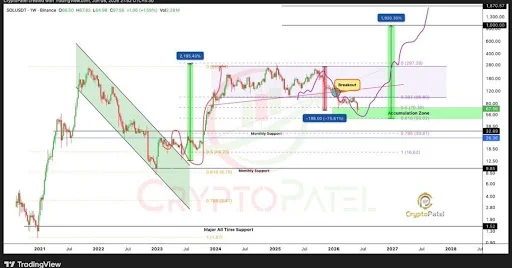
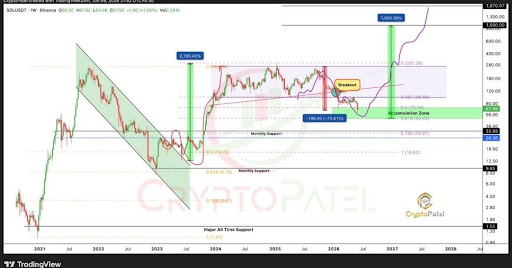
- The Consolidation Phase (June–Present): Throughout the summer and into the current period, Solana has been testing key support levels. During this time, the gradual attrition of whale wallets—totaling more than 200 individual addresses—has become visible on-chain.
- Current Outlook: The market is now in a "wait-and-see" phase. The reduction in large holders is occurring precisely as SOL attempts to establish a floor, making the behavior of these remaining whales a focal point for technical analysts.
Supporting Data: Why Whale Metrics Require Context
The term "whale" in the cryptocurrency industry is often used loosely, but in the context of analytical platforms like Arkham Intelligence and Solscan, it refers to specific thresholds of capital exposure. A 3.6% decline in these addresses is statistically significant, but it must be parsed with nuance.
1. The Anatomy of an "Exit"
When an analyst notes that a wallet has "left" the network or dropped below the whale threshold, it does not necessarily equate to a market sell-off. There are three primary drivers behind this movement:
- Strategic Fragmentation: Sophisticated investors often split large holdings across multiple, smaller wallets to mitigate security risks or to prepare for specific DeFi farming strategies.
- Custodial Migration: Large holders may be moving assets from self-custody wallets to institutional-grade exchanges or cold-storage solutions, which can often obfuscate or redistribute the "whale" status.
- Threshold Slippage: If the price of SOL experiences a dip, a wallet that was previously classified as a "whale" due to its dollar-denominated value may fall below the arbitrary threshold, effectively disappearing from the whale count despite the holder retaining every token.
2. The High-Beta Factor
Solana is frequently categorized as a "high-beta" asset. In finance, beta measures the volatility of an asset relative to the broader market. When the market is bullish, SOL typically outperforms Bitcoin and Ethereum; however, when sentiment turns sour, investors tend to liquidate their Solana positions faster to lock in profits or cover losses elsewhere. The 3.6% decline in whale counts is likely a reflection of this higher-beta profile, as large holders rotate out of volatile altcoins into more "stable" assets like BTC or USD-denominated stablecoins during periods of uncertainty.
Ecosystem Fundamentals: The Counter-Narrative
Despite the thinning of whale ranks, Solana’s foundational health remains largely intact. To view the whale decline in isolation would be a analytical oversight. The network continues to lead in several key performance indicators:
- Retail and Developer Adoption: Solana remains the premier destination for high-frequency trading and retail-facing applications. Its low transaction fees and high throughput continue to attract a developer base that is significantly more active than many of its competitors.
- The DeFi Engine: The Total Value Locked (TVL) and activity within Solana’s decentralized exchanges (DEXs) provide a counterbalance to the whale narrative. While the "whales" (large passive holders) may be trimming their stakes, the "users" (active participants) continue to engage with the network’s protocols at a high rate.
- Market Resilience: The fact that SOL has maintained its support levels despite the exit of significant capital highlights a democratization of the asset. The network is no longer solely reliant on a small cohort of early, massive holders; it has evolved into a broader, more distributed ecosystem.
Implications for Traders and Investors
The current data presents a complex picture for market participants. The implications of this trend can be divided into two camps: the cautious bears and the resilient bulls.
The Bearish Perspective: A Sign of Cooling Momentum
For those skeptical of current price action, the whale decline is a confirmation of a "top" or a cooling period. If large-scale holders are systematically reducing their exposure, it suggests that they do not see an immediate catalyst for a significant upside breakout. This trend, if it continues, could create a "liquidity gap" where there is insufficient buying pressure to push the price through key resistance levels, leading to a prolonged period of stagnant or downward movement.
The Bullish Perspective: A Necessary Shakeout
Conversely, some analysts argue that a reduction in whale concentration is actually a positive long-term development. A network that is less dependent on a few massive wallets is generally more decentralized and less susceptible to "flash crashes" caused by a single whale deciding to dump their entire portfolio. If retail and mid-tier investors absorb the supply being sold by the exiting whales, the resulting distribution could create a stronger, more sustainable base for the next leg of the bull market.
Official Responses and Analytical Consensus
While no single entity speaks for the entire Solana ecosystem, the broader consensus among on-chain analysts—including those utilizing Arkham Intelligence and independent chart analysis—is one of vigilant observation.
The prevailing advice from the editorial desk is to avoid reactionary panic. The 3.6% figure is a data point, not a verdict. Market participants are advised to monitor the following "validation indicators" over the coming weeks:
- Exchange Flows: Are we seeing net inflows to exchanges (a sign of potential selling) or outflows (a sign of accumulation)?
- Support Integrity: Does the current price level hold during periods of Bitcoin volatility?
- On-Chain Velocity: Does the number of active daily addresses continue to grow despite the whale exodus?
Conclusion: The Path Forward
The story of Solana’s whale decline is a reminder that the cryptocurrency market is in a constant state of flux. While the departure of 200+ large wallets warrants attention, it should be viewed as part of the natural life cycle of a major asset maturing in a competitive landscape.
For Solana to reclaim its position as a clear market leader, it must demonstrate that its ecosystem-wide demand—fueled by developers, retail users, and institutional adopters—can outpace the liquidation pressure from its largest holders. As the market moves into the next phase of the cycle, the focus will remain on whether these whales are truly abandoning the ship, or if they are simply repositioning for a different wave. Traders should treat this signal with caution, recognizing that while the "smart money" is shifting, the network’s core utility continues to define its true long-term value.
