

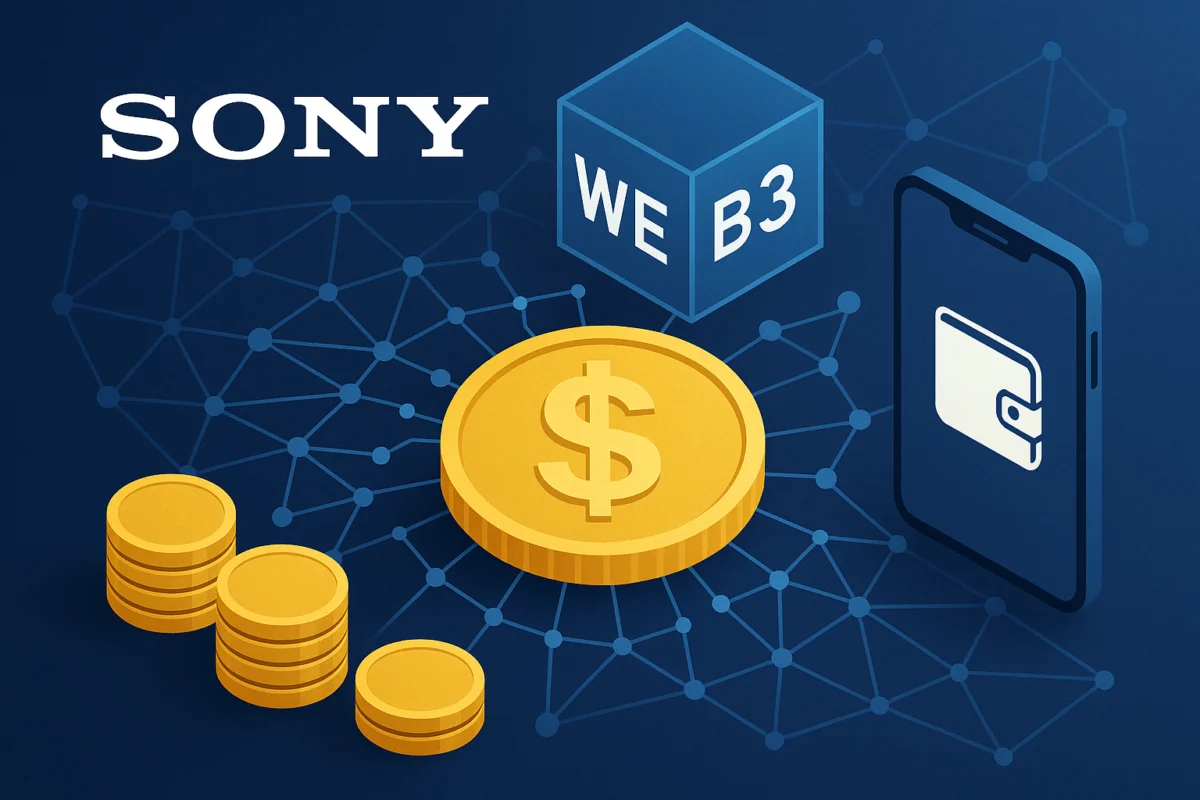
In a move that signals a paradigm shift for one of the world’s most iconic entertainment conglomerates, Sony is set to integrate blockchain technology into the very heart of its financial operations. According to recent reports, Sony Bank is actively developing a US dollar-pegged stablecoin, a strategic initiative designed to bridge the gap between traditional digital commerce and the burgeoning Web3 ecosystem.
By pivoting away from the legacy payment systems that have defined the gaming and entertainment industry for decades, Sony is positioning itself to lead a new era of digital finance. This project is not merely an experiment in currency; it is the construction of a comprehensive, high-efficiency payment network designed to serve millions of users across the PlayStation ecosystem, anime streaming platforms, and beyond.
Main Facts: The Anatomy of the Project
The core of Sony’s initiative lies in the deployment of a proprietary, dollar-backed stablecoin. Unlike volatile cryptocurrencies, this token is intended to function as a stable, reliable medium of exchange for digital goods and services.
- Strategic Focus: The project is spearheaded by Sony Bank, the online lending arm of the Sony Financial Group.
- Market Targeting: The primary focus is the United States, a territory that constitutes roughly 30% of Sony Group’s external sales. By concentrating on this market, Sony is tapping into a region with high digital asset adoption and a mature gaming audience.
- Operational Efficiency: A primary driver behind the move is the reduction of transaction costs. By bypassing traditional card networks, Sony aims to minimize processing fees and expedite settlement times, ultimately passing those efficiencies on to the consumer.
- Partnership Dynamics: Sony has demonstrated a serious commitment to this venture by securing a partnership with Bastion, a US-based stablecoin issuer. Furthermore, Sony’s venture capital arm participated in a $14.6 million funding round for Bastion, led by Coinbase Ventures, underscoring the company’s intent to embed itself deeply within the US blockchain infrastructure.
A Chronological Progression: From Vision to Execution
The journey toward this stablecoin launch has been characterized by methodical planning and structural realignment.
- May 2025: Sony Bank publicly outlines its vision for integrating digital assets into its service model, signaling that blockchain-based finance would become a core pillar of its growth strategy.
- June 2025: A dedicated Web3 subsidiary is officially established. This unit, later christened BlockBloom, is tasked with creating the technological infrastructure required to link digital and physical experiences through NFTs and fiat-linked tokens.
- September 2025: A monumental shift occurs as Sony Financial Group is spun off from the parent conglomerate and listed on the Tokyo Stock Exchange. This independence is critical; it grants the financial arm the autonomy to pursue long-term, high-stakes projects like the stablecoin without the constraints of the broader group’s quarterly balance sheet pressures.
- October 2025: Sony Bank formally applies for a banking license in the United States, a necessary legal prerequisite for operating a regulated stablecoin business within the jurisdiction.
- 2026 (Projected Launch): The target date for the commercial rollout of the stablecoin, marking the transition from development to full-scale integration within the Sony ecosystem.
Supporting Data: Why Web3 Matters to Sony
To understand why a tech giant like Sony is turning to blockchain, one must look at the data surrounding its user base and transaction volumes.
The entertainment industry is increasingly fragmented. A user may purchase a PlayStation 5 game in the morning, pay for an anime subscription in the afternoon, and purchase digital merchandise in the evening. Each of these transactions, when processed through traditional banking rails, incurs significant "friction"—specifically in the form of merchant fees, currency conversion, and processing delays.
By adopting a stablecoin, Sony can create a "closed-loop" economy. Because the token is pegged to the US dollar, users can maintain their purchasing power while benefiting from the speed of blockchain settlements. Furthermore, the integration with BlockBloom’s infrastructure allows for the interoperability of digital assets. For instance, a user could theoretically sell a rare in-game item (an NFT) and immediately use the proceeds—in the form of the stablecoin—to purchase a digital movie, all within the same ecosystem.
Official Stances and Institutional Strategy
While Sony has kept specific technical details guarded, the establishment of the BlockBloom subsidiary offers a clear roadmap of their philosophy. The bank has stated that digital assets are no longer a peripheral niche but are becoming a foundational layer for the future of service delivery.
By separating the financial arm from the main conglomerate, Sony has essentially created a "sandbox" for innovation. This allows Sony Bank to take on the regulatory and technical complexities of stablecoin issuance while shielding the main electronics and media divisions from potential market volatility.
The partnership with Bastion is equally telling. It suggests that Sony is not attempting to "reinvent the wheel" in terms of blockchain infrastructure. Instead, they are opting to work with established US-based entities that are already compliant with American financial regulations. This "compliance-first" approach is essential for a company that derives such a large portion of its revenue from the US market.
Implications for the Future of Entertainment
The implications of this initiative extend far beyond the crypto-native community. If successful, Sony’s stablecoin could redefine the "platform economy."
1. The Death of Transactional Friction
For gamers, the integration of a stablecoin means faster access to content. No longer waiting for bank clearances or credit card verification, users can complete transactions near-instantaneously. This is particularly relevant for the high-frequency, low-value transactions that define modern mobile gaming and micro-purchases.
2. Strengthening the Ecosystem Moat
By creating a proprietary payment network, Sony is effectively strengthening its ecosystem. Users who hold funds within the Sony environment are more likely to spend those funds within that same environment. This creates a powerful loyalty loop that keeps users engaged with Sony products for longer durations.
3. A New Paradigm for Creators
With the inclusion of NFTs and digital asset management, Sony is positioning itself to be the preferred platform for content creators. By providing a secure, efficient way for creators to earn and spend, Sony can attract talent from other platforms that may lack the same financial infrastructure.
4. Regulatory Influence
Sony’s entry into the stablecoin space is a major endorsement of the technology. As one of the world’s most trusted brands, their participation legitimizes the use of blockchain for enterprise-level payments. It signals to other corporations that the regulatory landscape is sufficiently stable to support serious, large-scale investment.
Conclusion: A Calculated Leap
Sony’s venture into stablecoins is a testament to the company’s evolution from a hardware manufacturer to a holistic digital entertainment powerhouse. By leveraging the independence of its newly spun-off financial arm and the technical prowess of its BlockBloom subsidiary, Sony is not just reacting to the Web3 trend—it is actively shaping the infrastructure that will power the next generation of the digital economy.
As 2026 approaches, all eyes will be on the technical implementation of this stablecoin. If Sony can successfully balance the ease of use required for casual gamers with the rigorous regulatory demands of the US banking system, they will have set a new industry standard. The transition from credit cards to blockchain-based payments is rarely seamless, but for a company with Sony’s scale and global reach, it may be the most logical step in the future of entertainment.
