

Stablecoin issuer Tether is finding itself at the center of an intensifying global debate over financial enforcement, national security, and regulatory oversight. As the dominant player in the digital asset ecosystem, Tether has steadily expanded its cooperation with international law enforcement agencies, deploying its issuer-level freeze capabilities to intercept funds linked to illicit activities.
However, this proactive enforcement strategy highlights a deeper, more complex dilemma: while public blockchains offer unprecedented transparency compared to traditional cash networks, the sheer velocity, scale, and utility of Tether’s flagship stablecoin, USDT, make it an appealing conduit for actors seeking to bypass traditional financial systems.
This tension was brought into sharp relief following revelations that Tether froze approximately $550 million in Iranian-linked USDT at the request of U.S. regulatory and law enforcement authorities. As transaction volumes reach historic highs—surpassing $4.4 trillion in the final quarter of 2025 alone—the crypto industry faces crucial questions regarding the efficacy of asset freezes, the rise of blockchain-based shadow banking networks, and the scaling challenges introduced by infrastructure updates like StableChain.
1. Main Facts: The Anatomy of Tether’s Enforcement Actions
The core development centers on Tether’s willingness to leverage its centralized controls to assist Western governments in combating financial crimes. Unlike decentralized cryptocurrencies where third-party intervention is impossible, Tether maintains the technical capability to freeze specific USDT tokens held within targeted digital wallets across multiple blockchains.
- The U.S. Enforcement Request: Tether confirmed it has frozen roughly $550 million worth of USDT tied directly to Iranian networks following formal requests from a U.S. agency.
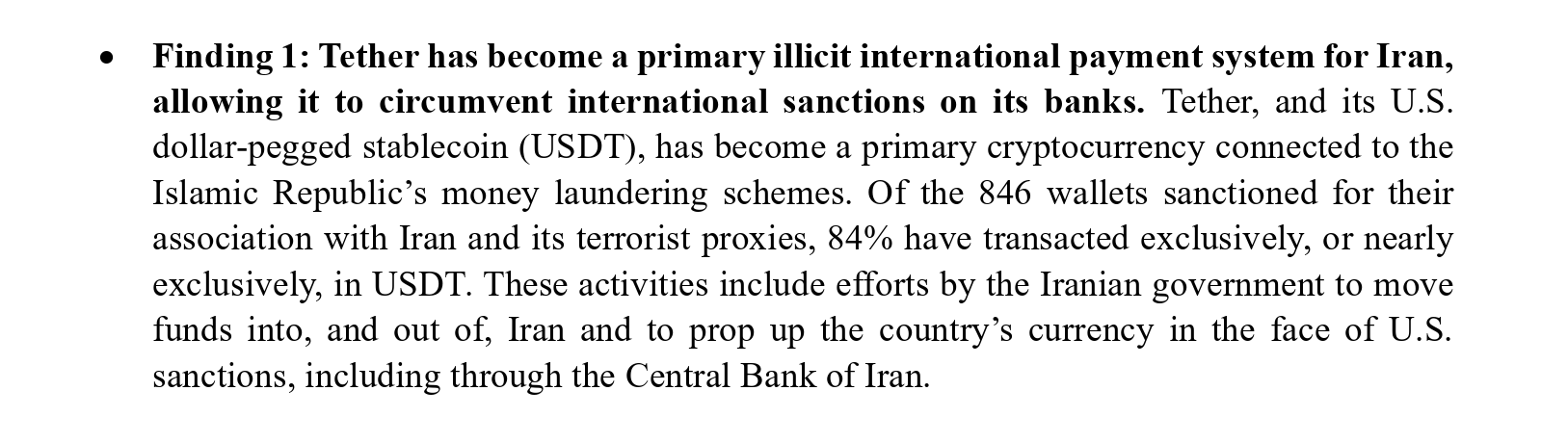
- The Scale of Shadow Banking: Recent congressional investigations, notably a Senate Homeland Security and Governmental Affairs Committee (HSGAC) report, revealed that 84% of 846 analyzed wallets targeted for sanctions or seizures relied on USDT as their primary digital currency.
- The Transaction Volume Boom: Tether’s usage metrics have skyrocketed, recording an astonishing $4.4 trillion in transaction volume during Q4 2025. This massive liquidity creates both economic vitality and regulatory vulnerability.
- Infrastructure Scaling: The introduction of high-speed scaling solutions like StableChain—capable of processing transactions with 0.7-second finality and targeting a throughput of 10,000 transactions per second—elevates the pressure on real-time compliance and monitoring systems.
2. Chronology: Tracing USDT’s Integration into Sanctioned Networks
To understand how Tether’s compliance mechanisms became a frontline defense, it is necessary to examine the timeline of how USDT evolved into a critical financial rail for nations cut off from the SWIFT banking system.
Pre-2021: The Pivot to Digital Assets
Following the reimposition of heavy U.S. economic sanctions on Iran, traditional banking routes for the nation’s energy exports and cross-border trade were systematically choked off. Iranian entities, state-backed enterprises, and associated proxies began searching for liquid, censorship-resistant alternatives to settle international trade imbalances.
2021–2025: The Rise of the Iranian USDT Corridor
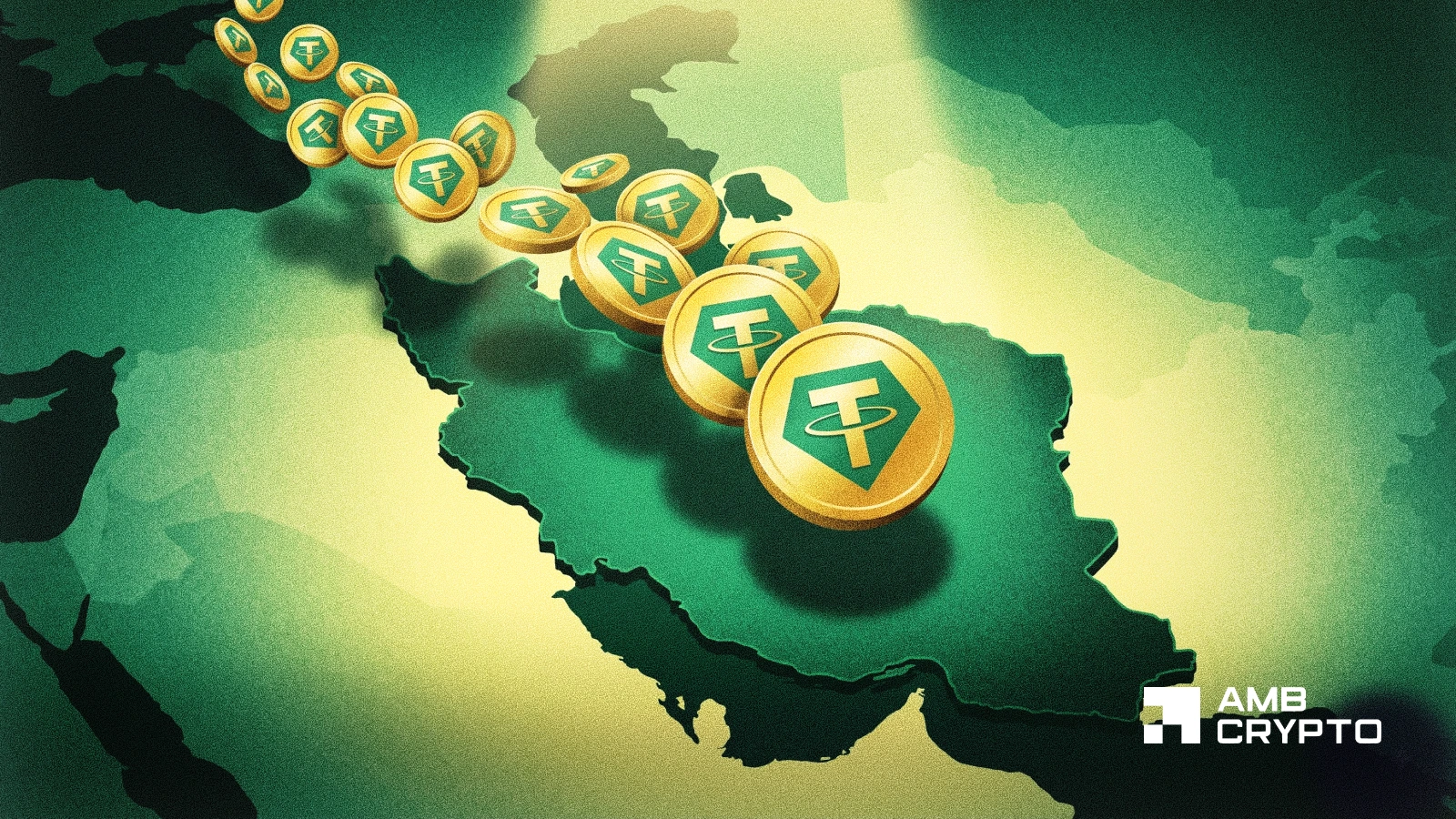
According to comprehensive blockchain intelligence and Senate findings, investigators successfully traced over $600 million in USDT moving through the accounts of two primary sanctioned Iranian oil smugglers between 2021 and 2025. During this period, stablecoins transitioned from experimental alternatives to mainstream infrastructure for state-adjacent entities.
Furthermore, data indicates that these transaction flows did not merely serve isolated merchants; they established direct financial bridges connecting Iranian state-linked banks to regional militant networks, including financial operations associated with Hizballah and the Houthis. What began as individual workaround strategies transformed into a cohesive, crypto-based shadow banking architecture.
Late 2025: Record Volumes and Regulatory Interventions
By the final quarter of 2025, USDT quarterly transaction volumes hit an unprecedented $4.4 trillion. This surge coincided with heightened scrutiny from U.S. lawmakers and intelligence agencies. Responding to mounting pressure, Tether executed high-profile asset freezes, culminating in the immobilization of the $550 million in Iranian-linked funds noted by the company.
3. Supporting Data: Unpacking the Numbers
The intersection of stablecoin utility and illicit finance is quantifiable through a series of striking data points compiled by regulatory watchdogs, blockchain analytics firms, and Senate reports:
- $550 Million: The total value of Iranian-linked USDT frozen by Tether following directives from a U.S. agency. This move marks one of the largest coordinated stablecoin interventions to date.
- 84%: The percentage of 846 wallets identified in Senate committee findings—all either sanctioned or targeted for seizure—that utilized USDT as their baseline currency. This underscores a heavy concentration of illicit or restricted capital within the Tether ecosystem.
- $600 Million Plus: The cumulative volume of USDT traced by investigators through accounts managed by just two sanctioned Iranian oil smugglers over a four-year window (2021–2025).
- $4.4 Trillion: Tether’s staggering Q4 2025 transaction volume. To put this into perspective, Tether’s quarterly throughput rivals or exceeds the payment volumes of traditional global financial giants, making manual or reactive compliance increasingly difficult.
- 10,000 TPS Target: The ambitious transaction processing capacity set for StableChain, designed to deliver ultra-fast settlements with sub-second finality.
4. Official Responses: Defending Transparency and Centralized Control
The executive leadership at Tether has consistently defended the company’s cooperative approach toward law enforcement, framing centralized oversight as a necessary feature of a responsible financial network.
Weighing in on the debate, Tether CEO Paolo Ardoino addressed the inherent paradox of blockchain surveillance:
"Public blockchains provide visibility for investigators where cash does not."
Ardoino has repeatedly emphasized that unlike physical cash—which is notoriously difficult to track across borders once withdrawn from a banking system—public ledgers create an immutable, permanent record of transactions. He clarified that Tether’s policy is to actively assist law enforcement agencies worldwide whenever they are provided with "credible information" substantiating illicit activity or sanctions violations.
This stance represents a delicate balancing act for the issuer. On one hand, Tether must project reliability and compliance to appease Western regulators who view unmonitored stablecoins as a national security threat. On the other hand, the company must maintain the trust of millions of legitimate users across emerging markets who rely on USDT as a hedge against hyperinflation and a tool for everyday commerce, without alienating them over fears of overreaching censorship.
5. Implications: The Future of Stablecoin Compliance and StableChain
The convergence of massive transaction volumes, state-level sanctions evasion, and high-speed blockchain infrastructure carries profound implications for the future of the digital asset industry.
The Issuer as the Primary Gatekeeper
Because public blockchains are permissionless at the network layer—meaning anyone can deploy a wallet or transfer tokens without permission—preventing illicit finance falls heavily on centralized issuers. Tether’s freeze function serves as the ultimate circuit breaker. However, relying on an issuer-level kill switch raises philosophical questions within the crypto community regarding decentralization, censorship resistance, and the potential weaponization of private corporate policies by foreign governments.
The Speed vs. Compliance Dilemma
The introduction of high-performance ecosystems like StableChain introduces formidable operational hurdles. With transactions settling in a fraction of a second (0.7 seconds) and network throughput scaling toward 10,000 transactions per second, traditional compliance loops cannot keep pace.
When capital can move instantaneously across borders in massive volumes, automated screening tools must operate at lightning speed. If transaction monitoring, real-time sanctions data feeds, and Tether’s freeze mechanisms fail to scale alongside network throughput, illicit actors will exploit the latency, moving funds out of harm’s way before compliance departments can flag them.
Regulatory Pressures Ahead
As USDT deepens its footprint as a global shadow banking rail for sanctioned jurisdictions, regulatory bodies in the United States, Europe, and Asia are likely to intensify their scrutiny of stablecoin issuers. Rather than banning stablecoins outright, regulators may demand stricter, institutional-grade compliance frameworks, mandatory wallet pre-screening protocols, and more transparent auditing of freeze requests.
Ultimately, Tether’s ability to successfully navigate these headwinds will determine not only its own corporate survival but also shape the regulatory landscape for the entire digital economy. The path forward requires proving that unprecedented financial speed and robust national security compliance can coexist on a shared decentralized ledger.
