

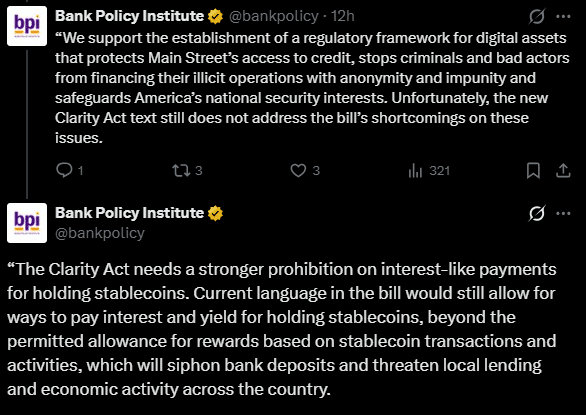
The legislative future of the U.S. crypto sector hangs in the balance as the proposed CLARITY Act faces mounting opposition from the traditional banking establishment and a fractured Senate. On July 23, 2026, the Bank Policy Institute (BPI), a powerful trade group representing the nation’s leading financial institutions, issued a formal statement flagging significant "shortcomings" within the latest draft of the bill. This development has injected new volatility into the legislative process, casting doubt on whether the landmark crypto regulation can clear the Senate’s high 60-vote threshold before the impending August recess.
The Core Conflict: Stablecoin Yields and Illicit Finance
At the heart of the BPI’s opposition is a fundamental disagreement over stablecoin mechanics. The banking industry has long viewed the emergence of stablecoins as a potential threat to traditional deposits, fearing that the ability to earn yield on digital assets could trigger widespread capital flight from regulated banks.
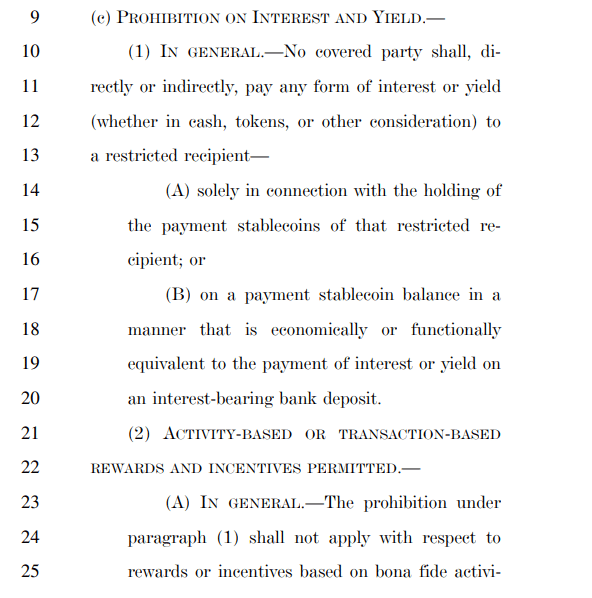
The current draft of the CLARITY Act attempts to strike a delicate balance through Section 404, which proposes a compromise: it permits incentives based on active account usage while banning passive yield generated from idle balances. However, for the BPI and its allies in the banking sector, this compromise is insufficient. The industry had lobbied for a total, unconditional ban on any form of stablecoin yield, arguing that even limited incentives create an uneven playing field that favors crypto-native platforms over traditional, highly regulated depository institutions.
Furthermore, the BPI has raised alarms regarding the bill’s "illicit finance provisions," suggesting that the current language fails to provide the robust oversight necessary to prevent money laundering and terrorism financing. By signaling that the bill needs to be "strengthened" in these areas, the BPI has effectively provided a roadmap for lawmakers who are skeptical of the crypto industry’s rapid expansion.
Chronology of a Legislative Standoff
The path to the current stalemate has been marked by a series of political hurdles and tragic circumstances that have reshaped the Senate’s internal arithmetic.
- Early July 2026: Initial optimism surrounded the CLARITY Act as lawmakers began circulating a draft aimed at providing regulatory certainty for stablecoin issuers and digital asset service providers.
- Mid-July 2026: The passing of Senator Lindsey Graham reduced the Republican caucus to 53 members. Simultaneously, the extended health-related absence of Senator Mitch McConnell further hampered the GOP’s voting capacity, bringing their effective headcount to 51.
- July 23, 2026: The Bank Policy Institute officially breaks its silence, criticizing the bill’s yield provisions and illicit finance controls.
- Late July 2026: Influential Republican senators, including John Curtis (R-Utah) and John Cornyn (R-Texas), signaled their alignment with the BPI’s concerns. This shift in stance threatens to drop Republican support to 49, making the bill’s path to 60 votes increasingly treacherous.
- July 24, 2026: Senate Majority Leader John Thune publicly questioned the feasibility of passing the bill before the August recess, noting that the legislative calendar is becoming impossibly tight.
Supporting Data and Market Sentiment
The skepticism regarding the CLARITY Act is not confined to the halls of Congress; it is being reflected in real-time market data. Prediction markets, which often serve as a barometer for legislative success, showed a sharp decline in the probability of the bill’s passage. On July 24, market expectations dropped to 32%, a significant cooling from previous weeks when proponents felt that a breakthrough was imminent.
The Senate math is unforgiving. To reach the 60-vote threshold required to overcome potential filibusters, the GOP needs a unified front and at least 11 Democratic votes. However, pro-crypto Democrats, such as Senators Angela Alsobrooks and Ruben Gallego, have publicly criticized the bill. Their opposition centers on the argument that the legislation’s current framework lacks the "teeth" required for ethical oversight and anti-money laundering enforcement. Consequently, the coalition needed to pass the bill is currently non-existent, and the window for negotiation is rapidly closing.
Official Responses and the "Ethics" Debate
The tension between the White House and Senate leadership has reached a boiling point. White House Chief Crypto Advisor Patrick Witt has taken an aggressive stance, urging Majority Leader Thune to force a vote regardless of Democratic consensus. Witt argues that the administration has successfully integrated a robust ethics provision into the draft, intended specifically to address the concerns raised by the Democratic caucus.
"You’d be waiting forever," Witt remarked when pressed on the prospect of securing total bipartisan agreement. He maintains that the current version of the bill represents a historic achievement in legislative craft, one that balances innovation with the strict requirements of financial integrity.
However, Leader Thune remains cautious, prioritizing the reality of the floor schedule over political posturing. "I don’t think we’ll be able to get them done," Thune stated regarding the pre-recess timeline. "I would like to get at least Clarity started. We’ll see where the votes are." This disconnect between the White House’s urgency and the Senate’s procedural reality underscores the difficulty of passing complex, industry-shaping legislation in a polarized environment.
Implications for the Crypto Industry
The failure of the CLARITY Act to pass before the August recess would have profound implications for the U.S. digital asset ecosystem.
1. Regulatory Uncertainty
Without a federal framework, the crypto industry will remain in a state of "regulation by enforcement." As the SEC and other agencies continue to pursue litigation against various projects, the lack of clear statutory guidelines will continue to hamper institutional adoption and discourage long-term investment.
2. Capital Flight and Innovation Stagnation
If the banking industry succeeds in its lobbying efforts to maintain a strict stance on yield, the U.S. risks losing its competitive edge. Innovators may relocate to jurisdictions with more flexible or clearer stablecoin regulations, such as the European Union or Singapore. The "capital flight" that banks fear may, ironically, be accelerated by the very regulations designed to prevent it, as domestic players look abroad for a more stable regulatory environment.
3. The Future of Institutional Crypto
The banking sector’s involvement in this debate signals that the "crypto-versus-bank" era is evolving into a "crypto-within-banking" era. If the BPI continues to insist on stringent, potentially prohibitive, standards, the integration of blockchain technology into traditional finance will likely slow. Conversely, if a compromise is found that satisfies the BPI’s demands for risk mitigation while providing enough flexibility for stablecoin issuers, the U.S. could witness a surge in legitimate, bank-integrated digital asset services.
Conclusion: A Race Against Time
The next two weeks are critical. The CLARITY Act is currently caught in a classic Washington trap: the competing interests of a powerful financial lobby, a slim and divided Senate majority, and an administration desperate to claim a legislative win before the election cycle intensifies.
If the bill fails to gain momentum before the August recess, most analysts agree it will likely be shelved indefinitely. The legislative window is closing, and for the crypto industry, the cost of this inaction could be years of continued uncertainty. Whether the Senate can bridge the divide on stablecoin yields and ethics remains the singular question that will define the regulatory future of digital assets in the United States. For now, all eyes remain on the floor of the Senate, waiting to see if leadership will force a vote that could either solidify the industry’s future or leave it to navigate the murky waters of existing, outdated regulations.
