The Ethereum ecosystem, often lauded for its robust decentralized infrastructure, is currently grappling with the fallout of another high-profile project failure. Blast, a Layer 2 (L2) scaling solution that once captured the imagination—and billions of dollars—of the crypto community, has officially announced it will cease operations by the end of October 2026. The move marks a definitive end to a project that, at its peak, was hailed as a revolutionary approach to native yield generation, but which now finds itself at the center of a vitriolic debate regarding transparency, sustainability, and the ethics of decentralized finance (DeFi).
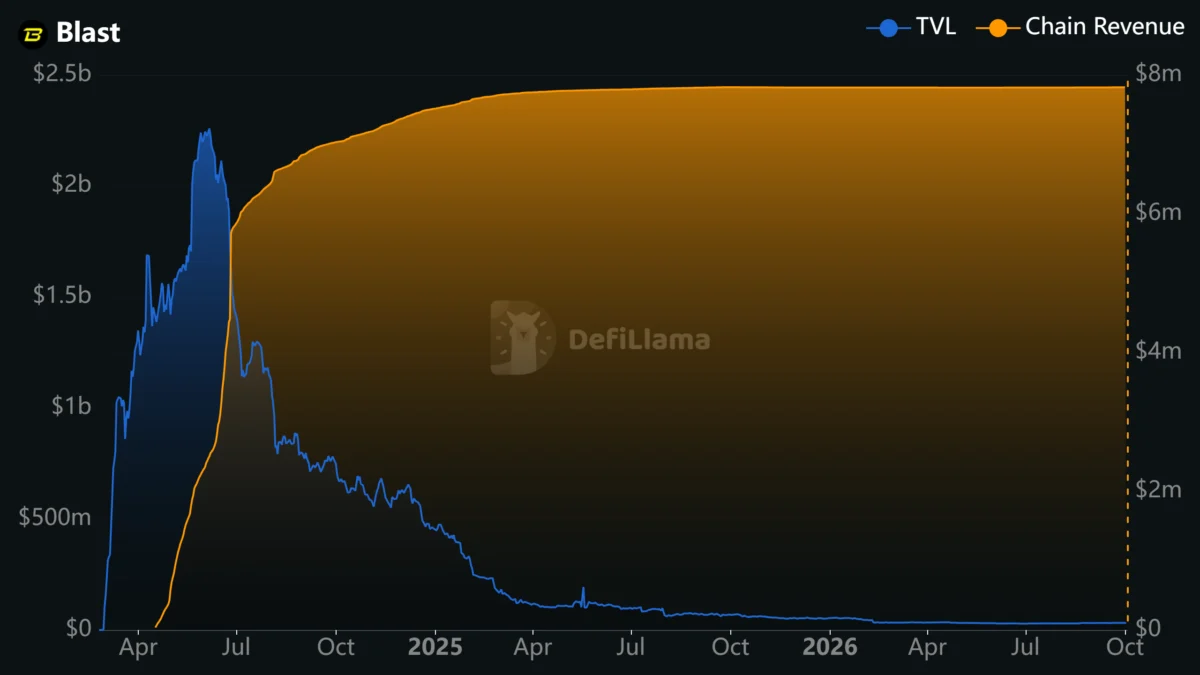
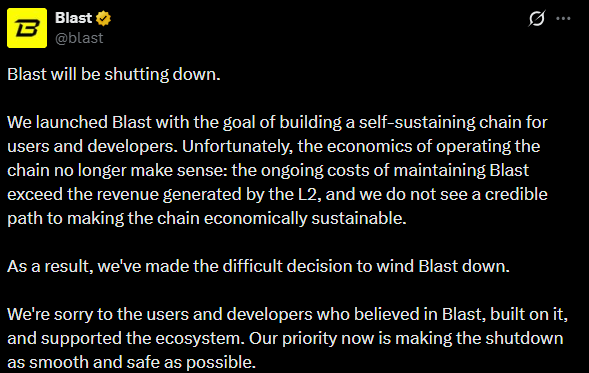
The team behind Blast cited insurmountable operational costs and a lack of a “credible path” to long-term economic sustainability as the primary drivers for the shutdown. As the deadline for the final withdrawal of assets looms, the industry is left to dissect how a platform that once commanded a Total Value Locked (TVL) of over $2.4 billion spiraled into obscurity and resentment.
The Chronology of a Slow-Motion Exit
The trajectory of Blast has been anything but conventional. Launched with significant fanfare, the protocol sought to distinguish itself by offering native yield on Ethereum and stablecoins, attracting massive capital inflows during its initial hype cycle. However, the cracks in the foundation began to appear early.
2024: The Era of Hyper-Growth
In mid-2024, Blast stood as a titan in the L2 space. Investors were drawn to the promise of "automatic" yield, resulting in a staggering $2.4 billion in TVL. The project benefited from the general market fervor, yet it was precisely this rapid growth that many analysts now point to as the beginning of the end. By prioritizing aggressive liquidity acquisition over long-term utility, the protocol created an ecosystem that was inherently fragile.
2025: The Revenue Stagnation
By early 2025, data analytics began to paint a grim picture. Cumulative revenue across the chain flattened, signaling that while capital was sitting in the protocol, it was not being actively used to generate meaningful economic activity. For nearly two years, the chain functioned as a stagnant vault rather than a thriving L2 ecosystem.
2026: The Final Countdown
The decline accelerated throughout 2026. As the crypto landscape shifted, users began to migrate elsewhere, and the TVL cratered by over 90%, dropping from its multi-billion-dollar high to a mere $32 million. With operational costs continuing to outpace the negligible revenue generated by the network, the writing was on the wall. On October 3, 2026, the team officially confirmed that the "economics of operating the chain no longer make sense," setting the stage for a final shutdown on October 26, 2026.
Supporting Data: A Statistical Analysis of Decline
The failure of Blast is not merely a narrative of poor management; it is a case study in the danger of metrics-driven, rather than value-driven, development.
TVL and Revenue Decay
DeFiLlama data confirms that the collapse was not an overnight event but a slow bleed. The drop from $2.4 billion to $32 million represents one of the most significant value erosions in the history of L2 networks. This loss of faith was mirrored by the performance of the Blast token, which plummeted from a peak of $0.80 in late 2024 to a dismal $0.02 in October 2026—a 98% devaluation that has left retail investors reeling.
The Comparison to Industry Trends
Blast is not an isolated incident. The 2026 calendar year has been characterized by a broader "market cleansing." Platforms like BitMart and BitMEX have also shuttered or significantly restructured, citing the twin pressures of overwhelming compliance costs and falling transaction volumes. However, unlike these platforms—which often cited regulatory or competitive pressures—Blast’s collapse is uniquely tied to its internal economic design and the perception of an "extraction-first" model.
Official Responses and the "Pacman" Controversy
Tieshun Roquerre, better known by his pseudonym "Pacman," has been the face of the project since its inception. His reaction to the collapse has been characterized by a blend of apologetic sentiment and professional detachment, which has done little to soothe the anger of the community.
In a statement posted to X (formerly Twitter), Roquerre remarked:
"I’m disappointed that we weren’t able to make the chain sustainable over the long term. But I’m grateful to the users, developers, and teams who helped give Blast its moment, even if its run was shorter than we had hoped."
This statement was met with immediate, visceral backlash. Critics argue that the phrasing shifts blame away from the leadership’s strategic failures. The most stinging rebuke came from Mike Dudas, founder of the venture capital firm 6th Man Ventures. Dudas did not mince words, labeling Roquerre "one of the greatest extractors of all time" and criticizing the project’s backers for failing to hold the leadership accountable.
The sentiment among the community is increasingly leaning toward the theory that Blast was never intended to be a long-term utility-driven chain, but rather a vehicle for the team to exit their own token positions—a practice commonly referred to as a "slow rug."
Technical Implications for Retail Users
As the October 26 deadline approaches, the technical burden of exiting the ecosystem falls squarely on the shoulders of the users. The team has stated that assets must be withdrawn to the Ethereum mainnet. For those with assets locked in the Lido staking pool, the team has indicated a one-week waiting period for withdrawals to be processed.
The Complexity of Exit
This is a point of significant friction. For experienced DeFi participants, navigating a direct withdrawal via the Ethereum mainnet is standard procedure. For the average retail user, however, the process is fraught with complexity. Interacting directly with smart contracts, managing gas fees, and ensuring that no "stranded" assets remain on the L2 is a high-bar requirement. There is growing concern that many small-scale investors may lose their remaining funds simply due to the technical difficulty of the withdrawal process once the official interface goes offline.
Wider Implications: Trust in the L2 Era
The collapse of Blast carries profound implications for the future of Ethereum scaling solutions.
1. The Death of "Yield Farming" Hype
The era of launching L2s based solely on the promise of high, native yield appears to be coming to an end. Investors have learned that if a protocol does not have a robust, organic application layer to support its activity, the yield is essentially a subsidy that cannot last forever.
2. The Responsibility of Venture Capital
The criticism directed at the backers of Blast underscores a growing demand for accountability in the VC space. When high-profile firms back projects that appear to prioritize token extraction over sustainable development, the credibility of the entire ecosystem is damaged. We are likely to see increased scrutiny of project founders and their past performance records in the future.
3. Regulatory and Ethical Scrutiny
While the shutdown is being framed as an "economic" decision, the persistent rumors of a "slow rug" suggest that the industry is becoming increasingly sensitive to the optics of team exits. Future projects will face greater pressure to prove their sustainability and provide clear, transparent roadmaps that don’t rely on artificial liquidity.
Conclusion: A Cautionary Tale
The story of Blast is a stark reminder of the volatility inherent in the crypto markets. It serves as a cautionary tale for both developers and investors: a project that relies on hype rather than foundational utility will eventually run out of runway. As the final assets are withdrawn and the Blast chain goes dark, the industry must ask itself whether it has truly learned from the cycle of over-promotion and eventual abandonment. For now, the investors left holding the bag are the ones paying the price for the industry’s collective failure to demand better.