

By Tech & Gaming Desk
Published: January 2025
Main Facts
The mobile gaming landscape is on the brink of a profound structural shift. After three years of clandestine, meticulous development, the studio behind the upcoming play-to-earn mobile Massive Multiplayer Online Role-Playing Game (MMORPG), Chaos on the Chains, has announced that it is entering the final stretch of production ahead of its slated release this year.
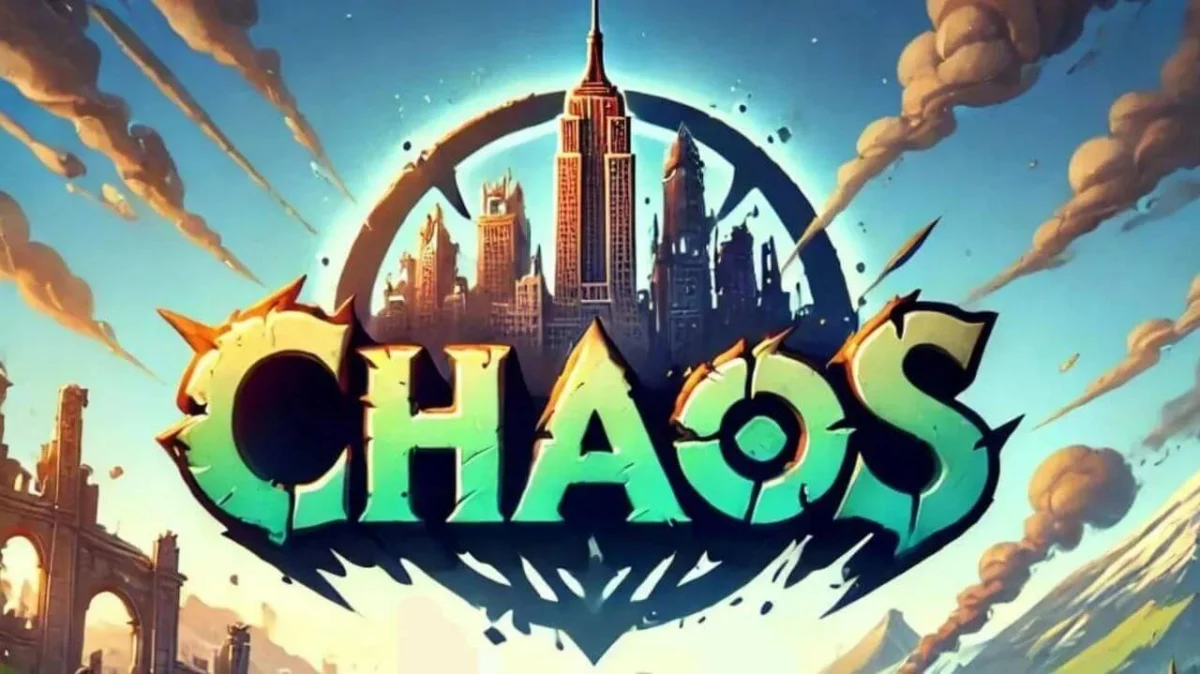
Positioned as a genre-defining project, the title seeks to bridge the gap between digital entertainment and physical reality. By weaving together augmented reality (AR), global positioning systems (GPS), artificial intelligence (AI), and blockchain technology within a stylized low-poly aesthetic, Chaos on the Chains attempts something few mobile titles have successfully scaled: a persistent, multi-era universe where a player’s literal neighborhood serves as a battleground for global empire-building.
At the core of the experience is an intricate fusion of strategic gameplay, an open-world narrative, and a multi-crypto chain economy. Players do not merely log into a static server; they step outside, open their mobile devices, and use real-world geolocation to claim territory, forge alliances, and engage in tactical warfare. As the project approaches its highly anticipated Token Generation Event (TGE), early interest is surging, driven by promises of exclusive in-game assets, priority expansions, and an evolving narrative that collapses the boundaries between past, present, and future.
Chronology: The Three-Year Journey to Launch
To understand the weight of the upcoming release, one must trace the developmental arc that brought Chaos on the Chains to the precipice of its commercial debut.
Phase 1: Conceptualization and Foundation (2022)
The project began as an ambitious thought experiment among veteran developers and blockchain architects: How could the compulsive, walk-and-explore mechanics popularized by titles like Pokémon GO be married with the deep, macroeconomic strategy of traditional PC-based MMORPGs?
In 2022, the core team laid out the technical framework. They established the foundational lore: a cataclysmic meteorite shatters reality itself, rupturing the fabric of space-time and crashing distinct eras—ranging from ancient mythological epochs to distant, cyberpunk futures—into a single, chaotic continuum. During this foundational year, the team focused heavily on spatial computing frameworks, mapping out how GPS data could be translated into defensible in-game strongholds without compromising player safety or server stability.
Phase 2: Tech-Stack Integration and Closed Alpha (2023–2024)
With the narrative spine established, the middle years of development were consumed by technical integration. Merging AR rendering with real-time AI non-player characters (NPCs) on standard mobile hardware proved to be a formidable engineering hurdle.
During 2023, the studio transitioned from basic wireframing to a stylized low-poly art direction. This artistic choice was strategic: it allowed the game to render complex, real-time AR overlays and massive player-versus-player (PvP) skirmishes across thousands of devices without triggering catastrophic battery drain or overheating.
By mid-2024, the team initiated closed alpha testing. A small cohort of testers provided critical feedback on balance, combat loops, and the responsiveness of the multi-crypto chain economy. These private sessions also tested the game’s unique live-events feature, wherein developers could dynamically drop into the game world as historical figures or rogue entities to challenge unsuspecting players.
Phase 3: The Final Stretch and TGE Horizon (2025–Present)
Entering 2025, Chaos on the Chains has officially entered its home stretch. The focus has shifted from core engine development to polish, community onboarding, and economic balancing. With the Token Generation Event (TGE) looming on the horizon, the studio is opening its doors to a wider audience, transitioning from a private, insular development cycle to a community-driven rollout designed to pressure-test server loads and decentralized asset distribution channels.
Supporting Data: Technology and Economic Architecture
The ambition of Chaos on the Chains relies on a complex web of modern technologies. Examining the structural pillars reveals how the game intends to sustain its ecosystem:
- Spatial Computing & Geolocation: Utilizing high-precision GPS APIs, the game transforms urban landscapes, parks, and suburban streets into strategic nodes. Capturing a territory often requires physical presence, turning routine commutes or evening walks into tactical expeditions.
- Artificial Intelligence Integration: Unlike static MMORPG mobs, the NPCs in Chaos on the Chains leverage dynamic AI models that adapt to player strategies. These entities learn from regional combat patterns, adjusting defensive formations and counter-offensives based on how local player factions operate.
- The Multi-Crypto Chain Economy: Operating on a multi-chain architecture, the game’s internal economy is designed to insulate players from the liquidity bottlenecks of any single blockchain network. Assets, resources, and governance tokens can be traded, staked, or utilized across supported chains, minimizing gas fees and maximizing trading efficiency.
- Episodic Narrative Seasons: Content delivery is structured around seasonal arcs. Each season introduces fresh storylines, quests, and structural shifts in the game world, ensuring that early-game territory holds do not become insurmountable monopolies for veteran players.
Official Responses and Developer Insights
The development team has maintained an active dialogue with the gaming community through social channels, emphasizing that Chaos on the Chains is designed by gamers for gamers who crave mechanical depth on mobile platforms.
In recent briefing statements released via their official communication channels, representatives highlighted the immersive philosophy driving the project:
"For three years, our goal has been to eliminate the barrier between the player and the game world. When you walk down your street, you shouldn’t just see concrete and buildings; you should see the sprawling borders of your empire waiting to be expanded. By blending AR, AI, and true digital ownership through blockchain, we aren’t just building a game—we are building a living, breathing alternate reality."
Furthermore, the team has underscored the interactive nature of their live-ops strategy. The inclusion of developer-led avatars—where studio leads, designers, and even the CEO occasionally manifest as high-tier bosses within the global map—is intended to foster a tight-knit, unpredictable community culture reminiscent of early tabletop role-playing games where the Dungeon Master actively shapes the evening’s chaos.
Implications for the Mobile and Web3 Gaming Sectors
The upcoming release of Chaos on the Chains arrives at a critical juncture for both the mobile gaming industry and the broader Web3 ecosystem.
1. Elevating Mobile Play-to-Earn Standards
For years, the "play-to-earn" (P2E) or "Web3 gaming" sector has faced skepticism regarding gameplay quality. Many early titles prioritized tokenomics over engaging mechanics, leading to rapid user churn once financial incentives dwindled. Chaos on the Chains represents a philosophical correction. By anchoring its value proposition in a robust, high-fidelity MMORPG framework with AR and AI integration, the project places fun and immersion first, treating blockchain infrastructure as an invisible engine rather than the primary product. If successful, it could provide a blueprint for how future Web3 games should balance entertainment value with decentralized economics.
2. Mainstreaming Location-Based Strategy
While Pokémon GO proved the viability of AR and GPS in mobile gaming, the genre has largely remained anchored in casual collection mechanics rather than deep, competitive strategy. Chaos on the Chains pushes location-based gaming into hardcore territory. By introducing guild wars, territorial invasions, and resource management into real-world geography, it tests whether casual and mid-core mobile users are ready to embrace aggressive, persistent-world strategy on their daily commutes.
3. Community-Centric Onboarding via TGE
The impending Token Generation Event serves as a stress test for decentralized community building. By offering early adopters priority access, exclusive gear, and governance weighting, the project is attempting to cultivate a loyal vanguard. How the market responds to the TGE will likely influence investor confidence in similar hybrid Web3 mobile titles throughout the remainder of the year.
Conclusion and How to Participate
As Chaos on the Chains races toward its official launch later this year, the gaming community stands on the precipice of a new era in interactive entertainment. Whether players choose to operate as stealthy raiders navigating urban alleyways or frontline commanders orchestrating massive multi-realm invasions, the promise of a shattered reality where past, present, and future collide is drawing closer to realization.
For those looking to secure their place in the vanguard before the global rollout, participation in the upcoming Token Generation Event offers early access to exclusive perks and ecosystem governance.
- Official Website: www.chaosonthechains.com
- X (formerly Twitter): @Chaos_on_X
- Official Telegram Community: t.me/chaosonthechains
