

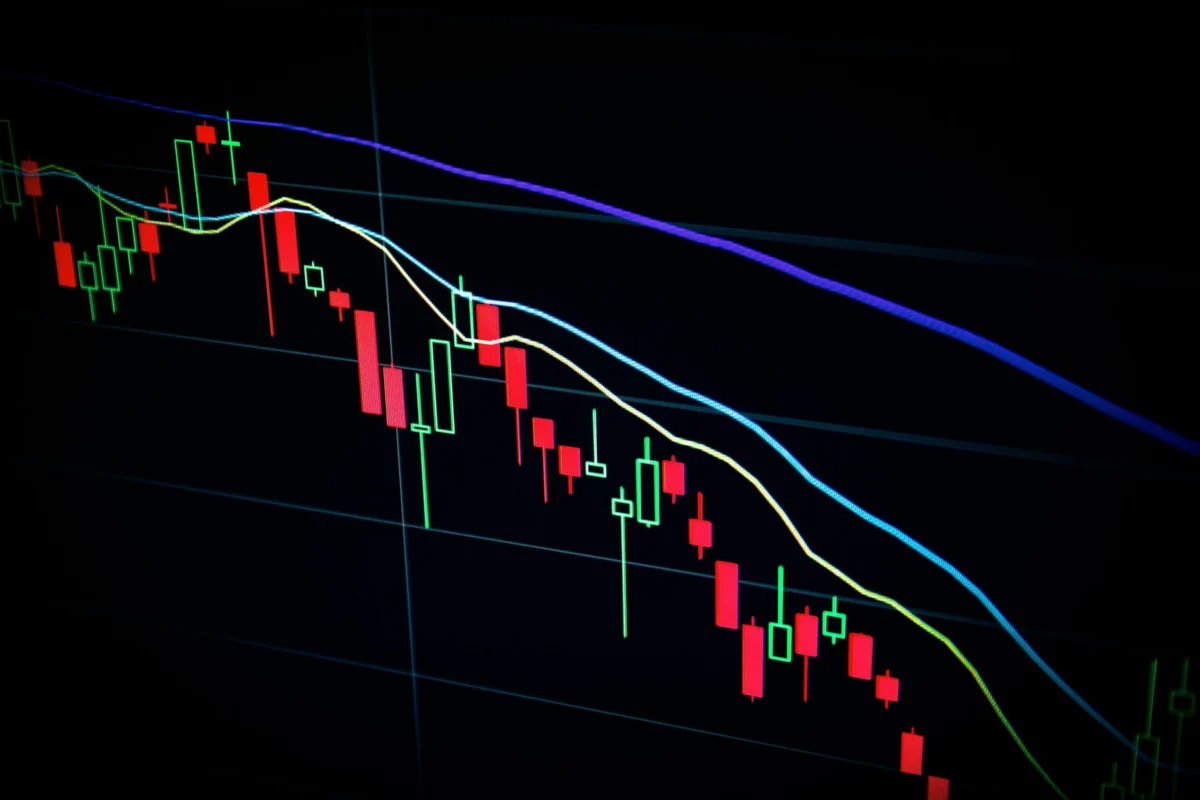
Ethereum, the world’s second-largest cryptocurrency by market capitalization, currently finds itself in a state of profound technical and structural dissonance. Market participants are grappling with two diametrically opposed signals: a fragile, range-bound price chart hovering near the critical $1,500 support level, and a thriving on-chain ecosystem where staking deposits on the Beacon Chain are surging toward historic highs. This article explores the nuances of this "Ethereum Paradox," examining how long-term supply contraction is colliding with short-term market apathy.
Main Facts: A Tale of Two Markets
The current state of Ethereum is characterized by a stark divide between spot market sentiment and long-term protocol adoption. On the price front, ETH remains anchored to a precarious $1,500 threshold. This level acts as a psychological "no-man’s-land," where traders remain fearful of potential liquidation cascades and institutional sell-offs.
Conversely, the on-chain data paints a radically different picture. Despite the lack of bullish momentum in price, the Beacon Chain continues to see a steady, aggressive accumulation of staked ETH. This phenomenon is effectively removing significant portions of the circulating supply from liquid exchange environments. By locking up these assets, long-term holders are signaling a fundamental conviction in the network’s long-term utility, even as the speculative market remains hesitant.
Chronology: The Evolution of the Staking Surge
To understand why this is occurring, one must look at the timeline of the Proof-of-Stake (PoS) transition and the subsequent evolution of the staking landscape.
- The Beacon Chain Genesis: Since the inception of the Beacon Chain, Ethereum has been on a trajectory toward a lower-inflation, high-security model.
- Post-Merge Stability: Following the transition from Proof-of-Work to Proof-of-Stake, the "Triple Halving" narrative—the idea that staking would drastically reduce the net issuance of ETH—gained significant traction.
- The Withdrawal Enablement Phase: Critics once argued that enabling withdrawals would trigger a massive sell-off of staked ETH. History has proven the contrary: the market displayed remarkable resilience, with staking inflow rates often outpacing outflow requests.
- The Current "Liquidity Crunch" Period: In recent weeks, we have seen a plateau in price action while staking deposits have accelerated. This confirms a trend of "HODLing" among validators, as they prioritize yield generation over short-term speculative trading.
Supporting Data: The Mechanics of Supply and Demand
The data provided by Etherscan and various on-chain analytics platforms reveals a compelling story. When ETH is deposited into a staking contract, it is essentially removed from the order books of centralized exchanges (CEXs). While staked assets are not "burned" or permanently destroyed, they are subject to withdrawal queues and epoch-based waiting periods.
The Liquidity Deficit
Liquidity is the lifeblood of price discovery. When supply is easily accessible on exchanges, it is highly sensitive to sell pressure. However, as the percentage of staked ETH increases, the "float"—the portion of supply available for active trading—shrinks.
- Supply Buffer: This reduction in liquid supply creates a "structural buffer." In theory, if demand were to suddenly spike, there would be fewer sell-side participants available to suppress the price, potentially leading to a more aggressive upward revaluation.
- Correlation Breakdown: Historically, we expect a direct correlation between supply reduction and price increases. However, the current market is proving that supply-side constraints are only half of the equation. Without a corresponding catalyst for buy-side demand, a reduction in supply merely leads to lower volume rather than higher prices.
Official Responses and Market Analysis
Industry experts and market analysts have been divided on the implications of this data. Some argue that the staking surge is a "hidden bull flag," suggesting that once the macro-economic environment stabilizes, Ethereum is primed for an explosive move upward. Others, more conservative in their assessment, warn against "forcing the squeeze story."
"Staking is not a magic wand for price action," notes the News Desk analysis. "It is a fundamental improvement in the asset’s utility and security, but it cannot override negative market sentiment or liquidity-draining macroeconomic policies."
The consensus among institutional analysts is that the current market is in a "wait-and-see" phase. Institutional investors are likely keeping their ETH staked to earn yield while they await clearer signals regarding interest rate policies and regulatory clarity. They are not dumping their assets, which explains the lack of a deep crash, but they are also not aggressively buying, which explains the lack of a breakout.
Implications: What Comes Next?
The tension between the staking surge and the $1,500 price floor presents three distinct scenarios for the coming quarters.
1. The Consolidation Scenario (Most Likely)
Ethereum continues to trade in a tight range. Staking deposits continue to rise, slowly tightening the supply. This creates a "coiling" effect. The market remains boring for short-term traders but highly attractive for long-term holders who are comfortable with the current volatility.
2. The Demand-Driven Breakout
If a major catalyst—such as an institutional adoption announcement or a positive shift in macroeconomic policy—triggers a surge in buying, the reduced liquid supply will act as a force multiplier. Because so much ETH is locked away, the market may find that even moderate buying pressure creates a sharp, sustained rally.
3. The Demand Failure Scenario
If market demand remains stagnant for an extended period, even a reduction in liquid supply cannot prevent a price drop. If external factors drive traders to seek liquidity, even some staked positions might be unqueued for withdrawal, adding to the sell-side pressure. In this case, the $1,500 support level could finally break, leading to a retest of lower support zones.
Conclusion: A Market Searching for a Floor
The Ethereum ecosystem is currently a case study in resilience versus stagnation. By locking up their assets, validators and long-term holders are essentially betting on the long-term viability of the network. They are providing the protocol with an incredible level of security and supply-side stability.
However, the market is currently shouting that supply alone is not enough. The price of Ethereum is currently being dictated by macroeconomic anxiety and a lack of fresh liquidity, rather than the internal mechanics of the staking protocol.
For the savvy investor, the lesson is clear: do not look at the price chart in a vacuum, and do not look at the on-chain data in a vacuum. Ethereum is currently a two-sided setup. The supply picture is improving fundamentally, even while the price action remains fragile. This tension is not a sign of failure; it is a sign of a market searching for its next equilibrium.
The next major move for Ethereum will require a confluence of both factors: the continued confidence of long-term stakers and a genuine, volume-backed return of buy-side demand. Until those two forces align, Ethereum will likely remain in this high-tension, low-volatility environment, serving as a battleground between those who see a structural bottom and those who fear a breakdown.
This report is based on information provided by Etherscan and ongoing market observations. It serves as an analysis of current market dynamics and should not be construed as financial advice.
Written by the News Desk; Edited by Samuel Rae.
