

The cryptocurrency market is currently defined by a profound paradox. While institutional giants like BlackRock and Fidelity have signaled a new era of mainstream adoption through Bitcoin spot ETF filings, the underlying market structure—characterized by plummeting liquidity and aggressive regulatory crackdowns—suggests a reality far more volatile than the current price action implies. As Bitcoin breaches the $30,000 threshold, investors are left to reconcile soaring optimism with a precarious macro-financial environment.
Main Facts: The ETF-Driven Resurgence
The digital asset landscape has witnessed a rapid shift in sentiment over the past three weeks. Following a period of stagnation, Bitcoin (BTC) has surged approximately 20%, reclaiming key psychological resistance levels, while Ethereum (ETH) has followed suit with a 16% rally, once again testing the $2,000 barrier.
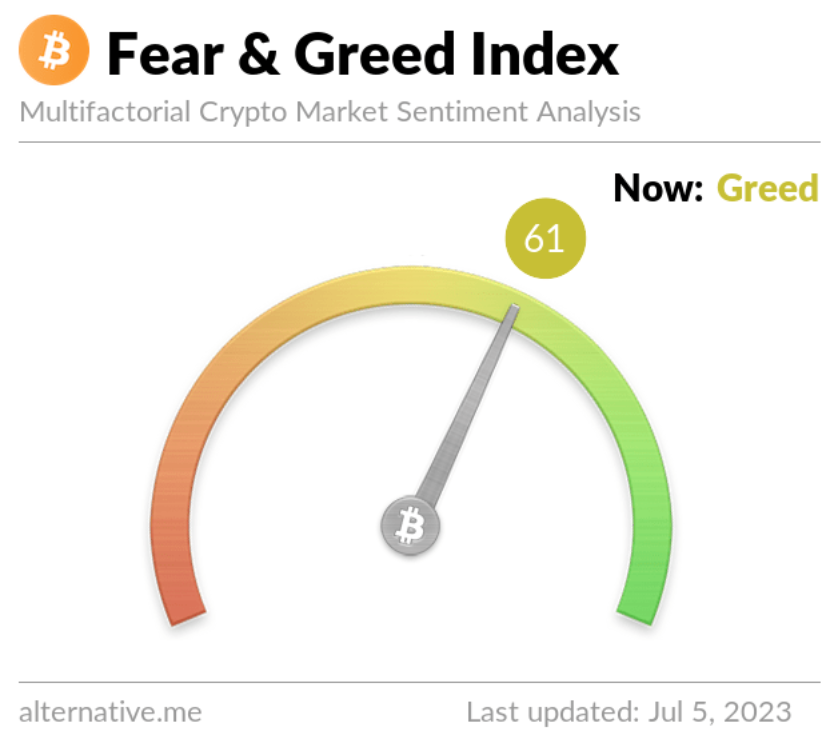
This rally is fundamentally rooted in institutional ambition. The filings for Bitcoin spot ETFs by BlackRock—the world’s largest asset manager—and Fidelity have acted as a catalyst for a "greed-heavy" market, with the Fear and Greed Index recently climbing to a score of 61. Furthermore, the launch of EDX Markets, a crypto exchange backed by heavyweight financial entities such as Schwab and Citadel Securities, has provided a veneer of traditional-finance legitimacy to the sector, offering trading pairs for BTC, ETH, Litecoin, and Bitcoin Cash.
However, the "institutional pivot" is not without friction. Reports from the Wall Street Journal indicate that the U.S. Securities and Exchange Commission (SEC) has deemed the initial ETF filings "inadequate." The regulatory body cited a lack of detail regarding "surveillance-sharing agreements"—a mandatory safeguard designed to prevent market manipulation. While CBOE and Nasdaq have moved to refile these applications, the development serves as a stark reminder that the road to a spot ETF remains fraught with historical precedent for rejection, including the SEC’s previous denial of Fidelity’s application in January 2022.
Chronology: A Month of Volatility
The trajectory of the last 30 days highlights the volatile intersection of innovation and law enforcement:
- Early June: The SEC initiates high-profile litigation against two of the industry’s most significant players: Binance and Coinbase.
- Mid-June: The Federal Reserve announces a pause in its interest rate hiking cycle; however, Chair Jerome Powell clarifies that this is a tactical pause rather than a pivot, signaling further tightening is likely.
- Late June: Institutional ETF filings from BlackRock and Fidelity trigger a sharp, counter-intuitive rally despite the mounting regulatory pressure.
- Early July: The market begins to grapple with the "inadequacy" of initial filings, forcing a second round of institutional engagement with the SEC.
Supporting Data: The Liquidity Crisis
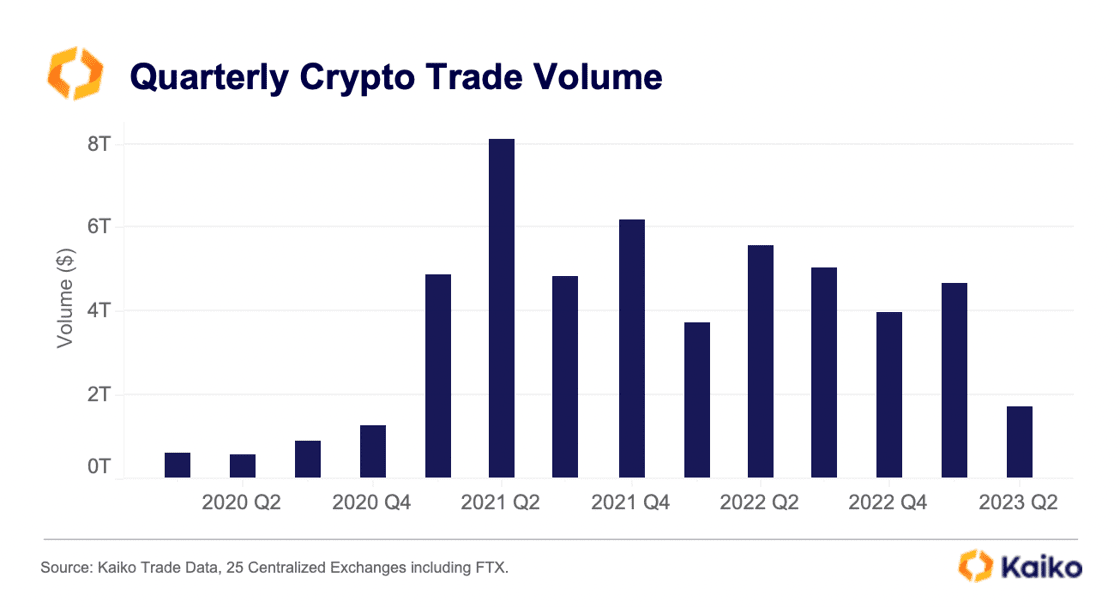
Beneath the surface of the price rally lies a concerning trend: the evaporation of market liquidity. According to data from Kaiko, trading volumes on centralized exchanges for the second quarter of 2023 hit their lowest levels since 2020.
The Stablecoin Drain
The health of a market is often measured by the "dry powder" available for deployment. The total balance of stablecoins held across centralized exchanges has plummeted by 60% over the last six months—representing a staggering $26 billion outflow. This suggests that the recent price increases are occurring in a "thin" market, where lower liquidity levels exacerbate both upside and downside volatility.
Derivatives vs. Spot Markets
While spot market volume has withered, derivatives markets have shown surprising resilience. Volume in the derivatives sector is currently trending higher than the levels seen in the latter half of 2022. This divergence suggests that professional traders and institutional hedgers remain active, even as retail participation in the spot market wanes under the weight of regulatory uncertainty.
Official Responses and Regulatory Landscape
The SEC’s dual-pronged attack on Binance and Coinbase represents a defining moment for the industry’s regulatory future.
The Binance Case
The charges against Binance are extensive, involving allegations of trading against customers, volume manipulation, and the circumvention of geographical restrictions. These charges align with the SEC’s long-standing skepticism regarding the exchange’s internal compliance structures.
The Coinbase Precedent
The case against Coinbase is arguably more existential for the broader industry. Because Coinbase is a publicly traded company that underwent an SEC-approved IPO in 2021, the current classification of several listed tokens as "securities" creates a significant legal contradiction. Industry experts are watching this case closely, as the outcome will dictate whether the SEC can unilaterally define the asset class without congressional intervention.
Despite these legal challenges, the market has displayed a "crypto-native" resilience, with many of the tokens explicitly named by the SEC as unregistered securities rising in value alongside Bitcoin. This irrational exuberance suggests that the market is either pricing in a long-term legal victory or is ignoring the regulatory reality altogether.
Implications for the Macroeconomic Horizon
Market participants are currently operating under the assumption that the Federal Reserve has reached the end of its tightening cycle. However, the data suggests otherwise. Fed futures currently indicate an 86% probability of a 25 basis point hike in the upcoming meeting, with only a 14% chance of a pause.
When compared to the probability metrics from one month ago, it is clear that the market’s bullish sentiment is not supported by a more "dovish" macro forecast. In fact, the likelihood of further rate hikes has only increased as the price of Bitcoin has climbed.
The Lag Effect
Monetary policy historically operates with a significant time lag. The U.S. economy has undergone one of the most aggressive tightening cycles in history, with rates moving from 0% to over 5%. As these higher rates begin to permeate the broader economy, the potential for a liquidity shock increases.
Conclusion: The "Crypto-Native" Risk
The recent surge in crypto assets is a testament to the market’s unique ability to decouple from macro-realities and regulatory warnings. However, investors must distinguish between the long-term potential of a spot Bitcoin ETF and the short-term reality of a liquidity-starved market.
The rally, while impressive in magnitude, lacks the depth of the 2020-2021 bull market. With stablecoin balances at multi-year lows and the SEC sharpening its focus on the primary gateways of the industry, the current environment is one of high sensitivity. If the spot ETFs are eventually approved, they may provide the necessary structural liquidity to stabilize the market. Until then, participants are navigating a landscape where sentiment is prone to rapid reversals, and where the "lag" of historical monetary tightening has yet to be fully realized.
As the industry moves into the second half of 2023, the question remains: is this a genuine turning point for institutional adoption, or merely a speculative spike in a vacuum of liquidity? History suggests that in the crypto sector, the truth usually lies somewhere in the volatile middle.
