

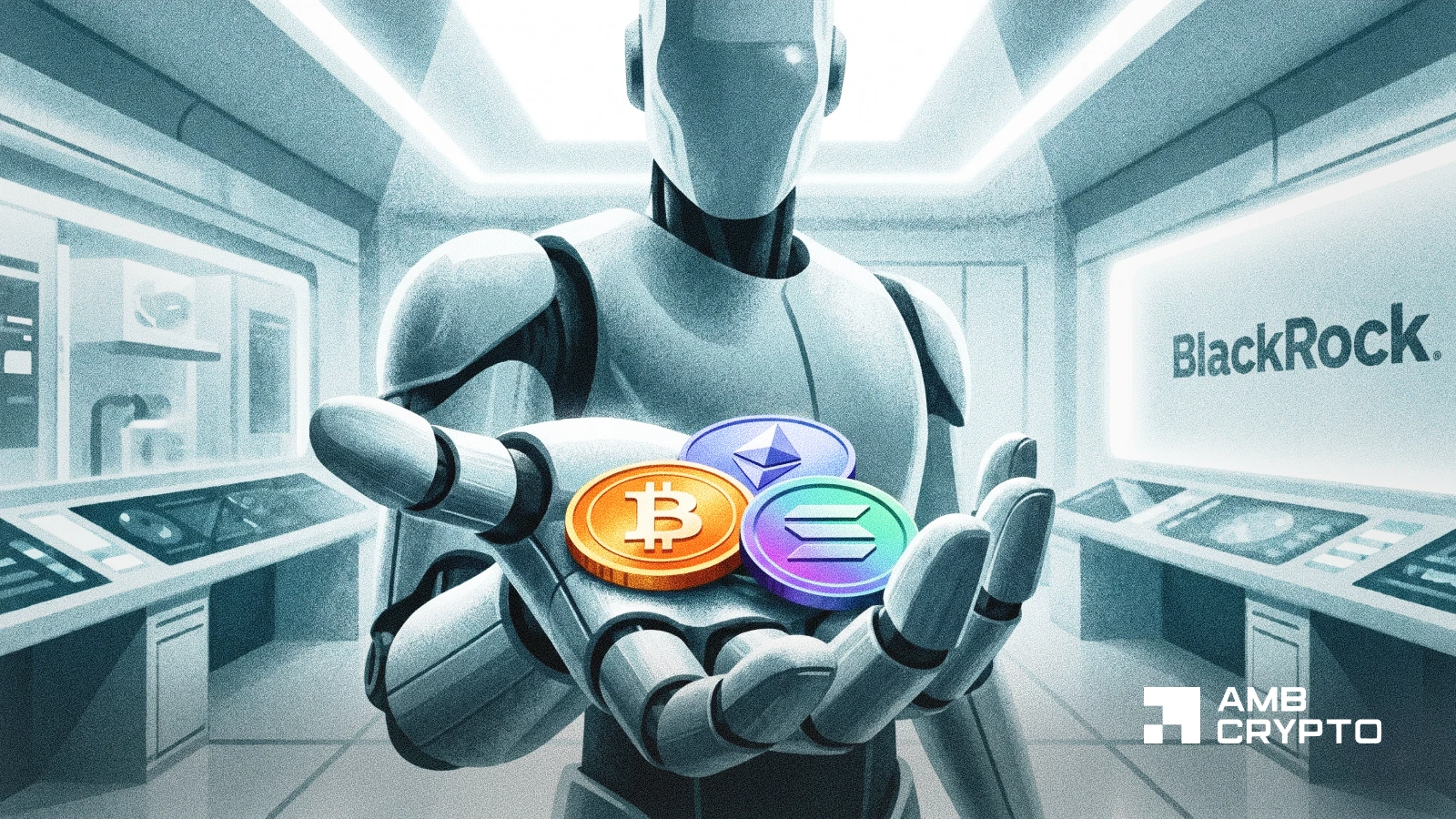
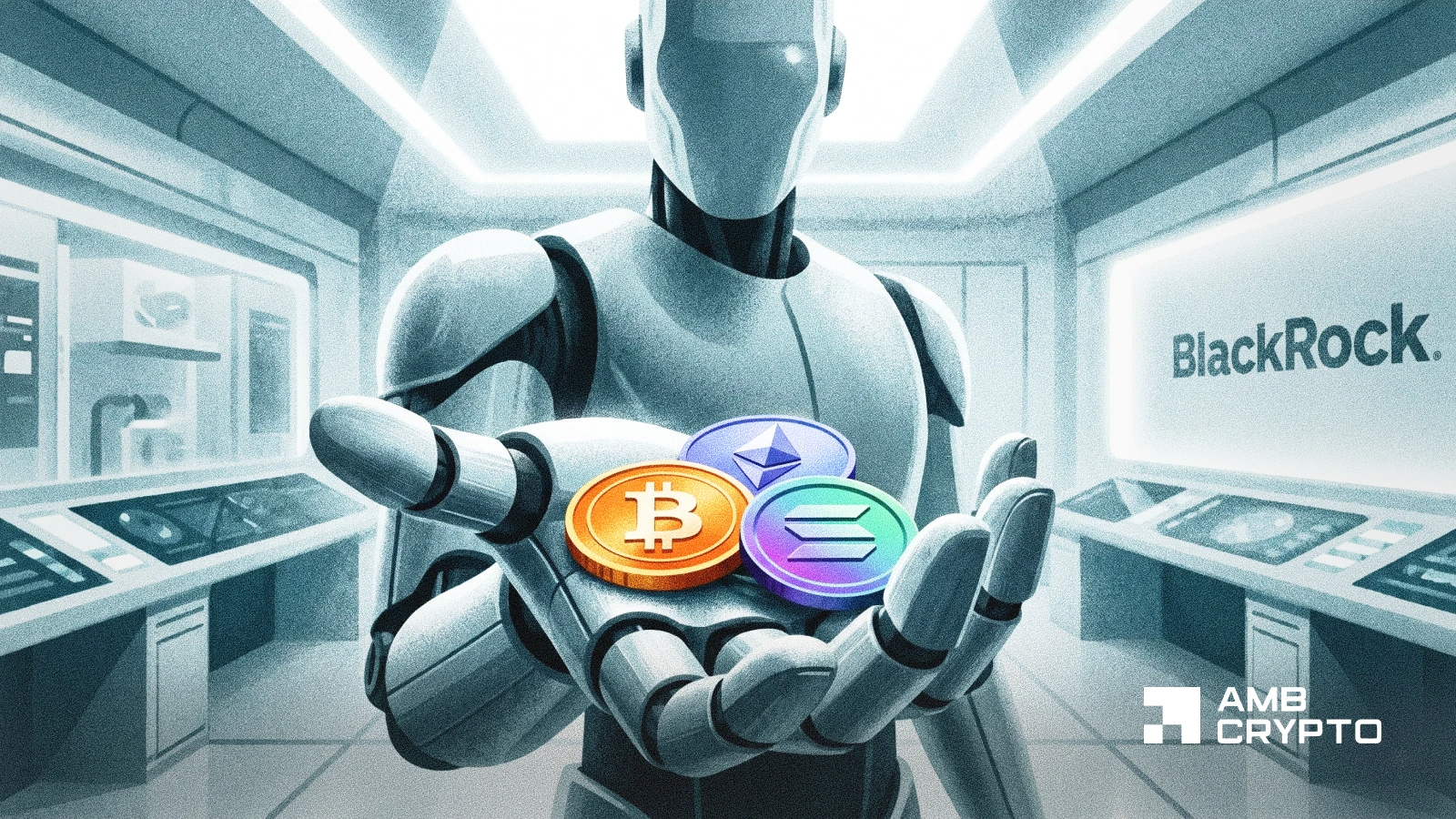
As artificial intelligence rapidly transitions from a tool of passive assistance to one of active economic participation, the world’s largest financial institutions are taking notice. In a comprehensive new research brief, asset management titan BlackRock has mapped out the profound ways in which artificial intelligence is set to reshape the digital asset ecosystem.
According to BlackRock’s analysis, the rise of autonomous AI agents will serve as a massive, organic catalyst for digital asset demand. As these sophisticated systems begin to execute independent economic tasks—ranging from micro-transactions and capital allocation to complex asset settlement—they are laying the groundwork for a brand-new paradigm often referred to as "machine finance."
Main Facts: The Intersection of Artificial Intelligence and Blockchain
At the core of BlackRock’s thesis is a fundamental shift in who is transacting. Traditional financial infrastructure was built by humans, for humans, operating within conventional banking hours and relying on manual identity verification, compliance checks, and authorization protocols. However, the proliferation of AI agents changes this equation entirely.
- Autonomous Economic Agents: Future economic activity will increasingly be driven by software agents capable of making independent financial decisions, purchasing resources, moving capital, and settling contracts without requiring human intervention or approval for every step.
- The Need for 24/7/365 Programmable Rails: Because AI agents operate continuously at lightning speeds, legacy banking rails—marked by batch processing, settlement delays, and geographic frictions—are fundamentally unequipped to handle machine-to-machine commerce.
- Stablecoins as the Baseline Infrastructure: Stablecoins have emerged as the primary transactional bridge for this digital economy, offering instant settlement, programmatic utility, and round-the-clock availability.
- Beyond Simple Payments: Beyond basic transactional currency, tokenized real-world assets (RWAs) will soon give AI systems direct access to yield-generating instruments, collateral markets, and decentralized liquidity pools.
Chronology: From Human-Centric Ledgers to Autonomous Economies
To understand the weight of BlackRock’s recent observations, it is vital to trace how the technological landscape has evolved to bring artificial intelligence and blockchain technology into alignment.
Phase 1: The Genesis of Programmable Money (2009–2020)
The introduction of Bitcoin and subsequent smart-contract platforms like Ethereum established the foundational concept of decentralized, programmable value. For over a decade, these networks were utilized almost exclusively by human actors trading, speculating, and experimenting with decentralized finance (DeFi).
Phase 2: The Stablecoin Boom and Institutional Awakening (2020–2025)
As the crypto ecosystem matured, fiat-pegged stablecoins transformed from niche trading tools into global settlement rails. By 2025, the utility of stablecoins became undeniable to traditional finance, culminating in an astonishing $11 trillion in adjusted transaction volume throughout the year. Concurrently, institutional giants like BlackRock began tokenizing money market funds and exploring blockchain rails for asset settlement.
Phase 3: The Generative AI Explosion (2023–2025)
Parallel to the growth of digital assets, the generative AI boom unlocked reasoning, planning, and execution capabilities in software. Large Language Models (LLMs) and specialized machine learning agents evolved from answering text prompts to executing multi-step digital workflows, including writing code, managing cloud infrastructure, and interacting with APIs.
Phase 4: The Convergence—The Era of Machine Finance (2026 and Beyond)
As highlighted by BlackRock’s latest research, 2026 marks the critical juncture where AI agency meets digital asset infrastructure. No longer confined to closed software environments, AI systems are now being provisioned with financial wallets, enabling them to pay for compute power, data sets, and API calls autonomously using digital native currencies.
Supporting Data: The Metrics Driving Machine Finance
While theoretical frameworks often dominate discussions surrounding nascent technologies, hard metrics underscore the rapid velocity at which stablecoins and digital assets are scaling to meet institutional and algorithmic demands.
- $11 Trillion Volume: In 2025 alone, adjusted stablecoin transaction volumes soared past $11 trillion. This staggering figure places stablecoin settlement volumes on par with, and in some metrics competitive against, traditional legacy payment networks.
- Frictionless Microtransactions: Traditional payment processors typically charge high percentage-plus-fixed fees (e.g., 2.9% + $0.30), making micro-payments economically unviable. AI agents frequently require pay-per-token or pay-per-query micropayments fractions of a cent in size—a task impossible on legacy rails, but seamless on high-throughput blockchain networks.
- Global Accessibility: Unlike regional banking systems constrained by SWIFT networks and local regulatory gatekeepers, digital asset rails are permissionless, global, and instantly accessible to any software application deployed anywhere in the world.
Official Responses and Industry Perspectives
BlackRock’s acknowledgment of machine finance highlights a broader institutional pivot toward viewing cryptocurrencies not merely as speculative investments, but as essential technological infrastructure for the next generation of the internet.
Market analysts and fintech leaders have increasingly echoed the sentiment that traditional banking systems cannot support the speed of automated economies. Industry advocates point out that human-in-the-loop bottlenecks—such as waiting days for a wire transfer to clear or dealing with fraud alerts triggered by algorithmic trading—are incompatible with autonomous software agents that execute trades in milliseconds.
Furthermore, tech conglomerates and Web3 native protocols are racing to build developer tools that allow AI frameworks (such as OpenAI’s GPT models, Anthropic’s Claude, and open-source agents) to securely hold private keys, manage non-custodial wallets, and interact with smart contracts safely via strict programmatic guardrails.

Implications: Reshaping the Global Financial Landscape
The convergence of artificial intelligence and digital assets carries profound implications for the global economy, regulatory frameworks, and the future of work and capital.
1. Redefining Capital Efficiency
When AI systems control capital allocation, liquidity will move with unprecedented speed. Algorithms can continuously scan global markets to rebalance portfolios, chase the highest yields across decentralized finance protocols, and hedge risks in real-time. This level of hyper-efficiency could drastically compress spreads and alter how market liquidity behaves during periods of macroeconomic stress.
2. Security, Compliance, and Guardrails
Granting AI agents financial autonomy introduces complex risk management challenges. Ensuring that an autonomous system does not misallocate funds, fall victim to sophisticated smart contract exploits, or violate anti-money laundering (AML) and know-your-customer (KYC) regulations is a paramount concern. Financial institutions will need to develop sophisticated cryptographic guardrails—such as zero-knowledge proofs and hardware security modules designed specifically for AI—to govern machine-driven transactions safely.
3. The Expansion of Utility Beyond Human Finance
Historically, digital assets have served human desires for speculation, value storage, and peer-to-peer transfers. As machine finance takes root, blockchain infrastructure will increasingly operate in the background, powering machine-to-machine economies where humans act primarily as overseers rather than direct participants in every transaction.
Conclusion
BlackRock’s mapping of AI’s growing role in digital assets signals a watershed moment. The narrative is shifting away from simple crypto price cycles toward structural utility. As autonomous agents scale up their economic footprint, stablecoins and tokenized assets are no longer just alternative currencies—they are rapidly becoming the indispensable financial nervous system for the machine age.
