

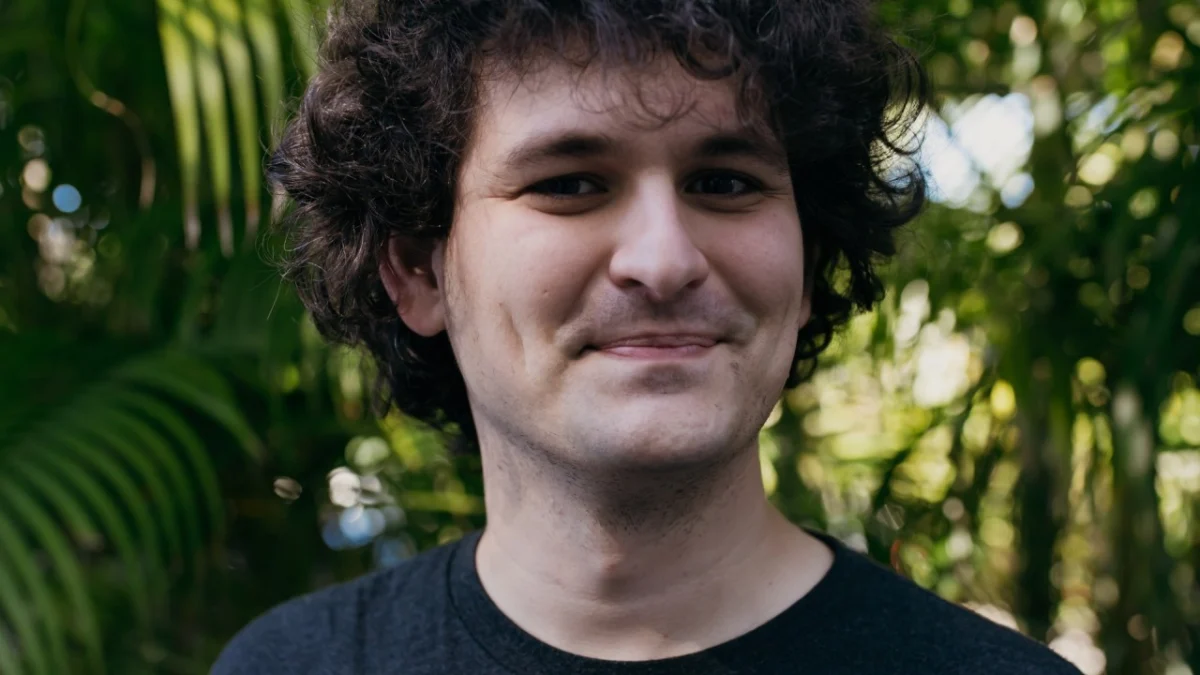
In the annals of financial history, few collapses have been as cataclysmic or as personally identifying as the disintegration of FTX. Sam Bankman-Fried (SBF), the once-celebrated face of the cryptocurrency industry, remains a polarizing figure even from behind bars. Recently, headlines have been stirred by reports that the convicted founder has been contemplating a new token project—one he claims could potentially serve as a vehicle to repay the victims of his multi-billion dollar fraud.
While the prospect of any repayment mechanism is naturally a subject of intense interest for the thousands of individuals who saw their life savings vanish in November 2022, Bankman-Fried’s latest musings must be viewed through a lens of profound skepticism. To treat this as a "comeback" or a "new business plan" is to ignore the stark, immovable legal barriers that define his current reality.
The Legal Anchor: A 25-Year Sentence
To understand the nature of these comments, one must first confront the reality of the judicial system. On June 12, 2026, a United States appeals court definitively upheld Bankman-Fried’s 25-year prison sentence. This ruling serves as a massive, concrete wall between the former billionaire’s ambitions and any actual participation in the global financial market.
A convicted felon serving a quarter-century sentence does not have the capacity to manage corporate entities, register securities, or oversee the complex, highly regulated operations required to launch a legitimate cryptocurrency token. The suggestion that he could engineer a financial solution from a federal prison facility is not merely optimistic; it is legally and logistically impossible under current U.S. jurisprudence. The courts have spoken, and the bankruptcy proceedings—managed by seasoned professionals tasked with clawing back assets—operate on a plane entirely removed from the speculative musings of the man who orchestrated the collapse.
Chronology: From Crypto Darling to Inmate
To contextualize why these comments are garnering attention, it is necessary to revisit the trajectory of the FTX saga:
- 2019–2021: The Rise. FTX positions itself as the "safe" exchange, bolstered by the "effective altruism" branding of its founder.
- November 2022: The Collapse. A liquidity crunch leads to a run on the exchange, revealing an $8 billion hole in customer funds. FTX files for Chapter 11 bankruptcy.
- November 2023: The Verdict. After a high-profile trial, a jury finds Bankman-Fried guilty on all seven counts of fraud and conspiracy.
- March 2024: Sentencing. Judge Lewis Kaplan sentences Bankman-Fried to 25 years in federal prison.
- June 2026: The Appeals Ruling. The appeals court rejects his challenge to the conviction and sentence, cementing the original judgment.
- June 2026: The Token Proposal. Reports emerge via New York Magazine suggesting Bankman-Fried is circulating ideas regarding a new token-based mechanism for victim restitution.
The Anatomy of the "Token" Idea
Why does a prisoner’s speculative thought on a new crypto project still move the needle? The answer lies in the unresolved trauma of the FTX fallout. The crypto industry remains scarred by the events of 2022, and the hunger for justice—and the return of lost assets—remains a powerful psychological driver for creditors.
Bankman-Fried’s reported idea rests on the premise that a new digital asset could be issued, the value of which would somehow be tied to the repayment of those who lost funds. However, such a proposal suffers from three fundamental flaws that market experts have identified repeatedly:
- Regulatory Impotence: A token issued by a convicted fraudster, from prison, would be viewed by the Securities and Exchange Commission (SEC) and other global regulators as a non-starter. It would likely be classified as an unregistered security, and any exchange that attempted to list it would be exposing itself to severe enforcement action.
- The Trust Deficit: The fundamental cause of the FTX collapse was a breach of trust. A new token project from the same architect lacks the one ingredient required for market viability: credibility. Investors and creditors alike are unlikely to participate in a scheme that mirrors the very mechanisms that led to the original insolvency.
- The Bankruptcy Reality: FTX’s assets are currently being liquidated under the oversight of John J. Ray III and a team of bankruptcy specialists. This is a rigorous, court-mandated process. There is no legal path for a convicted individual to "intervene" or "supplement" this process with an unauthorized private token project.
The "Comeback" Narrative vs. Market Reality
There is a dangerous tendency in modern media to treat any utterance from a high-profile figure as a "strategic move." In this case, some might be tempted to frame Bankman-Fried’s comments as a desperate attempt to gain favor or as a sign of his refusal to accept his fate.
However, it is critical to distinguish between imagination and execution. In the world of high finance and bankruptcy law, execution is all that matters. As it stands, Bankman-Fried’s legal team has exhausted the primary avenues for overturning his sentence. Any "token project" is, therefore, purely a theoretical exercise occurring within the confines of his private thoughts. It has no bearing on the actual balance sheets being reconciled by the bankruptcy estate.
Official Responses and Stakeholder Skepticism
The community response to these reports has been overwhelmingly dismissive. Former FTX customers, many of whom lost their life savings, have taken to social media and forums to express that any "repayment" should come through the systematic liquidation of seized assets, not through the creation of a new, speculative token that carries its own inherent risks.
Bankruptcy administrators have remained focused on the arduous task of recovering funds through legal clawbacks, litigation against political beneficiaries, and the sale of FTX’s remaining tech assets. They have not signaled any interest in "innovative" token projects proposed by the individual whose actions necessitated the liquidation in the first place.
The Broader Implications: Can Failed Platforms Recover?
The Bankman-Fried episode serves as a case study for the entire cryptocurrency sector regarding the limits of "restitution." Can a platform that has failed due to fraud ever truly "make it right"?
History suggests that the only path to resolution is through transparency, legal accountability, and the orderly distribution of remaining assets. Attempts by founders to "gamify" the recovery process—or to use the very tools that facilitated their downfall (tokens) to fix the problems they created—are usually viewed as further attempts to obfuscate the truth.
The tension in this story lies between the narrative Bankman-Fried hopes to craft—one of a misunderstood visionary trying to solve a problem—and the legal reality he faces—a convicted criminal who has been removed from the market by a jury of his peers.
Conclusion: A Cautionary Tale
As the crypto industry moves toward increased regulation and maturity, the FTX collapse serves as the ultimate cautionary tale. Bankman-Fried’s latest comments regarding a new token project should be categorized as an attempt to maintain relevance in a world he has been legally barred from influencing.
For creditors, the only "token" that matters is the currency currently being calculated by the bankruptcy court. The path to recovery is paved with subpoenas, legal filings, and the slow, methodical work of asset recovery. It is not paved with new whitepapers or prison-issued ideas for digital assets.
Ultimately, the story of Sam Bankman-Fried’s potential token project is a story about the endurance of ego. It is a reminder that even after the courtroom doors have closed and the prison gates have locked, the desire to control the narrative—and to believe one can outsmart the law—remains a powerful, if ultimately futile, human impulse. Investors, regulators, and the public would do well to look past the clickbait and focus on the cold, hard facts of the legal system, which remains the only arbiter of justice for the victims of FTX.
