

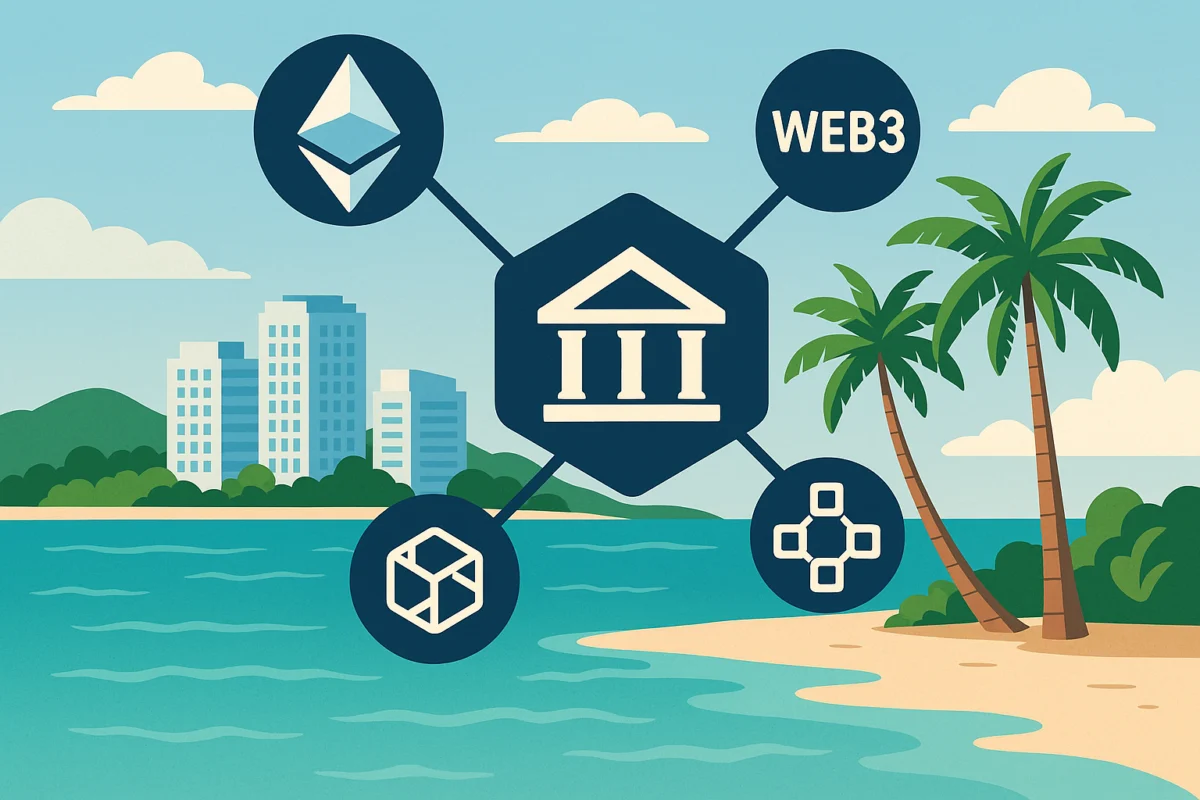
The global landscape for decentralized autonomous organizations (DAOs) and Web3 foundations is undergoing a seismic shift. As regulatory pressures mount in major Western economies, a clear migration pattern has emerged: projects are increasingly seeking refuge and legal legitimacy in the Cayman Islands. New data reveals a sharp, sustained rise in foundation company registrations, marking the jurisdiction as the preferred legal harbor for the next generation of decentralized finance.
The Main Facts: A Legal Safe Haven for Decentralized Entities
The Cayman Islands has rapidly evolved from a traditional offshore financial center into the preeminent global hub for Web3 governance. By the close of 2024, the jurisdiction hosted over 1,300 specialized entities, with an additional 400 formed in the first year of 2025 alone.
This surge is not merely a quantitative increase; it is a qualitative shift in how Web3 projects view their legal existence. At the heart of this trend is the "Foundation Company"—a bespoke legal structure that provides the liability shielding and operational clarity that many DAOs currently lack. For major protocols, these foundations act as the legal "wrapper," allowing the organization to enter into binding contracts, hire developers, hold intellectual property, and engage with service providers without exposing individual tokenholders to the risks of personal liability.
Chronology: From Legal Ambiguity to Strategic Relocation
The current rush toward the Cayman Islands did not happen in a vacuum. Its trajectory can be traced through a series of legal milestones and market reactions:
- Pre-2024: Web3 projects often operated in "grey zones," assuming that decentralization itself provided a natural shield against regulatory overreach.
- 2024 (The Samuels v. Lido DAO Catalyst): A pivotal moment occurred when a U.S. federal court ruled that an "unwrapped" DAO could be classified as a general partnership under California law. This ruling sent shockwaves through the industry, as it exposed individual DAO members to unlimited personal liability for the actions of the collective.
- Late 2024: Following the Lido decision, a "Great Migration" began. Communities and treasury managers began prioritizing legal restructuring, with the Cayman Islands emerging as the primary destination for risk-averse, professionalized protocols.
- January 2026 (Regulatory Horizon): The Cayman Islands announced the implementation of the OECD’s Crypto-Asset Reporting Framework (CARF), signaling that the jurisdiction is balancing its attractiveness to developers with a commitment to international compliance standards.
Supporting Data: By the Numbers
The scale of this migration is best illustrated by the financial weight of the entities now calling the Cayman Islands home. According to recent reports from Cayman Finance, at least 17 foundations overseeing treasuries exceeding $100 million have established their legal headquarters in the islands.
This concentration of capital is mirrored by the growth in the "Crypto Valley" of Switzerland, which currently hosts over 1,700 blockchain firms. However, while Switzerland remains a bastion for foundational research and development, the Cayman Islands has carved out a unique niche as the operational "legal wrapper" of choice. The 130% growth in Switzerland since 2020 suggests that the global Web3 ecosystem is not just growing; it is becoming increasingly sophisticated, with projects diversifying their jurisdictional footprints to capture the best benefits of each region—using Switzerland for engineering and the Cayman Islands for governance and treasury management.
Official Responses and Regulatory Implications
The regulatory climate in the Cayman Islands is characterized by a "pragmatic approach." While the islands have adopted the OECD’s Crypto-Asset Reporting Framework (CARF), the implementation is surgically precise.
Legal experts have noted that the new regulations, effective as of January 2026, are targeted primarily at "Reporting Crypto-Asset Service Providers"—entities that facilitate exchanges, brokerages, or custodial services. Crucially, this definition largely excludes the passive, treasury-holding foundations that comprise the majority of Cayman’s new Web3 registrants.
This nuanced regulatory stance has been interpreted by the industry as a "green light" for DAO governance structures. By providing clear guidance on who must report and who does not, the Cayman government is effectively lowering the barrier to entry for decentralized organizations that want to remain compliant without being stifled by retail-level brokerage regulations.
Implications for the Future of Decentralized Governance
The shift toward the Cayman Islands carries profound implications for the future of the Web3 sector.
1. The Death of the "Purely Anonymous" DAO
The Lido decision and the subsequent flight to legal wrappers signal the end of the era where DAOs could rely on code alone for protection. The future of decentralized governance is one of "hybridization"—where a protocol remains decentralized in its decision-making, but is anchored by a legal entity that can interact with the legacy financial system.
2. Institutional Allocation and the Trust Factor
For institutional investors, the ability to interact with a DAO that has a recognized legal personality is a non-negotiable prerequisite. By providing a structure that is familiar to traditional asset managers—offering tax neutrality and a predictable legal framework—the Cayman Islands has effectively bridged the gap between the chaotic world of early-stage DeFi and the regulated world of institutional capital.
3. The Fragmentation of Global Regulation
While the United States continues to debate the legal status of DAOs—often leaving developers in a state of regulatory purgatory—other jurisdictions are moving faster. The contrast between the U.S. approach (fragmented rules at the state level) and the Cayman approach (a unified, dedicated framework for foundation companies) suggests that the U.S. may struggle to retain top-tier Web3 talent if it does not offer a similar level of certainty.
4. Sustainability and Compliance
The move to adopt the OECD’s CARF standard demonstrates that the Cayman Islands is not positioning itself as a "tax haven" in the traditional, illicit sense, but as a "regulatory hub" that values transparency. This is a strategic move to ensure that the jurisdiction remains on the "white list" of global financial regulators, thereby ensuring that the Web3 projects based there can maintain banking relationships and continue to operate in the long term.
Conclusion: A Central Node in a Global Network
As Web3 organizations continue to mature, the necessity for professional legal structure will only increase. The Cayman Islands has successfully positioned itself as the "central node" for this evolution. By offering a blend of legal certainty, liability protection, and a clear path toward international compliance, the jurisdiction has become more than just a registry—it has become a strategic partner to the protocols building the internet of value.
For developers and community leaders, the message is clear: the era of operating in the shadows is closing. The future of Web3 lies in the ability to marry decentralized autonomy with legal, institutional-grade structure. As the numbers from late 2024 and 2025 demonstrate, the path toward that future currently runs directly through the Cayman Islands. As global competition for crypto-native businesses intensifies, the islands’ combination of regulatory foresight and operational flexibility will likely keep them at the forefront of the decentralized revolution for years to come.
