

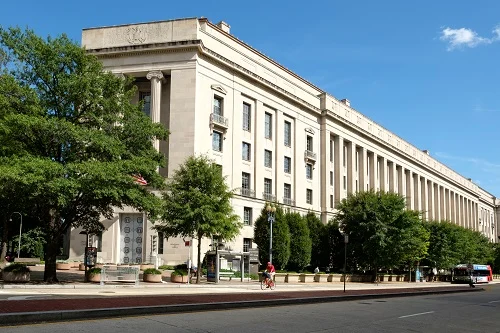
The legal odyssey of Sam Bankman-Fried, the disgraced founder of the now-collapsed cryptocurrency exchange FTX, has reached a volatile inflection point. As the October criminal trial—widely considered the most significant financial fraud case since Enron—looms on the horizon, the United States Department of Justice (DOJ) has formally petitioned the court to revoke Bankman-Fried’s bail and remand him to custody.
The move follows a mounting series of accusations that the former billionaire has systematically violated his release conditions by attempting to influence the testimony of key government witnesses. For a man who once graced the covers of business magazines and held court in the halls of Washington, the prospect of incarceration before his trial marks a dramatic fall from grace that could fundamentally alter his ability to prepare a legal defense.
The Core Accusation: Witness Tampering and the Ellison Diary
The flashpoint for the DOJ’s request centers on the alleged leaking of private journal entries belonging to Caroline Ellison, the former CEO of Alameda Research and Bankman-Fried’s on-again, off-again romantic partner. Ellison, who has entered a plea deal with federal prosecutors and is expected to serve as a star witness for the government, saw her private thoughts detailed in an explosive New York Times report earlier this month.
Prosecutors argue that the selective leaking of these documents was not a mere breach of privacy, but a calculated effort by Bankman-Fried to discredit a witness and intimidate others who might consider cooperating with the government. By injecting these materials into the public sphere, the DOJ contends, Bankman-Fried is attempting to poison the jury pool and create a narrative of a "disgruntled ex" before the trial even commences.
Chronology of a Collapse and the Road to Remand
To understand the gravity of the current situation, one must look at the timeline that led the once-revered "crypto king" from the penthouse of the Bahamas to a federal courtroom in Manhattan.
- November 2022: The FTX empire, once valued at $32 billion, collapses into bankruptcy following a liquidity crisis triggered by revelations of commingled funds between FTX and Alameda Research.
- December 2022: Bankman-Fried is arrested in the Bahamas by local authorities at the request of the U.S. government. He is subsequently extradited to the United States.
- December 2022: Upon his arrival in New York, Bankman-Fried is released on a $250 million personal recognizance bond—one of the largest in American history—allowing him to live under house arrest at his parents’ home in Palo Alto, California.
- February 2023: Prosecutors seek to tighten bail conditions after Bankman-Fried uses a VPN, citing concerns over his ability to access encrypted messaging platforms.
- July 2023: The DOJ files a formal motion to revoke bail, citing evidence that Bankman-Fried has repeatedly crossed the line regarding witness communication and public statements.
The Legal Tug-of-War: Defense vs. Prosecution
During the July 26 hearing before U.S. District Judge Lewis Kaplan, the courtroom became a theater of intense legal maneuvering. The prosecution’s position was unequivocal: no amount of restrictive bail conditions will stop Bankman-Fried from interfering with the trial process. They argue that his extrajudicial statements—leaks to the press, public blog posts, and social media activity—are an affront to the judicial process.
The Defense’s Counter-Argument
Bankman-Fried’s legal team has mounted a spirited defense against the prospect of incarceration. Their primary argument is rooted in the practicalities of modern litigation: a defendant needs access to their discovery materials, which include millions of pages of documents, emails, and financial records. Defense attorneys maintain that placing their client in a detention center would effectively strip him of his Sixth Amendment right to participate in his own defense. They argue that his communication with the media is an exercise of his First Amendment rights, intended to defend his reputation against a barrage of negative press.
The Judge’s Stance
Judge Lewis Kaplan, a jurist known for his no-nonsense approach in the Southern District of New York, has signaled that his patience is wearing thin. While he did not immediately grant the DOJ’s request for remand, his warnings to Bankman-Fried were stern. "Take this seriously," the Judge cautioned, acknowledging the complexity of balancing the defendant’s rights with the integrity of the upcoming trial. The court has granted the parties until August 3 to propose a comprehensive gag order, which would likely restrict Bankman-Fried from speaking publicly about the case.
Implications for the October Trial
The potential incarceration of Bankman-Fried would send shockwaves through the legal and financial worlds. If he is sent to a detention facility, the logistical hurdles of preparing for a high-stakes trial from behind bars are immense.
The Witness Factor
The DOJ’s focus on witness tampering underscores how vital the testimony of former insiders like Caroline Ellison, Gary Wang, and Nishad Singh will be to the government’s case. If the prosecution can prove that the defendant has been actively working to undermine these witnesses, it could lead to increased scrutiny of the defense’s tactics. Furthermore, if Bankman-Fried is found to have violated bail conditions, it creates a "consciousness of guilt" narrative that the prosecution can exploit during cross-examination.
The Integrity of the Judicial Process
Beyond the specifics of the FTX case, this hearing highlights a modern challenge for the legal system: how to handle high-profile defendants who are "digital natives" and influencers. Bankman-Fried’s comfort with social media and his tendency to treat his legal defense like a PR campaign have created a friction point with the traditional, closed-door nature of federal criminal proceedings.
Broader Context: The Crypto Reckoning
The collapse of FTX remains a defining moment for the cryptocurrency industry, serving as a cautionary tale regarding the lack of regulatory oversight and the dangers of unbridled hubris. Bankman-Fried, once a prominent donor to political campaigns and a fixture at congressional hearings, now faces a multi-count indictment that includes conspiracy to commit wire fraud, money laundering, and campaign finance violations.
The outcome of the October trial will serve as a bellwether for the future of crypto regulation in the United States. If the prosecution succeeds, it will likely pave the way for a more aggressive posture from the SEC and the DOJ toward the entire digital asset ecosystem.
Conclusion: A High-Stakes Wait
As the August 3 deadline for the proposed gag order approaches, all eyes remain fixed on the Southern District of New York. Whether or not Bankman-Fried is remanded to custody, the fundamental nature of his trial has shifted. The focus has moved beyond the balance sheets of FTX and into the realm of judicial integrity and the limits of a defendant’s freedom while awaiting trial.
The "crypto king" is learning the hard way that the rules of the traditional courtroom are vastly different from the rules of the venture capital boardrooms he once frequented. With the DOJ showing no signs of backing down and the Judge holding the keys to his pre-trial freedom, Sam Bankman-Fried is staring down the most precarious chapter of his life—a chapter that could end in a prison cell long before a jury even delivers its verdict.
