

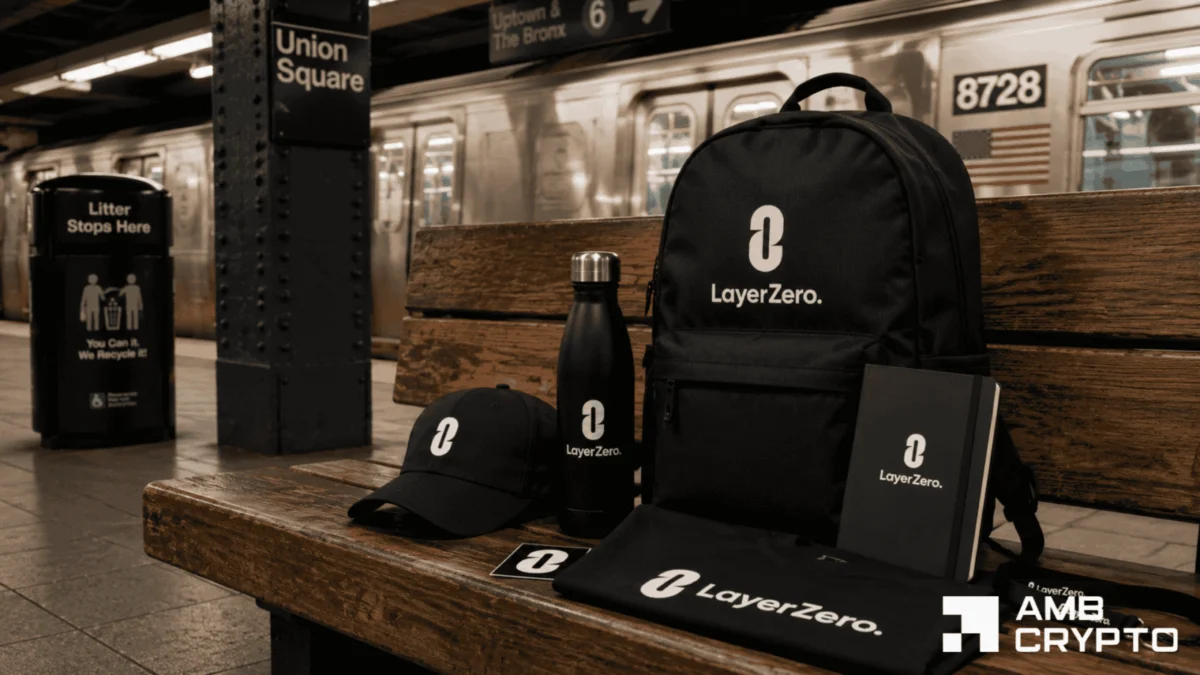
The blockchain interoperability sector—long defined by a chaotic race to connect fragmented liquidity pools—is undergoing a profound transformation. As institutional capital begins to eye tokenized real-world assets (RWAs) and 24/7 global settlement, the narrative is shifting from "how to connect" to "how to secure." At the center of this evolution is LayerZero, which has recently unveiled an ambitious roadmap to transition from a mere messaging protocol into the backbone of institutional financial infrastructure.
However, this strategic pivot comes at a volatile moment. A fierce debate has erupted regarding the security trade-offs inherent in cross-chain messaging, sparked by the fallout of the KelpDAO exploit and subsequent public skepticism from blockchain analytics firm L2BEAT.
1. The Strategic Pivot: Building "Zero"
LayerZero’s recent ecosystem report marks a definitive departure from its origins as a general-purpose cross-chain bridge. The company is now positioning itself as the foundational layer for institutional finance, with the centerpiece of this strategy being "Zero"—a dedicated Layer 1 blockchain specifically engineered for asset issuance, stablecoin settlement, and institutional-grade capital markets.
The Institutional Vision
The "Zero" network is designed to solve the friction points that currently plague traditional finance (TradFi) when interacting with decentralized ledgers. By building a purpose-built blockchain, LayerZero aims to offer:
- 24/7 Global Settlement: Removing the T+2 settlement cycles that currently define traditional securities trading.
- Native RWA Support: Streamlined frameworks for the issuance and management of tokenized treasury bills, equities, and commodities.
- Institutional Compliance: Architectures that allow for permissioned access and regulatory-compliant asset movement.
This shift is underscored by impressive operational data. According to the report, LayerZero has facilitated over $260 billion in total volume to date and currently commands roughly 70% of the cross-chain stablecoin market. By leveraging this existing liquidity, the company hopes to transition from being a "bridge provider" to a "settlement provider."
2. Chronology: From Protocol to Infrastructure
The evolution of the interoperability landscape can be traced through a series of critical milestones that define the current tension in the market.
- 2022–2023: The Proliferation Era. As the "multi-chain" thesis took hold, dozens of protocols emerged to bridge disparate networks. LayerZero rapidly gained market share by prioritizing developer experience and flexible security configurations.
- Early 2024: The KelpDAO Incident. A security vulnerability involving the KelpDAO protocol served as a catalyst for a broader market evaluation of cross-chain risks. The exploit triggered a wave of "flight to safety," with several projects announcing migrations from LayerZero to alternative infrastructures, most notably Chainlink’s Cross-Chain Interoperability Protocol (CCIP).
- Mid-2024: The Institutional Pivot. LayerZero formalizes its "Zero" L1 strategy, pivoting the company’s long-term business model toward serving TradFi entities rather than just retail-facing DeFi protocols.
- Late 2024: The L2BEAT Intervention. L2BEAT, a prominent analytics platform known for rigorous bridge and L2 risk assessments, releases a technical deep-dive questioning the efficacy of the post-KelpDAO migrations, suggesting that the "security improvements" touted by migrating projects may be illusory.
3. ZRO: The Engine of the Ecosystem
LayerZero’s governance and value-accrual strategy remain firmly anchored in the ZRO token. Despite the launch of the "Zero" network, the company has clarified that there will be no second token.
Instead, the ecosystem’s economic model relies on a feedback loop between network usage and token value. Revenue generated across the LayerZero and Zero infrastructure will be utilized for ZRO buybacks and token burns. This strategy is framed as a long-term alignment mechanism: as institutions utilize the network for high-volume asset settlement, the deflationary pressure on ZRO is intended to incentivize stakeholders and developers to maintain the security and growth of the protocol.
4. The Security Debate: L2BEAT vs. The Narrative
The most contentious element of the current landscape is the technical debate regarding whether migrating to Chainlink’s CCIP actually provides superior security compared to LayerZero. Following the KelpDAO migration, a narrative emerged that CCIP was the "secure choice" for institutional-grade projects.
The L2BEAT Counter-Argument
L2BEAT’s analysis challenges this narrative, arguing that security in interoperability is rarely binary. Their critique centers on several technical realities:
- Shared Security Fallacy: L2BEAT notes that while CCIP’s "shared security" model is marketed as robust, it remains reliant on decentralized oracle networks (DONs) and specific risk management configurations. They argue that "shared security" does not equate to "absolute security."
- Complexity and Risk Surfaces: The analytics firm suggests that the inherent complexity of CCIP’s architecture creates new operational risks. If a single supported chain in the CCIP ecosystem is compromised or misconfigured, it could potentially introduce contagion risks across the broader interconnected system.
- The "Better" vs. "Secure" Distinction: While acknowledging that CCIP may offer marginal improvements over specific, less-secure LayerZero configurations, L2BEAT maintains that the industry is conflating "brand reputation" with "cryptographic assurance." They caution that the migration trend is largely driven by marketing and optics rather than a material reduction in the underlying trust assumptions.
5. Implications for the Future of Finance
The conflict between LayerZero’s institutional expansion and the technical skepticism from auditors like L2BEAT signals a maturing market.
The Institutional Dilemma
As traditional banks and financial institutions begin their migration onto blockchain rails, they are faced with a "security-interoperability trilemma." They require:
- High Interoperability: The ability to move assets seamlessly between public and private chains.
- Institutional Security: Hardened, immutable, and audited codebases that can withstand multi-billion dollar attacks.
- Regulatory Compliance: The ability to implement KYC/AML at the protocol level.
LayerZero’s push into L1 infrastructure suggests they believe they can solve this trilemma by controlling the full stack—from the settlement layer to the messaging layer. However, the L2BEAT critique serves as a stark reminder that in the world of distributed systems, complexity is the enemy of security.
The Maturation of Security Audits
The days of "trusting the bridge" are over. We are entering an era where "proof of security" will be as important as the technology itself. Institutional participants are likely to demand:
- Transparency: Real-time monitoring of security parameters and oracle nodes.
- Liability: Increased focus on insurance-backed protocols or robust, decentralized risk-management systems (such as "rate limiting" or "circuit breakers").
- Auditor Consensus: The emergence of independent bodies that certify the security models of cross-chain protocols, moving beyond internal marketing claims.
6. Final Summary: The Road Ahead
The interoperability sector is currently divided between two distinct philosophies: the Aggregator Model, exemplified by LayerZero’s shift toward a unified, purpose-built institutional chain, and the Risk-Minimized Model, championed by analysts who emphasize that no protocol is immune to the risks of distributed complexity.
For LayerZero, the stakes have never been higher. By betting its future on institutional adoption, the protocol is inviting a level of scrutiny that retail-focused projects rarely face. Whether the "Zero" network can provide a truly secure foundation for global finance, or whether the security trade-offs identified by L2BEAT will remain an insurmountable hurdle, remains to be seen.
Ultimately, the winner of this "interoperability war" will not necessarily be the protocol with the highest volume or the most institutional partnerships, but the one that can provide a demonstrable, battle-tested guarantee that the assets crossing its bridge will arrive at their destination exactly as intended—without exception. As the lines between TradFi and DeFi continue to blur, the debate over security architecture is not just a technical dispute; it is the fundamental question that will determine whether blockchain technology can truly underpin the next generation of global capital markets.
