

In a significant development for the decentralized finance (DeFi) ecosystem, KelpDAO announced on May 25 that it has successfully concluded the operational phase of its recovery plan for rsETH. This milestone follows the transfer of a final tranche of 20,373.72 rsETH into the protocol’s Omnichain Fungible Token (OFT) adapter. The move is widely viewed as the definitive step in stabilizing the cross-chain backing infrastructure of its liquid restaking asset, signaling a return to normalcy after a period of heightened operational scrutiny.
The completion of this transfer marks the end of a rigorous two-week replenishment process, during which approximately 116,000 rsETH were funneled into the protocol’s adapter. This massive liquidity injection was bolstered by strategic collaboration with Aave, underscoring the vital role of cross-protocol cooperation in maintaining systemic stability within the DeFi landscape.
The Chronology of the Recovery Effort
The recent stabilization of rsETH did not occur in a vacuum. It was the result of a deliberate, phased response to a liquidity and infrastructure disruption that had caused significant anxiety among liquidity providers and restakers.
Phase 1: Identifying the Infrastructure Gap
The disruption began when discrepancies were identified within the cross-chain backing mechanism of the rsETH OFT adapter. As DeFi protocols increasingly rely on omnichain token standards to facilitate seamless movement across various layer-1 and layer-2 networks, the failure of an adapter can have cascading effects on collateralization ratios. KelpDAO immediately paused operations to prevent further volatility and initiated a comprehensive audit of its reserves.
Phase 2: The Refill Process
Beginning in mid-May, KelpDAO initiated a systemic replenishment. The goal was to ensure that every rsETH token minted on supported networks was backed by an equivalent, verifiable asset in the primary treasury. Over the course of two weeks, the team executed a series of transfers, with the final tranche of 20,373.72 rsETH serving as the capstone to this effort. By ensuring the OFT adapter was fully provisioned, the protocol aimed to eliminate any potential for "de-pegging" or redemption bottlenecks.
Phase 3: Resumption of Normal Operations
With the backing infrastructure secured, KelpDAO confirmed that minting, redemption, and staking reward distributions are currently functioning as intended. The protocol has returned to its baseline state, with users able to interact with the platform without the constraints that characterized the previous two weeks.
Supporting Data: Transparency as a Defense
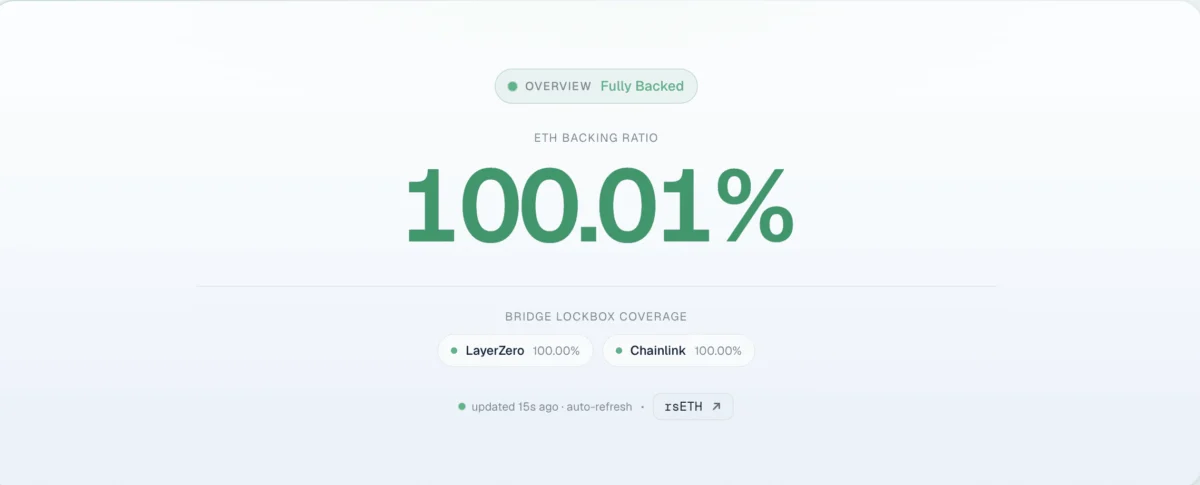
In an era where "trust, but verify" is the golden rule of DeFi, KelpDAO has pivoted toward radical transparency. The protocol has directed users to its live, real-time dashboard, which offers a granular view of its reserves.
Current metrics, as of late May, indicate that the backing ratio for rsETH sits comfortably above 100%. This figure is not merely a number; it is a critical instrument of reassurance. By providing a public window into the protocol’s collateralization, KelpDAO is attempting to dispel lingering doubts regarding the asset’s solvency. The dashboard provides clear evidence that the total circulating supply of rsETH is fully supported by the underlying restaked assets, effectively neutralizing claims of under-collateralization.
The Role of Strategic Partnerships: The Aave Factor
One of the most notable aspects of the recovery was the involvement of Aave. As a titan of the DeFi lending market, Aave’s participation in the replenishment process highlights the increasingly interconnected nature of decentralized finance. When a protocol of KelpDAO’s size experiences operational stress, the ripple effects can be felt across the wider market.

Aave’s support provided the necessary liquidity buffer to expedite the recovery, demonstrating that in the face of infrastructure failures, major DeFi players are often incentivized to coordinate to prevent broader contagion. This collaboration sets a precedent for how future liquidity crises might be managed: through institutional-grade cooperation rather than isolated firefighting.
Implications for the Liquid Restaking Sector
The challenges faced by KelpDAO are symptomatic of a broader trend in the DeFi industry. As liquid staking and restaking protocols gain traction, they have become prime targets for both market volatility and structural scrutiny.
Heightened Scrutiny of Cross-Chain Bridges
The reliance on OFT adapters and cross-chain bridges has emerged as a central point of failure in recent months. Investors are no longer satisfied with "black box" protocols; they are demanding, and receiving, visibility into how tokens are bridged and secured. The incident with KelpDAO serves as a case study in the necessity of robust, audited, and transparent cross-chain infrastructure.
The Shift Toward Real-Time Proof-of-Backing
The industry is witnessing a shift away from periodic audits toward continuous, real-time proof-of-backing. Investors are now prioritizing protocols that offer:
- Publicly verifiable reserve wallets.
- Real-time dashboard reporting.
- Automated pause mechanisms that trigger when backing ratios dip below a certain threshold.
KelpDAO’s recovery serves as a template for how protocols must communicate during a crisis. By acknowledging the disruption, outlining a clear recovery path, and providing the tools for users to verify the resolution, the protocol has maintained a level of integrity that many others in similar positions have failed to preserve.
Rebuilding User Confidence: The Long Game
While the "operational" phase of the recovery is complete, the "confidence" phase has only just begun. The challenge for KelpDAO moving forward is to ensure that the events of the past two weeks do not permanently dampen demand for rsETH.
Trust is a fragile commodity in DeFi. To restore it, the protocol must demonstrate sustained performance over the coming months. This includes:
- Enhanced Monitoring: Implementing more stringent automated monitoring of the OFT adapter to catch anomalies before they necessitate a full system pause.
- Community Engagement: Continuing to provide transparent updates on protocol governance and security upgrades.
- Security Audits: Inviting third-party security firms to conduct post-mortem audits of the recovery process to ensure that the vulnerabilities that led to the disruption have been permanently patched.
Summary of Key Findings
- Total Replenishment: Approximately 116,000 rsETH were added to the OFT adapter over the final two weeks of the recovery.
- Operational Status: All core protocol functions, including minting and redemptions, are fully operational.
- Collateral Integrity: The backing ratio remains above 100%, as confirmed by the public-facing reserve dashboard.
- Institutional Support: Aave’s active involvement proved instrumental in stabilizing the protocol’s liquidity.
- Future Outlook: The focus has shifted from crisis management to long-term trust-building through transparency and infrastructure hardening.
Conclusion
KelpDAO’s successful resolution of its rsETH liquidity issues represents a significant win for the protocol and, by extension, the liquid restaking sector. By moving quickly to restore its backing ratios and engaging with key industry partners, KelpDAO has demonstrated a level of accountability that is essential for the maturation of DeFi.
However, the industry remains in a state of high alert. The lessons learned from this incident—specifically regarding the vulnerabilities of cross-chain infrastructure—will likely inform the next generation of DeFi security protocols. For now, the successful replenishment of rsETH serves as a reminder that while the risks in decentralized finance are high, the mechanisms for remediation are becoming increasingly sophisticated. As KelpDAO moves into this next chapter, the eyes of the DeFi community will remain fixed on the protocol’s dashboard, looking for continued stability and a renewed commitment to user security.
