

In the high-stakes arena of digital assets, liquidity acts as the lifeblood of price action. It is the defining variable that separates a transient market bottom—a mere "dip" before a recovery—from a protracted, soul-crushing bear phase. When the macroeconomic tide turns against risk-on assets, capital typically retreats to the sidelines. However, the nuance lies in where that capital goes. Does it remain within the crypto ecosystem, waiting for a signal to re-enter, or does it flee to fiat, signaling a complete loss of investor confidence?
Recent data suggests we are currently navigating the latter, as the crypto market faces a severe liquidity contraction not seen since the collapse of the Terra-Luna ecosystem in 2022. Understanding this exodus is paramount for investors looking to identify the next major market bottom.
Main Facts: The Anatomy of a Liquidity Crisis
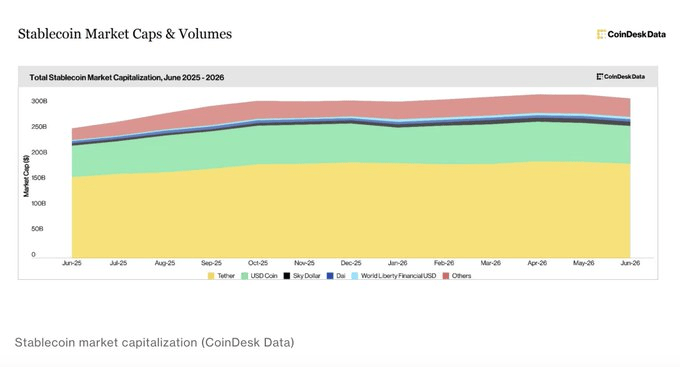
The current crypto landscape is defined by a significant and sustained withdrawal of stablecoins. Stablecoins, which function as the primary liquidity rails for decentralized finance (DeFi) and centralized exchanges, have seen their aggregate market capitalization shrink by nearly $10 billion since May.
June alone witnessed a staggering $7.7 billion in outflows, marking the largest monthly contraction in the stablecoin sector since the cataclysmic events of May 2022. This is not merely a localized shift; it is a systemic drainage of the liquidity required to sustain upward momentum. The mathematical correlation is clear: as this liquidity has evaporated, Bitcoin (BTC) has mirrored the trend, suffering a 3.6% correction in May, followed by a more severe 20.45% decline throughout June.
The primary concern for market analysts is that this price action mimics the liquidity-driven weakness that characterized the onset of the 2022 bear market. When liquidity is pulled from the ecosystem, the "floor" beneath asset prices drops, leaving them vulnerable to cascading liquidations and panic selling.
Chronology: A Two-Month Descent
To understand the current trajectory, one must look at the timeline of the recent liquidity retreat:
- May 2026: The onset of the current trend began with a subtle yet concerning withdrawal of capital from stablecoins. Bitcoin struggled to maintain support, resulting in a 3.6% monthly correction. At this stage, many analysts dismissed the move as a healthy consolidation phase.
- Early June 2026: The narrative shifted as the outflows accelerated. The total stablecoin market cap began to plummet, shedding billions in value as institutional and retail investors alike sought to deleverage.
- Late June 2026: By the end of the month, the total outflow reached $7.7 billion. Bitcoin’s price plummeted by over 20%, breaking through key psychological support levels. The velocity of this decline confirmed that the market had entered a definitive "risk-off" phase.
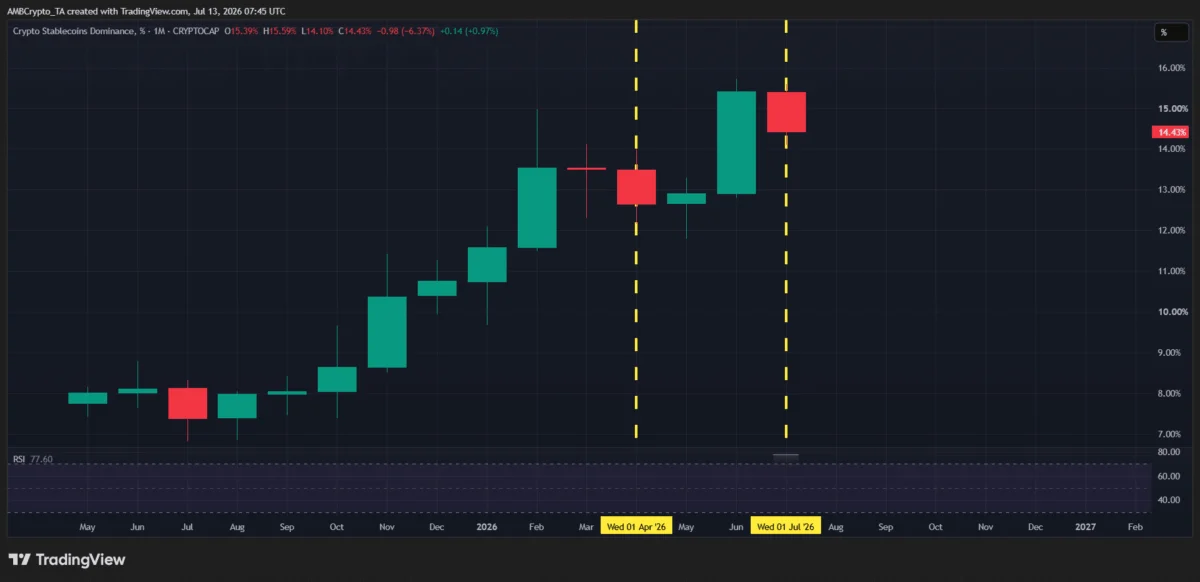
- July 2026 (Present): The market is now in a state of cautious observation. While the outflows continue, the rate of contraction has shown signs of slowing. Crucially, Stablecoin Dominance (STABLE.D) has begun to trend downward, offering a glimmer of hope that the hemorrhaging may be nearing an exhaustion point.
Supporting Data: Why This Cycle is Different
While the parallels to 2022 are undeniable, a deeper dive into the data reveals a critical divergence. In previous bear cycles, a risk-off environment typically prompted a "flight to safety," where capital would rotate from volatile cryptocurrencies into traditional defensive assets like gold or U.S. Treasuries.

However, the current cycle has defied this historical precedent. Both gold and stablecoins have faced downward pressure simultaneously. Gold closed May down 1.6% and June down 11.73%, mirroring the weakness in the crypto market. This suggests that investors are not merely rotating assets; they are experiencing a systemic liquidity crunch where capital is being withdrawn entirely from speculative and semi-defensive positions.
Despite this, Bitcoin Dominance (BTC.D) remains resilient, hovering near the 60% mark. Even with a minor 3% dip in dominance, the fact that capital has not broadly abandoned the crypto ecosystem in favor of traditional assets suggests a "Bitcoin-centric" sentiment among survivors. Investors appear to be shedding altcoins and stablecoins, but they are holding onto their core BTC positions. This resilience is a stark departure from the 2022 cycle, where liquidity exited the entire ecosystem indiscriminately.
Official Perspectives and Market Sentiment
Financial analysts and institutional observers are divided on what these metrics imply. Some institutional analysts argue that the current contraction is a necessary "de-leveraging event" that clears the market of "weak hands" and speculative debt.
"The current outflow is not necessarily a signal of a total abandonment of crypto, but rather a reflection of the global liquidity drain caused by high interest rates and macro-uncertainty," notes one market strategist. "The fact that BTC dominance remains at 60% is a testament to the institutional conviction that Bitcoin is no longer just a speculative asset, but a distinct store of value."
Conversely, some DeFi analysts remain wary, pointing to the 4-year high in stablecoin outflows as a warning sign. They argue that without a significant return of stablecoin liquidity, any price recovery will likely be met with massive selling pressure at the first sign of resistance, as liquidity providers have not yet returned to the fold.
Implications: Navigating the Potential Bottom
What does this mean for the average investor? The key indicator to watch moving forward is Stablecoin Dominance (STABLE.D).
The Signal for Recovery
If STABLE.D continues to trend lower, it serves as a macro-indicator that sidelined capital is finally re-entering the ecosystem. When stablecoin dominance peaks and begins to decline, it historically correlates with a "bottoming out" process, as investors move their cash reserves back into assets like Bitcoin and Ethereum.
The Risks of a Prolonged Phase
Should STABLE.D remain stagnant or climb higher, it would imply that the market is stuck in a liquidity trap. A failure to see a rotation back into the market would confirm that the current price levels are not yet a "floor," but merely a temporary pause in a much longer, grinding bear phase.
Strategic Outlook
For those monitoring the market, the current "Bitcoin-centric" behavior of capital is a double-edged sword. While it provides a degree of stability for Bitcoin, it also suggests that the broader ecosystem—altcoins, DeFi protocols, and decentralized applications—will remain starved of liquidity until the macro environment shifts.
As we move through the second half of the year, investors should watch for a stabilization in the stablecoin market cap. A return of stablecoin inflows would be the ultimate confirmation that the "risk-off" sentiment has dissipated. Until then, the market remains in a state of high sensitivity, where liquidity, rather than hype, will dictate the next major trend.
Conclusion
The crypto market is currently undergoing a brutal, yet potentially necessary, liquidity reset. While the $7.7 billion June exodus is alarming, the refusal of the market to completely abandon Bitcoin suggests a level of maturity not seen in previous cycles. Investors are no longer blindly chasing yield; they are waiting for the macro-environment to signal that the cost of capital is stabilizing.
The path to the next bull market will not be paved with volatility, but with the slow, steady return of liquidity to the digital asset ecosystem. Keep a close eye on stablecoin flows—if the drain stops, the floor may finally be in place.
