

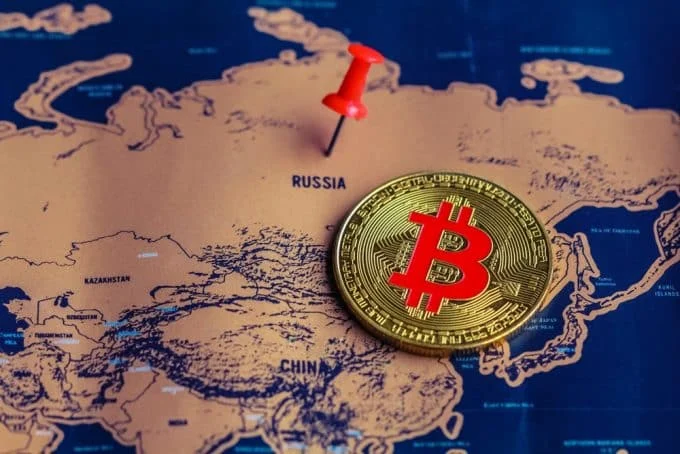
The global cryptocurrency market is currently navigating a treacherous confluence of geopolitical volatility and restrictive regulatory maneuvers. As tensions escalate along the Russo-Ukrainian border, digital asset markets have experienced a profound, broad-based sell-off. Bitcoin, the industry’s bellwether, has retreated significantly from its January peaks, while Ethereum and other major altcoins face mounting downward pressure. This instability is further compounded by the Russian Central Bank’s aggressive posturing regarding a potential blanket ban on cryptocurrency mining and domestic trading—a development that threatens to disrupt one of the world’s most critical hubs for blockchain operations.
The Convergence of Geopolitical Jitters and Market Volatility
The current market climate is defined by an acute sense of anxiety among investors. As of Thursday, Bitcoin was trading at approximately $43,352, according to Coingecko, reflecting a sharp decline from the $47,000 resistance level observed on January 1. This downward trend is not an isolated phenomenon; it mirrors a global flight from risk assets as Western intelligence agencies and the United States government warn of a potential imminent military incursion by Russia into Ukraine.
The correlation between geopolitical instability and cryptocurrency performance has become increasingly evident. Historically, proponents of Bitcoin argued that the asset class might function as "digital gold"—a hedge against inflationary pressures and traditional geopolitical strife. However, recent market behavior suggests a more nuanced reality: in times of extreme uncertainty, investors are prioritizing liquidity, often opting to exit riskier positions across the board. The cryptocurrency market’s correlation with the Nasdaq Composite—a index heavily weighted toward technology stocks—has deepened, signaling that digital assets are being traded as high-beta risk assets rather than safe-haven hedges.
Chronology: A Timeline of Escalating Tension
The current market distress did not occur in a vacuum. It is the result of a month-long escalation of rhetoric and troop movements:
- Early January 2022: Bitcoin opens the year with a degree of optimism, holding steady near the $47,000 mark.
- Mid-January: Reports surface of massive Russian military mobilization, with over 100,000 troops amassing near the Ukrainian border. Western intelligence agencies, led by the United States, express grave concerns regarding a possible "false flag" operation or a direct invasion.
- Late January: High-level diplomatic efforts intensify. President Joe Biden holds a critical hour-long conversation with Ukrainian President Volodymyr Zelensky to discuss security guarantees and the potential for a diplomatic resolution. Despite these efforts, U.S. National Security Adviser Jake Sullivan publicly reiterates the imminent nature of the threat.
- The Regulatory Shock: Parallel to the military buildup, the Russian Central Bank issues a damning assessment of the cryptocurrency industry, proposing a total ban on Bitcoin mining and circulation within the Russian Federation.
- The Market "Tailspin": Following these dual pressures, the crypto market experiences a massive liquidity event. Within a single 24-hour window, the total cryptocurrency market capitalization shed an estimated $200 billion, with Bitcoin and Ethereum dropping to six-month lows.
Supporting Data: Analyzing the Market Sell-Off
The breadth of the recent sell-off underscores the severity of investor sentiment. Bitcoin’s volatility, while historically high, is being scrutinized under a new lens. According to BuyBitcoinWorldwide’s volatility index, Bitcoin’s 30-day volatility averaged approximately 4.56% throughout 2021. Recent data shows a slight contraction in volatility, yet the price action remains bearish.
Despite the recent dip, it is important to contextualize these losses. Bitcoin has not yet surrendered all the gains achieved during the mid-January recovery, where it traded as low as $32,950 before embarking on a short-lived rally. However, the current market cap of roughly $817 billion for Bitcoin alone reflects a cooling of investor enthusiasm compared to the multi-trillion-dollar highs of late 2021.
Ethereum, which has become the backbone of decentralized finance (DeFi) and non-fungible token (NFT) ecosystems, has been hit even harder than Bitcoin. With a 2.14% drop in the most recent session to $2,873, ETH’s decline reflects broader fears that a major conflict would stifle the capital inflows necessary to sustain the growth of decentralized applications. Cardano and other major layer-one protocols have similarly "taken a beating," according to market analysts, as investors move toward cash and stablecoins to mitigate further exposure.
Official Responses and Diplomatic Posturing
The geopolitical standoff has been characterized by intense diplomatic sparring. The Kremlin continues to reject Western warnings, characterizing them as "hypocrisy" and "war-mongering." This dismissal has only heightened the tension in global markets, as the lack of a clear diplomatic off-ramp leaves investors guessing about the potential for sanctions—or worse, a regional conflict that could disrupt global energy supplies and financial systems.
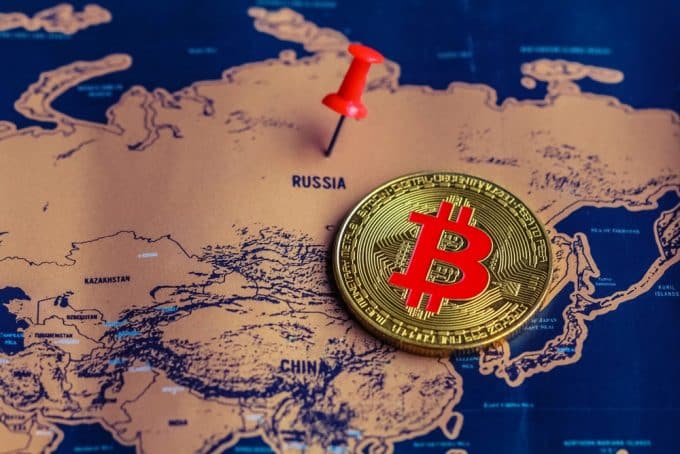
The United States government, for its part, has been clear about the consequences. By signaling that the U.S. and its NATO allies are prepared to implement severe, unprecedented economic sanctions against Russia in the event of an invasion, Washington has inadvertently increased the volatility in global markets. The crypto industry is particularly sensitive to these threats, as Russia is a major geopolitical player that could attempt to utilize decentralized assets to bypass traditional financial sanctions, thereby inviting increased regulatory scrutiny from global watchdogs.
Implications: The Russian Mining Factor
Perhaps the most significant development for the crypto sector is Russia’s proposed crackdown on the mining industry. Russia currently accounts for approximately 10% of the world’s total Bitcoin mining capacity. As China successfully drove mining operations out of its borders in 2021, Russia emerged as a primary destination for those migrating hash power.
A blanket ban by Moscow would represent a major supply-side shock. If Russia follows through on its Central Bank’s recommendation to prohibit mining, the global network would likely experience a period of extreme hashrate volatility. While the decentralized nature of the Bitcoin network ensures that it would eventually recover and redistribute mining capacity to other jurisdictions, the short-term impact of such a policy shift would be profound. It would likely lead to a temporary increase in transaction times and costs, and more importantly, it would serve as a psychological blow to institutional investors who are already wary of the regulatory environment surrounding digital assets.
Furthermore, the Russian government’s stated intent to "impound unlawfully acquired cryptocurrencies" suggests that the regulatory future for crypto in the region is moving toward a highly centralized, surveillance-heavy model. This shift contradicts the fundamental ethos of decentralization and privacy that birthed the industry, creating an existential tension between state power and the crypto-economy.
Conclusion: A Market at a Crossroads
The cryptocurrency market is currently facing a "perfect storm." The intersection of looming military conflict and the threat of aggressive state-level regulation has created a climate of profound uncertainty. While the industry has historically shown remarkable resilience in the face of volatility, the current challenges are structural and systemic.
For the investor, the immediate future is likely to remain turbulent. As long as the threat of a Russian invasion remains, the "risk-off" sentiment will likely persist, keeping digital assets under downward pressure. Simultaneously, the global community will be watching to see if Russia follows through on its anti-crypto legislation. Should these two risks materialize simultaneously, the market may face further downside in the short term.
However, the fundamental thesis of blockchain technology remains unchanged. The long-term trajectory of the industry continues to be linked to the broader evolution of the global economy. As the world navigates these current geopolitical frictions, the crypto market serves as an unfiltered, real-time barometer for global investor confidence—and at this moment, that confidence is being tested like never before. Whether this period of volatility proves to be a temporary correction or the beginning of a more fundamental shift in the industry’s landscape remains the defining question for the coming months.
