

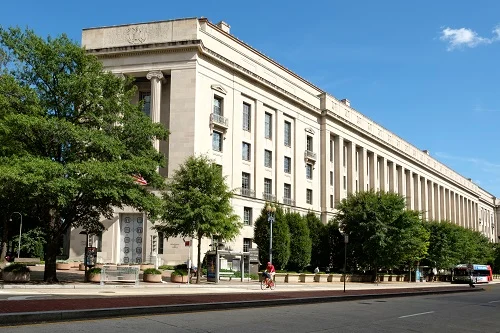
The legal odyssey of Sam Bankman-Fried (SBF), the disgraced founder of the collapsed cryptocurrency exchange FTX, reached a critical inflection point this week. The United States Department of Justice (DOJ) has formally petitioned the court to revoke the bail of the former billionaire, citing a pattern of behavior that prosecutors argue constitutes flagrant witness tampering and attempts to obstruct the administration of justice. As the October trial date looms, the possibility of Bankman-Fried spending the lead-up to his defense behind bars has shifted from a theoretical risk to a distinct legal reality.
The Core Allegations: A Pattern of Obstruction
The DOJ’s request for detention follows a series of incidents that prosecutors characterize as a calculated campaign to influence the narrative of the upcoming trial. Central to the government’s argument is the recent leak of private diary entries belonging to Caroline Ellison, the former CEO of Alameda Research and Bankman-Fried’s one-time romantic partner.
Ellison, who has entered into a plea agreement with the government, is expected to be a star witness for the prosecution. The DOJ contends that by providing excerpts of her private journals to the New York Times, Bankman-Fried sought to discredit her character and intimidate her, effectively sending a message to other potential witnesses about the consequences of cooperating with federal authorities.
Prosecutors argued before Judge Lewis Kaplan of the Southern District of New York that Bankman-Fried’s conduct has reached a threshold where no set of bail conditions—no matter how restrictive—can guarantee the safety of the judicial process. "The defendant has engaged in a pattern of witness tampering," the DOJ stated in court filings, asserting that SBF’s actions are designed to exert extrajudicial influence on the jury pool and pressure those who might testify against him.
A Chronology of the FTX Collapse and Legal Fallout
To understand the gravity of the current situation, one must examine the timeline of the FTX implosion and the subsequent legal maneuvers:
- November 2022: FTX, once valued at $32 billion, files for Chapter 11 bankruptcy following a liquidity crisis triggered by a run on deposits. Revelations of commingled funds between FTX and Alameda Research spark global outrage.
- December 2022: Sam Bankman-Fried is arrested in the Bahamas at the request of U.S. authorities. Shortly thereafter, he is extradited to the United States.
- December 2022: SBF is released on a $250 million personal recognizance bond, one of the largest in U.S. history, allowing him to reside at his parents’ home in Palo Alto under strict house arrest and electronic monitoring.
- February 2023: Judge Kaplan expresses frustration with Bankman-Fried’s use of encrypted messaging apps and internet access, leading to tighter restrictions on his digital communications.
- July 2023: The New York Times publishes an article featuring excerpts from Caroline Ellison’s private diary. The DOJ identifies this as a direct violation of court expectations regarding witness intimidation.
- July 26, 2023: The DOJ files a motion to revoke bail, citing witness tampering.
- August 2023: A deadline is set for the implementation of a comprehensive gag order to limit SBF’s public commentary on the case.
Supporting Data and Legal Precedent
The prosecution’s argument rests on the principle that the defendant’s right to prepare for trial does not supersede the integrity of the trial itself. Legal analysts suggest that the DOJ’s decision to move for detention is a strategic escalation. By bringing the diary leak to the court’s attention, the government is signaling to Judge Kaplan that the current bond conditions—which include limited internet access and monitoring—have been insufficient to restrain Bankman-Fried’s impulses.
Furthermore, the government has emphasized that Bankman-Fried’s public commentary is not merely "speaking to the media," but a concerted effort to influence potential jurors. In the digital age, where social media posts and news stories are consumed by the public, the DOJ argues that SBF’s influence extends far beyond the courtroom walls.
Defense attorneys, conversely, argue that remanding Bankman-Fried to the Metropolitan Detention Center in Brooklyn would severely hinder his ability to assist in his own defense. They maintain that the complexity of the discovery materials—which include millions of pages of financial records and code—requires access to high-speed internet and specialized software that would be inaccessible in a prison setting.
Official Responses and Judicial Stance
During the July 26 hearing, Judge Kaplan did not immediately grant the DOJ’s request to revoke bail, opting instead for a more measured approach. However, his remarks were stern. He warned the defendant, "Take this seriously," underscoring the precariousness of his current situation.
The defense team has characterized the government’s reaction to the diary leak as an overreach, suggesting that the public has a right to know the details of the case. They argue that the First Amendment protects their client’s right to discuss his own situation.
The court has now shifted toward the implementation of a strict gag order. Both parties have been directed to negotiate the terms of this order, which is expected to be finalized by August 3. This order will likely prohibit Bankman-Fried from making any public statements that could be construed as tampering with witnesses or commenting on the evidence in a way that biases the jury.
Implications for the Crypto Industry and Judicial Reform
The potential incarceration of Sam Bankman-Fried would mark a definitive end to the "golden age" of crypto celebrity. For the broader digital asset industry, the trial is a litmus test for how traditional legal systems handle decentralized finance (DeFi) crimes.
1. The Impact on Witness Cooperation
If the court decides that witness tampering has occurred, it sends a powerful signal to white-collar defendants. It reinforces the DOJ’s commitment to protecting the integrity of the witness pool, particularly in high-profile cases involving complex financial fraud. For witnesses like Caroline Ellison and former FTX executives Gary Wang and Nishad Singh, the court’s protection is essential for them to provide transparent testimony.
2. Pre-Trial Detention and the Defense
The debate over whether SBF can effectively defend himself from behind bars touches on broader issues of the American justice system. Critics of the system often point to the "two-tier" nature of justice, where those with the resources to hire elite legal teams can manipulate the terms of their release. The DOJ’s move against Bankman-Fried is a rebuttal to this narrative, suggesting that no amount of wealth or legal maneuvering can shield a defendant from the consequences of interfering with the judicial process.
3. Future Regulatory Landscape
The trial itself is expected to serve as a blueprint for future crypto prosecutions. The evidence presented will likely detail the internal culture of FTX and the regulatory failures that allowed the company to function as an unregulated hedge fund. Regardless of whether Bankman-Fried is in a courtroom or a holding cell when the proceedings begin in October, the outcome will fundamentally shape how global regulators view the accountability of exchange founders and the necessity of strict financial oversight.
Conclusion: The Final Countdown
As the August 3 deadline for the gag order approaches, all eyes remain fixed on Judge Kaplan’s courtroom. Bankman-Fried’s freedom remains conditional, hanging by a thread that is fraying under the weight of his own public actions. Should he violate the forthcoming gag order or engage in further attempts to sway public opinion or intimidate witnesses, the transition from a Palo Alto residence to a federal holding facility will likely be swift.
The saga of FTX is a cautionary tale of hubris and systemic failure. For the victims of the exchange, the prospect of justice rests on a fair and untainted trial. Whether Sam Bankman-Fried spends his nights preparing his defense in the comfort of his home or behind bars, the trial beginning in October will represent a historic reckoning for the cryptocurrency sector. The DOJ has made its position clear: the integrity of the process is non-negotiable. Now, the court must decide if the defendant’s actions have forfeited his right to remain free while he awaits his day in court.
