

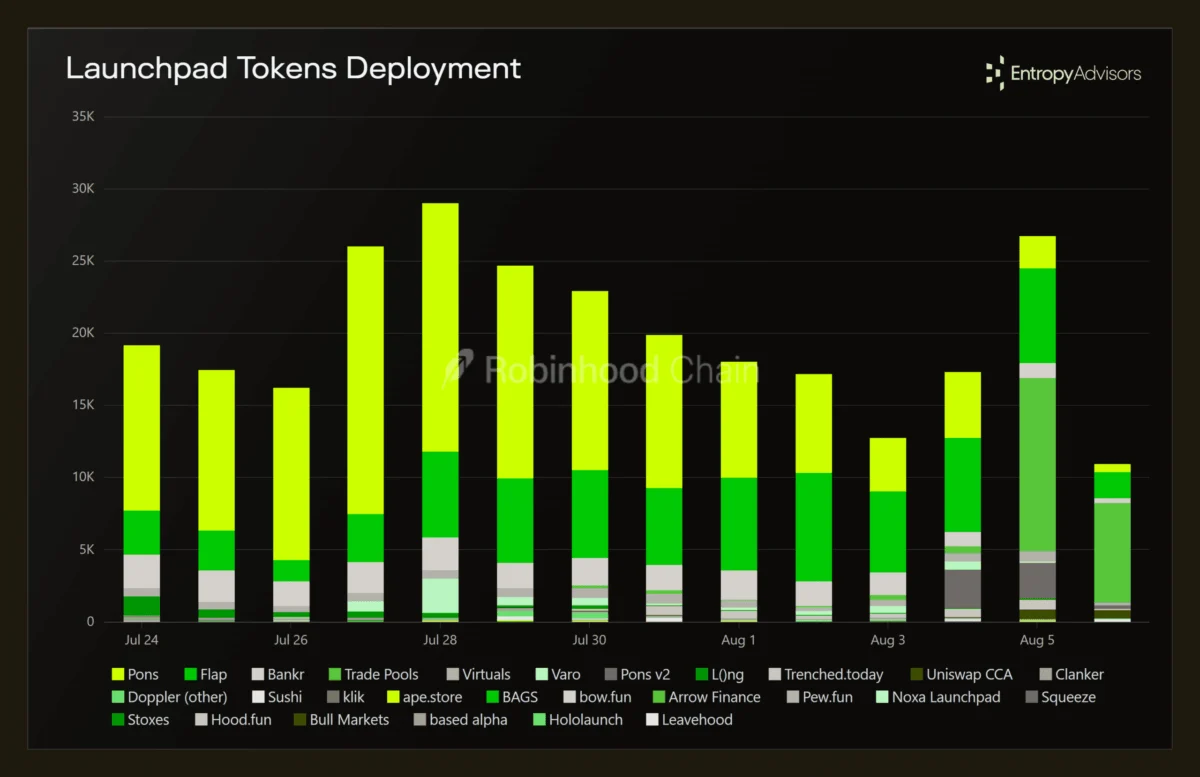
In the rapidly evolving landscape of decentralized finance (DeFi), the battle for dominance over memecoin liquidity has become one of the most fiercely contested sectors. Uniswap, the industry’s flagship decentralized exchange (DEX), has recently thrust itself into the center of this fray with the launch of its new product, “Trade Pools.”
By introducing a streamlined, cost-effective launchpad with a 0.25% trading fee—a figure significantly lower than the 1% industry standard—Uniswap is attempting to redefine the user experience for speculative token traders. However, the move has triggered a wave of skepticism among market observers, who question whether the exchange’s pivot toward high-frequency launchpad activity compromises its reputation for neutral, institutional-grade infrastructure.
The Genesis of Trade Pools: A Strategic Pivot
The emergence of Trade Pools marks a significant evolution in Uniswap’s product suite. Initially, the company introduced "Uniswap Launches," an aggregator interface designed to consolidate various third-party launchpads into a single, cohesive user experience. This feature was first deployed on the Robinhood Chain, capitalizing on the chain’s rapid rise as a hub for speculative activity. By integrating established launchpads like Pons, Flap, and Bankr, Uniswap sought to capture the growing traffic of retail traders.
However, the strategy shifted dramatically when Uniswap decided to debut its own native launchpad, Trade Pools. By offering a fee structure four times cheaper than its competitors, the exchange effectively positioned itself as a disruptor. This transition from a passive aggregator to an active participant in the memecoin ecosystem has drawn intense scrutiny. Critics have pointed to the exploitative nature of existing platforms—most notably PumpFun—where "value extraction" from retail users is often the primary business model. Skeptics are now questioning if Uniswap is drifting toward these "shady" practices in a desperate bid to maintain its competitive edge.
Defending the Vision: The CEO’s Response
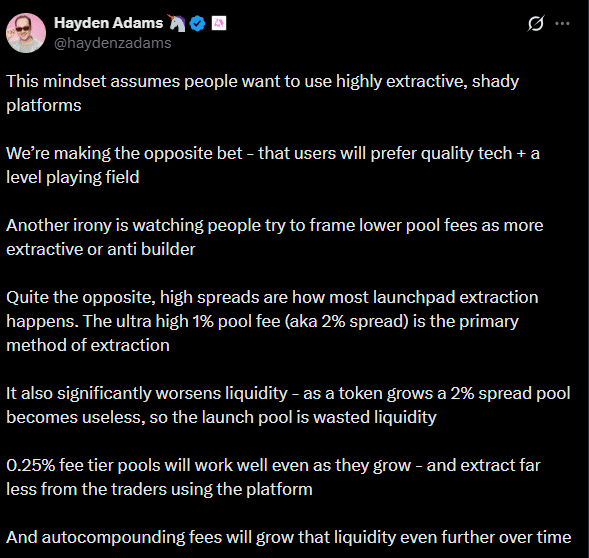
Facing mounting criticism, Uniswap CEO Hayden Adams has moved quickly to clarify the platform’s intentions. In a series of public statements, Adams rejected the premise that Trade Pools is designed to squeeze value from traders. Instead, he framed the move as a long-term strategic investment in user preference for high-quality, transparent technology.

"This mindset assumes people want to use highly extractive, shady platforms," Adams noted, distancing Uniswap from the "casino-like" dynamics that define many current memecoin launchpads. "We’re making the opposite bet—that users will prefer quality tech and a level playing field."
Adams emphasized that the 0.25% fee tier is not a race to the bottom, but a sustainable model that aligns with the protocol’s broader growth objectives. By lowering the friction associated with trading, Uniswap aims to foster a more efficient market where volume grows organically, rather than relying on the aggressive rent-seeking behavior common in the memecoin sector. He maintains that these pools will continue to perform well as they scale, providing a superior alternative to the high-fee environments that currently dominate the market.
Chronology of a Market Disruption
The timeline of this development reveals a calculated move by Uniswap to capitalize on the Robinhood Chain’s infancy.
- Late Summer 2026: The Robinhood Chain officially enters the market, experiencing an immediate surge in memecoin interest. Uniswap pivots to support the chain, recognizing its potential as a high-growth environment.
- The Aggregator Phase: Uniswap launches the "Uniswap Launches" interface, integrating third-party protocols to provide a centralized hub for traders on the new L2.
- The Launch of Trade Pools: Within weeks of the aggregator’s debut, Uniswap releases Trade Pools. The move effectively turns the DEX into a direct competitor to the very platforms it was previously aggregating.
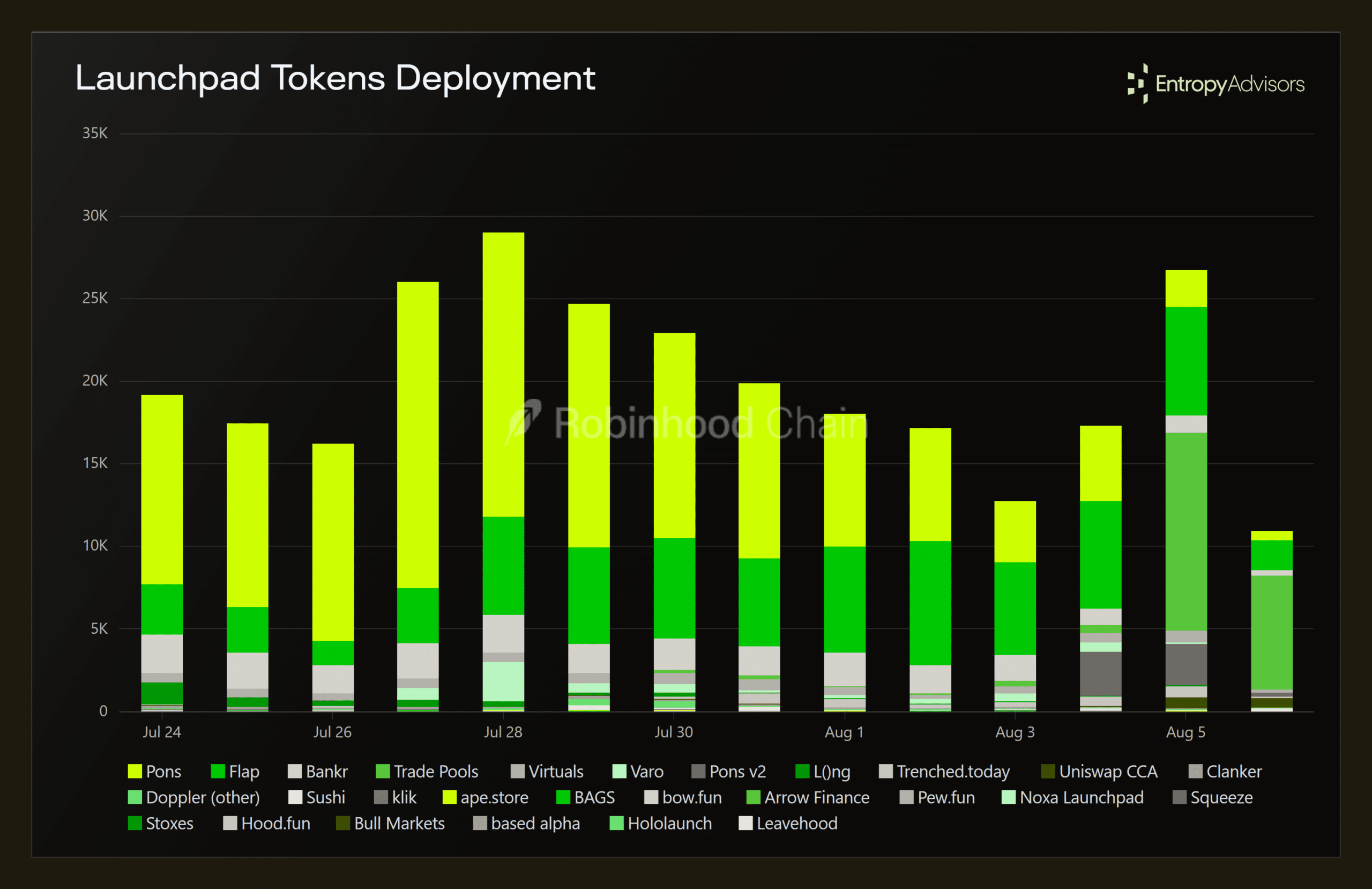
- Immediate Market Reaction: Within just 48 hours of launch, Trade Pools becomes the leading launchpad on the Robinhood Chain, significantly boosting Uniswap’s share of the L2’s total trading volume.
Data-Driven Insights: The Uniswap v4 Connection
The strategic significance of Trade Pools becomes clearer when viewed through the lens of protocol architecture. Tom Wan, head of data at Entropy Advisors, argues that Trade Pools is essentially a Trojan horse for the widespread adoption of Uniswap v4.
"I read Trade Pools as a strategic push to drive usage of Uniswap v4," Wan noted. "Most launchpads today graduate tokens into v3, while Trade Pools routes directly into v4."
The data supports this assessment. In the two days following the launch of Trade Pools, Uniswap’s v4 trading volume saw an explosive increase, climbing from $100 million to over $237 million—a 2.4x surge. This indicates that the launchpad is effectively onboarding new users and liquidity directly into the latest version of the Uniswap protocol, securing a long-term technological advantage over competitors who remain tethered to older versions.
Competitive Implications: Robinhood vs. The World
The integration of Trade Pools has broader implications for the competitive standing of the Robinhood Chain against established L2 and L1 giants. Recent on-chain data highlights a massive shift in capital flow. Last week, the Robinhood Chain recorded nearly $600 million in launchpad volume, effectively leapfrogging the BNB Chain, which reported $400 million.
While Solana remains the undisputed king of the memecoin sector—boasting roughly $3 billion in volume thanks to entrenched platforms like PumpFun and Bonkfun—the gap is narrowing. Uniswap’s entry into the space provides the Robinhood Chain with a professionalized, reliable infrastructure that could peel away retail liquidity from more volatile or less secure chains.
Market Impact and Future Outlook
The launch of Trade Pools has had a tangible effect on the price of the UNI token, which saw a 5% rally to $4.19 following the announcement. While the token is still in a period of consolidation after a volatile July, the market’s positive reception suggests that investors are viewing the launchpad as a revenue-generating asset rather than a liability.
However, the long-term success of the project will depend on several factors:
- Sustainability of Fees: Can a 0.25% fee structure support the necessary security and maintenance costs while providing enough incentive to stave off competitors?
- Regulatory Scrutiny: As Uniswap moves deeper into the speculative token market, it may face increased attention from regulators concerned with consumer protection and the high-risk nature of memecoin launches.
- Community Sentiment: Maintaining the balance between innovation and "shady" extractive practices will be vital for the platform’s brand equity. If the community perceives that the platform is prioritizing volume over user safety, the backlash could jeopardize the protocol’s reputation.
Conclusion: A New Era for Uniswap?
Uniswap’s foray into the launchpad space with Trade Pools is a bold move that highlights the exchange’s willingness to adapt to the realities of modern DeFi. By leveraging its technological infrastructure to provide a cheaper, more efficient alternative to existing memecoin casinos, Uniswap is attempting to steer the market toward a more sustainable model.
Whether this move will ultimately allow the Robinhood Chain to challenge Solana’s dominance remains to be seen. However, the data confirms one thing: the appetite for high-volume, low-friction token trading is insatiable. By positioning itself at the center of this activity, Uniswap has ensured that it remains the primary arbiter of value in the decentralized exchange space. As the market continues to mature, the success of Trade Pools will likely serve as a litmus test for whether a "quality tech" approach can truly compete with the fast-paced, high-extraction models that have dominated the memecoin cycle to date.
