

Introduction: The High-Stakes Evolution of Stablecoins
In the fast-evolving landscape of global finance, stablecoins have transitioned from being a niche trading tool for cryptocurrency enthusiasts to becoming a foundational pillar of cross-border liquidity. Among them, Tether (USDT) reigns supreme, anchoring trillions of dollars in economic activity.
However, this meteoric rise has placed the issuer under an unprecedented global microscope. As traditional banking routes close for sanctioned regimes and high-risk entities, decentralized and semi-decentralized digital assets have increasingly become the medium of choice for illicit financial networks.
In response, Tether has aggressively expanded its role in global financial enforcement. By actively collaborating with international governments—most notably U.S. regulatory and law enforcement agencies—the company has taken aggressive steps to freeze funds linked to illicit activities. Yet, this proactive stance brings to light a complex paradox: as Tether scales its infrastructure to handle mind-boggling transaction volumes, it faces mounting regulatory pressure, structural compliance hurdles, and the immense challenge of policing a shadow banking rail that operates across hostile geopolitical divides.
Main Facts: The Scope of Tether’s Enforcement Actions and Scale
At the core of the ongoing debate surrounding Tether’s operational model are two opposing forces: staggering commercial growth and intensive law enforcement intervention.
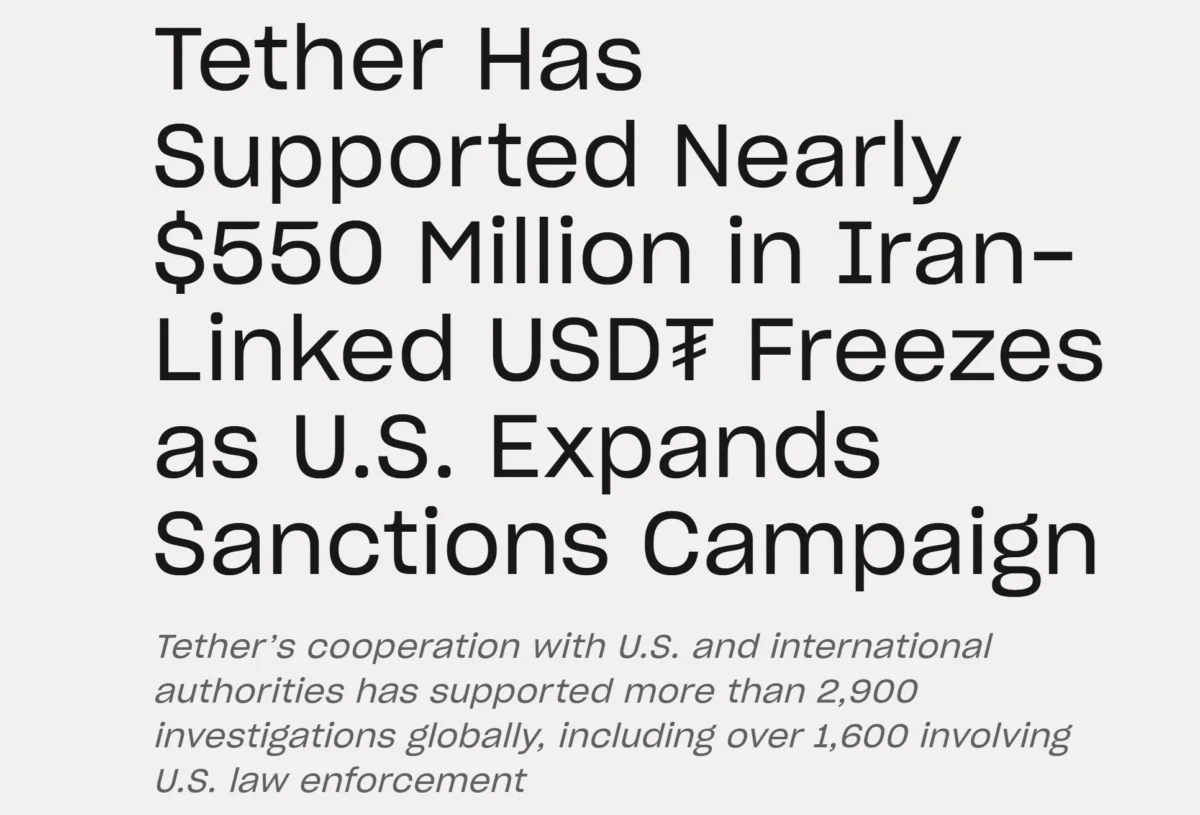
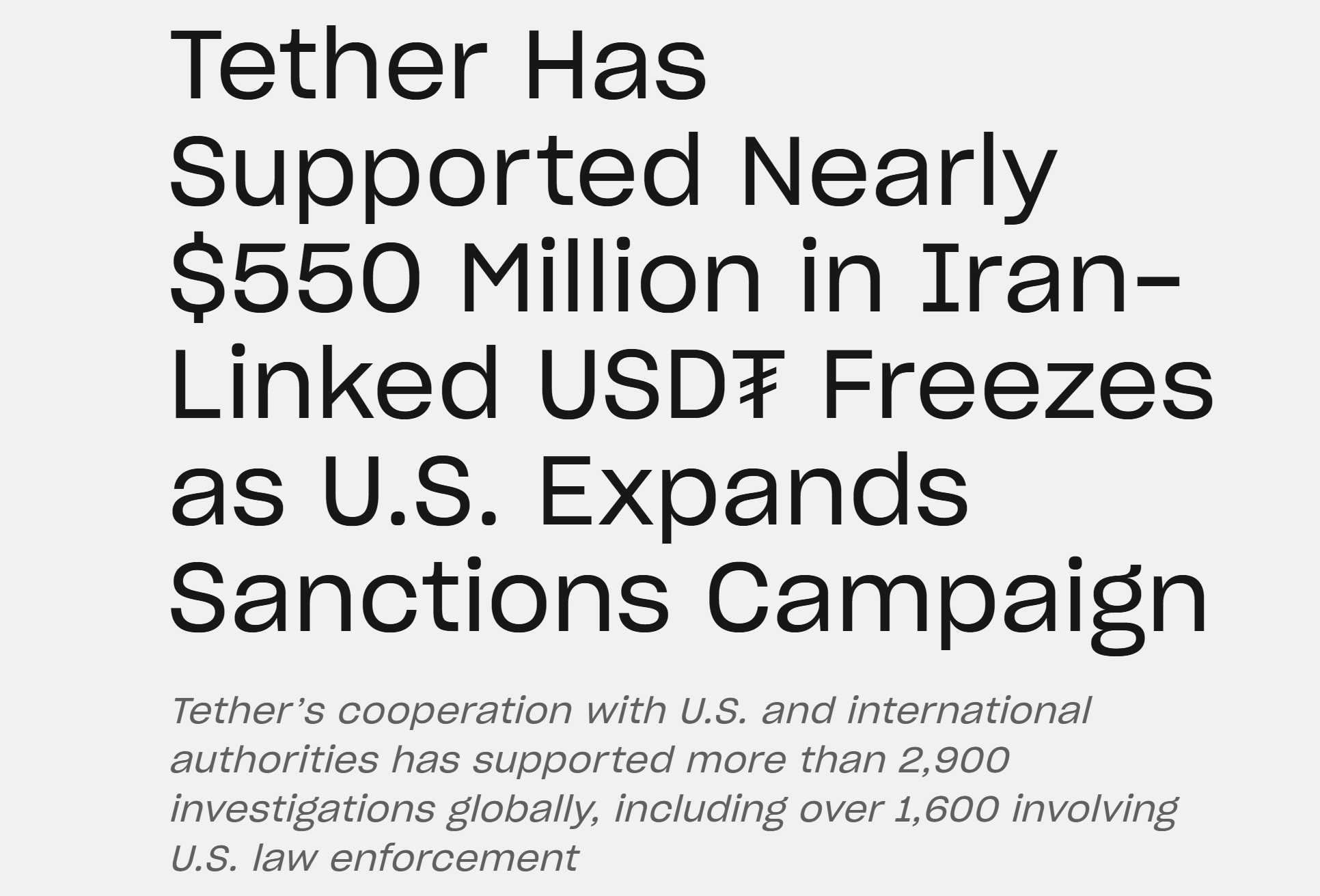
Recent disclosures highlight that Tether has frozen approximately $550 million in Iranian-linked USDT assets at the direct request of a U.S. agency. This enforcement action is not an isolated incident but part of a broader, systemic strategy by the issuer to cooperate with international authorities.
The scale of Tether’s ecosystem makes these interventions both vital and challenging. To understand the sheer volume of capital moving through the network, consider that USDT recorded a staggering $4.4 trillion in transaction volume during the final quarter of Q4 2025. This massive liquidity provides unmatched financial utility, but it also creates a massive surface area for illicit actors seeking to bypass traditional financial surveillance systems like SWIFT.
Key facts defining the current landscape include:
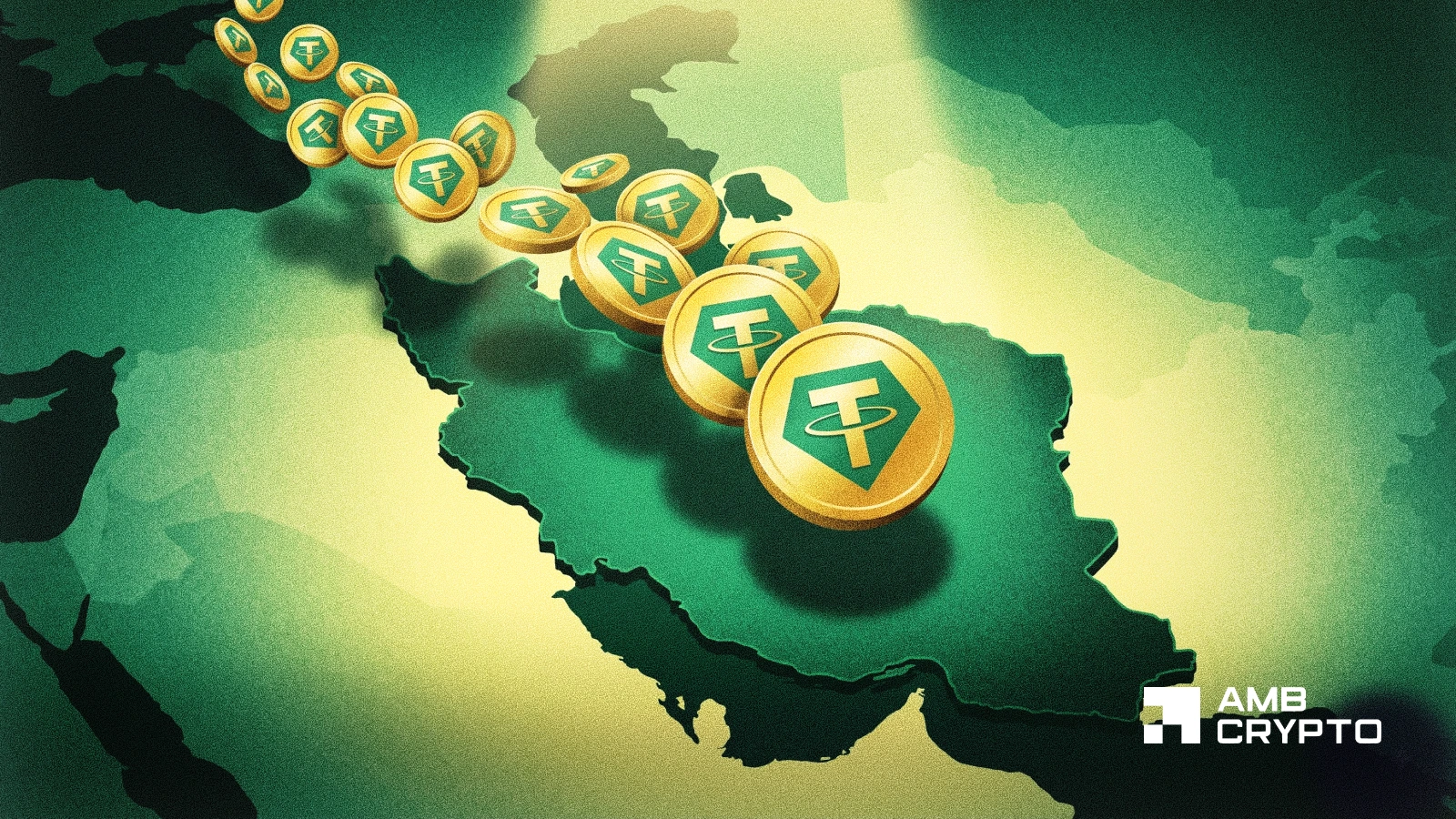
- Enforcement Scale: Approximately $550 million in Iranian-linked USDT frozen under U.S. agency directives.
- Transaction Velocity: A massive $4.4 trillion transaction volume recorded in Q4 2025, raising questions regarding the issuer’s capacity to monitor systemic flows.
- Shadow Banking Reliance: Recent legislative and investigative reports indicate that USDT has become a primary financial rail for jurisdictions cut off from Western banking systems.
- Technological Shifts: The introduction of high-throughput infrastructures like StableChain, targeting up to 10,000 transactions per second (TPS), which tests the limits of real-time compliance monitoring.
Chronology: The Trajectory of Iran-Related USDT Flows (2021–2025)
To fully comprehend how Tether became intertwined with geopolitical enforcement, it is essential to examine the timeline of how digital assets were adopted as a substitute for traditional fiat banking routes in heavily sanctioned nations like Iran.
2021: The Genesis of Crypto-Based Oil and Trade Settlements
As international economic sanctions tightened around Iran’s energy sector, traditional correspondent banking corridors were systematically severed. State-backed entities and proxy networks began experimenting with alternative settlement mechanisms. During this period, investigators noted an initial migration toward stablecoins, leveraging the price stability of USDT to conduct cross-border trade without exposure to the volatility inherent in unbacked cryptocurrencies like Bitcoin.
2022–2023: Institutionalization of the Shadow Financial Rail
By 2022, the adoption of digital assets within Iranian financial networks had evolved from ad-hoc experiments into an institutionalized shadow banking system. According to comprehensive data released by investigative bodies and legislative oversight committees, a significant percentage of flagged wallets began consolidating their reserves into USDT. The transparent, 24/7 nature of public ledgers inadvertently provided financial intelligence units with a clear trail, even as illicit actors utilized complex layering techniques, over-the-counter (OTC) brokers, and decentralized exchanges to obfuscate the origin of funds.
2024: Escalation of Congressional Scrutiny
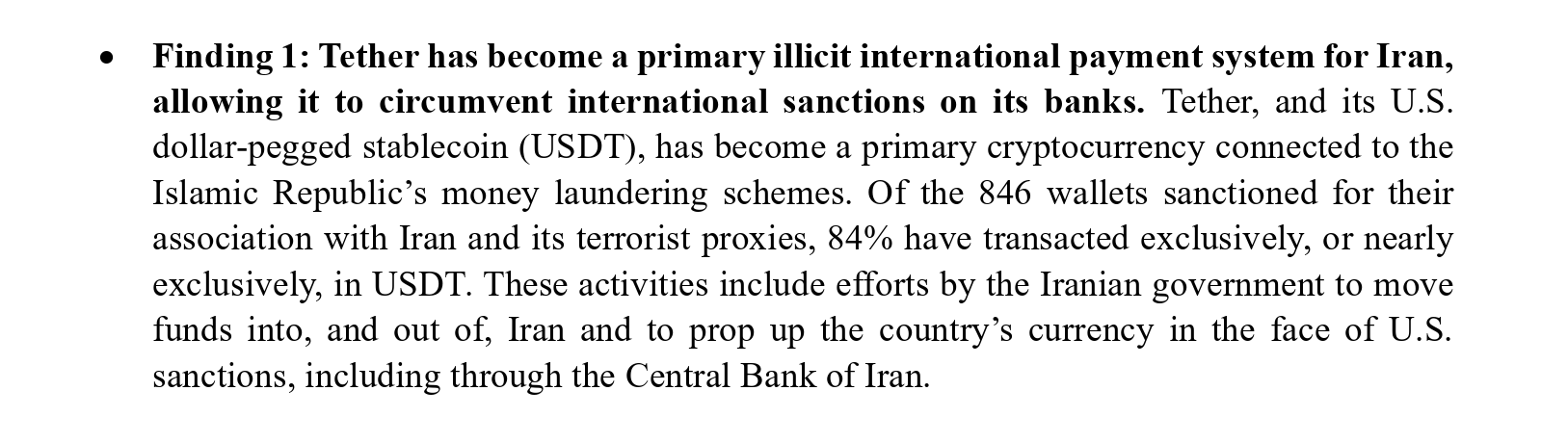
Pressure reached a boiling point in legislative chambers, most notably highlighted by U.S. Senate reports (such as those from the Homeland Security and Governmental Affairs Committee). Investigations revealed that a staggering 84% of 846 sanctioned or seizure-targeted wallets used USDT as their primary digital currency. Furthermore, forensic blockchain analysis successfully mapped over $600 million in USDT moving through the accounts of two prominent, sanctioned Iranian oil smugglers between 2021 and 2024. These findings established a direct pipeline connecting Iranian state-backed commercial entities to regional militant and paramilitary networks.
2025: Record Volumes and the Pivot to Active Enforcement
Entering 2025, Tether faced existential questions regarding its regulatory future. With Q4 2025 transaction volumes touching $4.4 trillion, the company could no longer rely on a passive compliance model. Tether began aggressively flexing its issuer-level controls—a technical feature native to centralized stablecoins that allows the company to blacklist and freeze specific wallet addresses upon receiving credible legal requests. The freezing of $550 million in Iranian-linked funds marked a turning point, signaling a hardening alignment between private stablecoin issuers and Western geopolitical enforcement goals.
Supporting Data: Unpacking the Senate Reports and Network Analytics
Official data underscores the heavy reliance of sanctioned entities on Tether’s infrastructure. Investigations into Iran’s crypto adoption—which various estimates place at upwards of $10 billion—reveal a sophisticated, multi-tiered financial apparatus designed to evade geopolitical isolation.
The Anatomy of Sanctioned Wallets
Senate committee findings provide a stark visual and statistical representation of how digital assets are weaponized by state actors:
- Concentration Risk: Out of nearly 850 wallets explicitly targeted for sanctions or asset seizure, an overwhelming 84% utilized USDT. This dominance stems from Tether’s deep liquidity, widespread acceptance across global exchanges, and ease of integration into non-compliant OTC brokerages.
- Cross-Border Nexus: Forensic audits of the $600 million tied to Iranian oil smugglers exposed direct transactional loops connecting Iranian financial institutions to regional actors, including financial networks associated with Hizballah and the Houthis.
This data counters the common misconception that cryptocurrency is used purely for decentralized, peer-to-peer retail transactions. Instead, in regions cut off from SWIFT, stablecoins act as wholesale settlement layers for sovereign-backed illicit trade, bridging the gap between underground commodities markets and global liquidity pools.
Official Responses: Tether’s Stance and the Philosophy of Transparency
Faced with mounting scrutiny from lawmakers, regulators, and international watchdogs, Tether’s leadership has mounted a robust defense of the company’s compliance framework. Rather than shying away from its gatekeeper role, Tether has leaned into its capacity to assist law enforcement agencies.
Weighing in on the debate, Tether CEO Paolo Ardoino vigorously defended the company’s cooperative stance, offering a compelling perspective on the inherent nature of distributed ledgers:
"Public blockchains provide visibility for investigators where cash does not."
Ardoino’s statement touches on a fundamental irony of modern financial crime: while digital assets are frequently criticized for facilitating illicit transactions, the immutable and public nature of blockchains often makes them vastly superior for forensic investigations compared to physical cash or opaque offshore bank accounts. In a physical cash economy, laundering billions of dollars through suitcases or traditional shell corporations leaves virtually no digital footprint. In contrast, every single movement of USDT leaves an indelible record on the ledger.
Furthermore, Tether leadership has continually clarified that the company operates under a strict threshold for intervention. Tether has committed to assisting law enforcement agencies globally whenever it is provided with "credible information" regarding illicit funds, coordinating directly with agencies to blacklist addresses and freeze assets before they can be converted back into fiat currencies or routed through mixing services.
Implications: StableChain, Scalability, and the Future of Compliance
As Tether looks toward the future, technological advancements designed to enhance user experience and scalability are introducing new compliance dilemmas. The launch and expansion of StableChain—an optimized infrastructure designed to support the immense scalability of USDT—exemplifies this double-edged sword.
The Speed vs. Compliance Trade-Off
StableChain boasts impressive technical metrics, including:
- Ultra-Fast Settlement: A rapid 0.7-second finality.
- Guaranteed Block Space: Ensuring uninterrupted transfers even during periods of extreme network congestion.
- High-Throughput Ambitions: Targeted transaction capacities scaling up to 10,000 transactions per second (TPS), following updates rolled out in late 2025.
While these performance benchmarks are a boon for merchants, cross-border traders, and decentralized finance (DeFi) participants, they present a daunting challenge for compliance and surveillance teams. Faster, denser, and higher-volume payment flows dramatically compress the window of time that monitoring systems have to detect, flag, and freeze suspicious movements before illicit actors can siphon funds across multiple chains or decentralized bridges.
The Burden of Issuer-Level Controls
In an environment where base-layer networks prioritize speed and decentralization, the burden of regulatory compliance falls heavily on the centralized issuer. Because blockchains themselves do not inherently replace wallet screening or sanctions enforcement, Tether’s issuer-level controls serve as the primary intervention point.
The ultimate test for Tether—and for the broader stablecoin industry—will be whether its transaction monitoring systems, artificial intelligence-driven analytics, sanctions data feeds, and asset-freezing mechanisms can successfully keep pace with exponential increases in payment throughput.
Conclusion
Tether’s recent actions to freeze $550 million in Iranian-linked funds mark a definitive evolution in the life cycle of the world’s most dominant stablecoin. No longer just a neutral software utility, Tether is increasingly functioning as a quasi-regulatory enforcer at the intersection of geopolitics, national security, and decentralized technology.
The revelations from Senate investigations regarding Iran’s shadow banking system prove that stablecoins are now central instruments of state-level economic survival and sanctions evasion. However, as CEO Paolo Ardoino points out, the transparency of public blockchains remains an asymmetric weapon for investigators—one that traditional fiat banking can rarely match.
As high-speed infrastructures like StableChain push transaction capacities to unprecedented heights, Tether’s ability to balance lightning-fast scalability with rigorous, real-time compliance will determine not only the company’s regulatory future, but the credibility of the entire digital asset ecosystem.
