

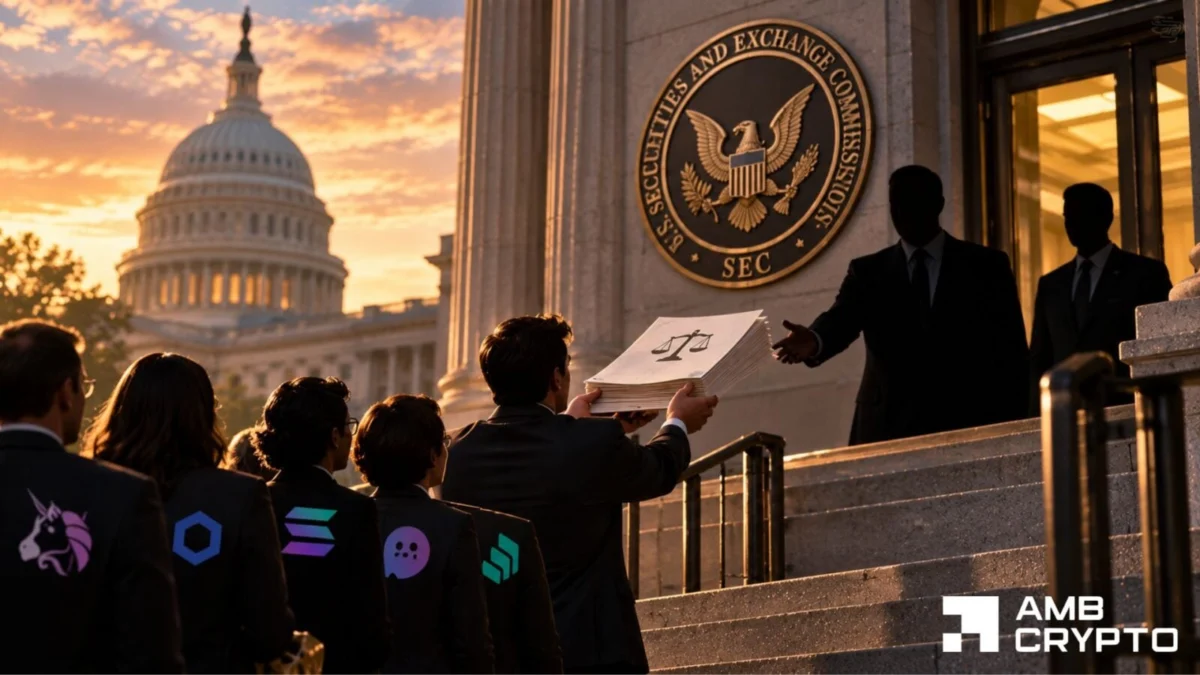
The cryptocurrency industry has reached a critical juncture in its relationship with the U.S. Securities and Exchange Commission (SEC). As the regulator works to finalize its proposed "Innovation Exemption" framework—a potential pathway for modernizing how digital assets are traded—major industry players are mounting a sophisticated lobbying effort to secure foundational protections for decentralized finance (DeFi).
On September 22, Miles Jennings, General Counsel at venture capital giant a16z Crypto, joined forces with the DeFi Education Fund to issue a formal request to the SEC. This petition seeks to reshape the regulatory landscape by carving out explicit exemptions for decentralized exchanges (DEXs), the applications that interface with them, and, most crucially, the developers who build them.
The Core Proposals: Seeking Regulatory Safe Harbors
The joint letter submitted by a16z and the DeFi Education Fund outlines two primary objectives designed to reconcile the realities of blockchain technology with the rigid requirements of the Securities Exchange Act of 1934.
1. Developer and Protocol Immunity
The first request targets the ambiguity surrounding "exchange registration requirements." Currently, the SEC maintains a broad interpretation of what constitutes an exchange. Jennings argues that this interpretation unfairly ensnares software developers who create open-source, immutable protocols.
The proposal calls on the SEC to clarify that developers of DEX protocols and the front-end applications (DEX Apps) that provide access to these protocols fall outside the scope of the Exchange Act. This is a strategic pivot to codify "developer protections," a concept that was previously at the heart of the stalled CLARITY Act. By decoupling the act of writing code from the act of operating an exchange, the industry hopes to provide "regulatory clarity to truly permissionless systems."
The industry’s stance is nuanced: they argue that if a platform is fully non-custodial—meaning it does not maintain control over user funds or assets—it should not be held to the same stringent registration standards as traditional, centralized exchanges. This exemption, they propose, should remain in effect even if the platform facilitates the trading of assets that the SEC might classify as tokenized securities.
2. A Two-Tiered Approval Pathway
The second request acknowledges that not all crypto platforms are decentralized. Recognizing the existence of Crypto Asset Trading Platforms (CTPs) that function as traditional intermediaries and hold custody of user funds, a16z has proposed a distinct, tailored approval pathway. This approach suggests that while decentralized protocols deserve total exemption, centralized, custodial crypto platforms require a modernized regulatory framework that better reflects their operational reality compared to legacy broker-dealers.
A Chronology of the DeFi Regulatory Stand-off
To understand the weight of this request, one must look at the recent timeline of the SEC’s aggressive posture toward digital assets:
- Early 2024: The SEC intensified its enforcement actions against major DeFi players, most notably issuing a "Wells Notice" to Uniswap, the world’s largest decentralized exchange. This served as a loud warning to the industry that the regulator intended to apply traditional securities laws to automated, protocol-based trading.
- Mid-2024: The CLARITY Act, a legislative effort aimed at providing a comprehensive legal framework for crypto, suffered setbacks. Provisions intended to shield developers from liability were watered down, leaving the industry vulnerable to ongoing litigation.
- September 2024: Following the stagnation of broader legislative efforts, the SEC moved forward with its "Innovation Exemption" framework. This created a new opening for industry stakeholders to lobby for specific carve-outs before the rules are finalized.
- September 22, 2024: a16z and the DeFi Education Fund submitted their formal recommendation, explicitly citing the Uniswap enforcement action as a catalyst for their demand for clearer, more favorable regulatory boundaries.
The Jurisdictional Mismatch: SEC vs. CFTC
The desperation for SEC clarity is amplified by the contrast with the Commodity Futures Trading Commission (CFTC). The CFTC has recently provided a degree of "safe harbor" for passive software, such as non-custodial crypto wallets like Phantom, exempting them from being classified as "introducing brokers" under the Commodity Exchange Act.
However, this relief is limited. Because the CFTC primarily oversees derivatives—such as perpetual futures—its guidance does not extend to the vast majority of tokens that the SEC labels as securities. A DEX that handles tokens deemed to be securities remains in a precarious legal limbo.
The industry’s argument is that if the CFTC can recognize the distinction between a software provider and a financial intermediary, the SEC should be capable of the same intellectual nuance. By forcing software developers to register as exchanges, the SEC risks stifling innovation, pushing development offshore, and effectively criminalizing the creation of open-source tools.
The Opposition: Traditional Finance Pushes Back
The road ahead is far from clear. The SEC’s "Innovation Exemption" is not being viewed through a singular lens. Traditional financial institutions, represented by the Securities Industry and Financial Markets Association (SIFMA), have already expressed significant reservations about the SEC’s proposal.
SIFMA, which counts giants like Citadel Securities among its members, has criticized the SEC for potentially creating an uneven playing field. While these legacy firms might support the second half of the a16z proposal—which seeks to create a more viable path for custodial CTPs—they are deeply opposed to the first half.
From the perspective of legacy finance, exempting DEXs and their developers from registration creates a "shadow market" that operates without the investor protections, anti-money laundering (AML) controls, and capital requirements that traditional exchanges are mandated to follow. The institutional lobby is expected to pressure the SEC to reject the exemption for decentralized protocols, arguing that "code is not law" and that any platform facilitating the trade of securities must be subject to rigorous oversight, regardless of its underlying technical architecture.
Implications for the Future of DeFi
The outcome of this dialogue will determine whether the United States remains a hub for blockchain innovation or whether it enters a prolonged period of "regulatory winter."
1. The Survival of Decentralization
If the SEC refuses to grant the requested exemptions, decentralized protocols may find themselves effectively barred from the U.S. market. This would force developers to choose between geofencing U.S. users or risking the same legal and financial onslaught currently facing companies like Uniswap.
2. Legal Precedents
Should the SEC adopt even a portion of the a16z proposal, it would represent a massive shift in how the government views software. It would signal an acknowledgment that the "Exchange Act" was written for a world of human brokers and paper ledgers, not for autonomous smart contracts running on public blockchains.
3. The Tokenized Securities Market
The SEC has shown interest in the potential of tokenized stocks. However, the current regulatory framework makes the trading of these assets on DeFi protocols nearly impossible. If the SEC truly wants to encourage the tokenization of real-world assets (RWA), they must find a way to accommodate non-custodial platforms. The a16z proposal offers a pathway to do exactly that, but it requires the SEC to accept a level of decentralization that is antithetical to its current mandate of centralized oversight.
Conclusion
The request from a16z and the DeFi Education Fund is not merely a technical suggestion; it is a fundamental challenge to the SEC’s authority over the internet’s infrastructure. By demanding that developers be treated as engineers rather than brokers, the industry is forcing the SEC to decide whether it will act as a facilitator of the next generation of financial technology or as a gatekeeper of the past.
As the comment period for the Innovation Exemption framework continues, the industry is bracing for a protracted battle. With traditional finance lobbying against the exemptions and the SEC caught between its enforcement-first reputation and the need to provide clarity for a growing asset class, the path forward remains murky. Yet, one thing is certain: the era of "regulation by enforcement" is being pushed to its limits, and the demand for a clear, code-aware regulatory framework has never been louder.
