

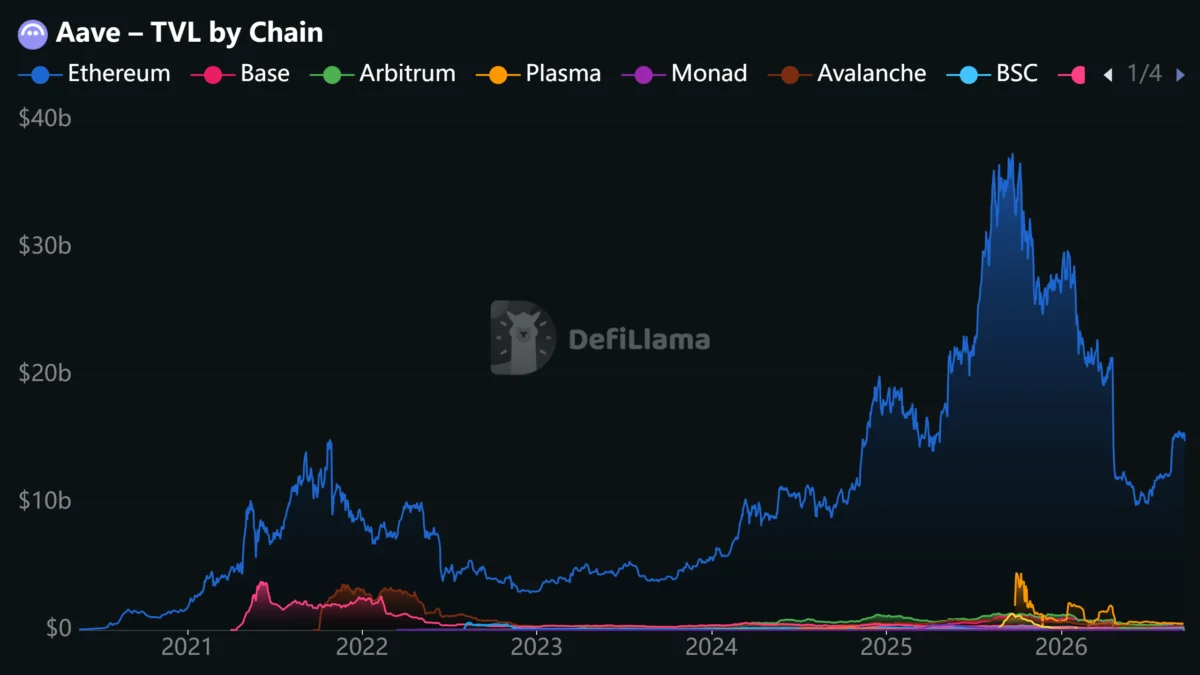
The decentralized finance (DeFi) ecosystem stands at a precarious juncture. While the sector has successfully democratized access to financial services, it has historically struggled to bridge the gap between traditional institutional mandates and the permissionless nature of on-chain protocols. Aave, the industry’s premier lending powerhouse, is now seeking to dismantle these barriers with a groundbreaking proposal: Custodied Collateral Lending. By integrating with regulated custodians, Aave aims to unlock billions in previously stagnant institutional capital, marking a significant evolution in how DeFi interacts with the traditional financial world.
The Core Concept: Redefining Institutional DeFi
At its heart, the new Aave proposal seeks to solve a fundamental friction point: the inability of regulated institutional players—such as hedge funds, pension funds, and asset managers—to utilize their crypto-assets for DeFi lending without violating strict custody requirements.
Currently, institutional investors are often mandated by compliance and fiduciary duty to keep their assets in "cold" or regulated storage solutions, such as those provided by Anchorage Digital. These assets are effectively locked away from the burgeoning yields and liquidity opportunities found within the DeFi space. To participate in protocols like Aave, these institutions would historically have to "self-custody" their assets—a non-starter for most regulated entities—or rely on "wrapped" alternatives like Wrapped Bitcoin (WBTC), which introduce additional layers of smart contract risk, counterparty exposure, and regulatory ambiguity.
Aave’s solution is elegant in its simplicity: it allows institutions to borrow stablecoins, such as USDC, while their actual collateral remains safely held within the confines of a regulated custodian. By utilizing Chainlink’s CustodySync technology and Custodied Collateral Tokens (CoCTs), Aave can verify the existence and security of the collateral on-chain without the asset ever leaving the custodian’s oversight.
Chronology: From Concept to Integration
The journey toward this institutional breakthrough has been marked by careful development and a deliberate push for regulatory harmony.
- Q1–Q2 2026: Identifying the Friction. Aave’s development team and the DAO community identified a significant "unreachable" market segment. Despite a massive Total Value Locked (TVL), a substantial portion of institutional capital remained sidelined due to the lack of a bridge between institutional custody systems and on-chain liquidity.
- September 2026: The Proposal Emerges. A formal Request for Comment (ARFC) was published on the Aave governance forums, detailing the "Hub-Spoke" model. This proposal outlined the integration with Anchorage, effectively creating a mechanism where custodial assets are represented on-chain through secure, verifiable tokens.
- The Voting Process. Following the initial proposal, the Aave community entered a multi-month period of deliberation. The process follows a strict governance path: from community discussion to formal Snapshot voting, and ultimately, if passed, the final technical implementation on Aave V4.
- The Road Ahead. As of the current trajectory, if the proposal secures sufficient governance backing, it will transition into the execution phase, potentially setting a new standard for how DeFi protocols handle institutional-grade collateral.
Technical Mechanics: How the "Hub-Spoke" Model Works
To understand the significance of this proposal, one must look at the technical architecture. The "Hub-Spoke" model is designed to maintain the security of the custodian while granting the user the utility of the Aave protocol.
The CustodySync Bridge
Chainlink’s CustodySync serves as the connective tissue between the traditional custodian (Anchorage) and the Aave V4 protocol. When an institution initiates a loan, the following sequence occurs:
- Deposit: The institution deposits their primary asset (e.g., BTC) into their Anchorage account.
- Tokenization: Anchorage issues CoCTs to the institution’s on-chain wallet. These tokens act as cryptographic receipts, proving that the underlying collateral is secured in the custodian’s vault.
- Lending: The institution deposits these CoCTs into the Aave V4 protocol. Because these tokens represent real-world assets held in custody, Aave treats them as valid, high-trust collateral.
- Borrowing: The institution is then able to borrow stablecoins against their CoCTs, gaining liquidity without ever moving the underlying BTC out of regulated custody.
- Repayment & Redemption: Once the loan is repaid with interest, the CoCTs are burned. This triggers a signal to Anchorage to unlock the original BTC, returning it to the institutional investor’s balance sheet.
This structure eliminates the need for wrapped assets and significantly reduces the "smart contract risk" associated with complex bridge protocols.
Supporting Data: Why Aave Needs This Now
The urgency behind this proposal is backed by compelling data regarding Aave’s recent growth and market position.
A Rebounding TVL
Aave has experienced a robust recovery throughout 2026. After hitting a low point of $12.5 billion in June, the protocol’s TVL surged to $19 billion—a 52% increase in just one quarter. This growth indicates a strong appetite for on-chain lending, yet the protocol’s researchers estimate that there is still billions of dollars in "idle" capital that cannot access the protocol due to current custody limitations.
Market Share Dominance
Aave currently commands approximately 48% of the total DeFi lending market. By capturing the institutional segment, the protocol is not just increasing its TVL; it is cementing its position as the primary financial layer for the next iteration of the digital economy. The ability to tap into institutional capital—which is typically much "stickier" than retail capital—could provide a massive boost to the protocol’s long-term sustainability.

Official Responses and Strategic Vision
Aave founder Stani Kulechov has been vocal about the importance of this development. Describing the proposal as "first-of-its-kind," Kulechov emphasizes that the goal is to bridge the gap between traditional finance (TradFi) and DeFi without sacrificing the core tenets of either.
"This is about enabling institutions to borrow stablecoins on Aave V4 against collateral held with a qualified custodian, accessing liquidity directly from Aave V4 markets," Kulechov stated in recent governance discussions.
Industry analysts observe that this move is a calculated response to the maturing DeFi landscape. While early DeFi was dominated by "degen" retail activity, the next wave of growth will be defined by institutional adoption. By prioritizing regulatory compatibility, Aave is positioning itself to be the first destination for institutional liquidity, potentially leaving competitors who remain purely focused on retail or un-custodied assets behind.
Implications: A New Era for DeFi
The introduction of custodied collateral lending has wide-reaching implications for the broader crypto market.
1. Competitive Pressure on Other Protocols
Protocols like Morpho and Kamino, which have carved out niches in the lending space, may find themselves under pressure to adapt. If Aave succeeds in creating a seamless, compliant path for institutions, other protocols will likely be forced to either integrate with major custodians or risk losing their institutional market share to Aave’s more robust, compliant infrastructure.
2. The Normalization of DeFi
This move acts as a legitimizing force for the entire DeFi sector. When regulated institutions like hedge funds start utilizing DeFi protocols to manage their treasury and leverage positions, it signals to regulators that the technology is mature, secure, and capable of being integrated into existing financial compliance frameworks.
3. Reduced Systemic Risk
By avoiding the need for wrapped tokens (like WBTC), the industry moves toward a cleaner, more transparent model. Wrapped tokens have historically been a source of vulnerability, with various bridge hacks costing the industry billions. By moving to a model where the underlying asset remains in a qualified, audited, and regulated vault, Aave is significantly lowering the risk profile for its users.
4. Market Liquidity and Efficiency
The injection of institutional capital into Aave will likely lead to deeper liquidity pools, lower borrowing costs, and more stable interest rates. This, in turn, makes the protocol more attractive to all users, not just institutions, creating a "flywheel effect" that could catalyze further growth across the entire DeFi ecosystem.
Final Thoughts
As Aave moves toward the potential adoption of custodied collateral lending, it is clear that the project is no longer just a "DeFi protocol." It is evolving into a comprehensive financial layer that recognizes the necessity of bridging the gap between legacy custody and modern on-chain liquidity.
The success of this proposal will serve as a bellwether for the industry. If the community votes in favor and the technical implementation proves secure, we are likely looking at the beginning of a massive influx of institutional capital. For Aave, the stakes are high, but the potential reward—a solidified, long-term dominance in the multi-billion-dollar world of decentralized finance—is higher still. As the lines between TradFi and DeFi continue to blur, Aave’s latest pivot might just be the most important strategic move in the history of the protocol.
