


October 2026 — The digital asset market is experiencing a remarkably bullish start to the final quarter of the year. Propelled by months of persistent expansion, the global stablecoin market capitalization has pushed past the $310 billion threshold. In a striking demonstration of incoming momentum, the market added upwards of $1 billion in fresh liquidity in less than 72 hours.
Simultaneously, the broader cryptocurrency market capitalization is marching upward, signaling a robust macro-liquidity improvement heading into Q4. Against this vibrant backdrop, strategic maneuvers by the industry’s two dominant stablecoin issuers—Tether and Circle—are capturing the intense focus of institutional investors, retail traders, and decentralized finance (DeFi) architects alike.
1. Main Facts: A New Liquidity Paradigm
The convergence of rising stablecoin supplies and high-profile institutional integrations is reshaping how capital flows into digital assets, particularly within the Bitcoin ecosystem.
- Explosive Stablecoin Growth: The global stablecoin market cap has comfortably cleared $310 billion, fueled by continuous capital inflows over the preceding two months.
- Tether’s Bitcoin Return: Tether is officially bringing its flagship USDT back to the native Bitcoin network through a strategic partnership with Utexo, unlocking a vital new liquidity channel for the pioneer cryptocurrency.
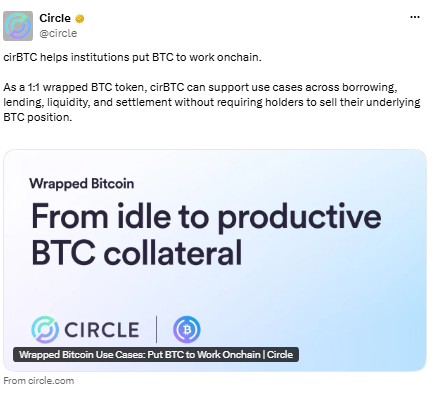
- Circle’s Institutional BTC Play: Circle is launching cirBTC, a 1:1 backed wrapped Bitcoin token engineered specifically to allow institutions to deploy their BTC holdings into DeFi protocols for lending, borrowing, and settlement without liquidating their underlying positions.
- Q3 Performance Leaders: According to data from the RWA Foundation, USDC led major stablecoin inflows in Q3 with an $881 million expansion over 90 days, closely followed by notable gains from RLUSD, U, and USDe.
2. Chronology of Events: Leading into Q4
The current expansion did not happen overnight; it is the culmination of structural shifts and regulatory adaptations that played out quietly throughout the third quarter of 2026.
- Late Q3 (August – September 2026): Stablecoins experienced steady, compounding growth. Projects like USDe and emerging assets like RLUSD and U posted massive inflows, culminating in stablecard spending hitting a record $789 million in September alone.
- Late September 2026: Circle made strategic moves to align fully with the European Union’s Markets in Crypto-Assets (MiCA) regulatory framework. This pivot positioned USDC as a heavily favored, fully compliant asset across European institutional markets.
- Early October 2026 (The 72-Hour Surge): As October commenced, market watchers registered a massive acceleration in on-chain capital. Over a span of less than 72 hours, the stablecoin market cap absorbed over $1 billion in fresh liquidity.
- First Week of October 2026: Tether announced its official collaboration with Utexo to reintroduce USDT to the Bitcoin network. Shortly thereafter, Circle announced the rollout of cirBTC, bridging Bitcoin holdings directly into modern utility frameworks.
3. Supporting Data & Market Metrics
Quantitative metrics from third-party analytics and foundational reports underscore the sheer scale of the liquidity influx driving Q4 market dynamics.

Stablecoin Q3 Growth Breakdown (via RWA Foundation)
- USDC (Circle): Gained $881 million in circulating supply over a 90-day window, leading all major fiat-pegged stablecoins.
- RLUSD: Secured $765.3 million in fresh deposits, highlighting rising demand for multi-chain utility.
- U (United States): Expanded by $474.2 million.
- USDe: Continued its algorithmic/delta-neutral growth path, adding $419.1 million in capital.
Overall Market Response
- Market Cap Milestone: The aggregate stablecoin market capitalization remains firmly anchored above $310 billion.
- Velocity of Inflow: A surge exceeding $1 billion was recorded inside a compressed 72-hour window at the start of October, signaling aggressive positioning by market participants ahead of anticipated Q4 volatility and upside.
- Retail Integration: Record-shattering stablecoin card spending of $789 million in September demonstrated that utility is scaling alongside absolute market capitalization.
4. Official Responses and Industry Commentary
While the formal rollouts of cirBTC and USDT-on-Bitcoin are still unfolding, key industry players and market analysts have weighed in on the profound structural implications of these products.
Industry stakeholders emphasize that bridging Bitcoin—historically viewed as "digital gold" intended for long-term cold storage—with yield-generating DeFi architectures marks a watershed moment for institutional finance. By introducing compliant, audited wrappers like Circle’s cirBTC, institutions can finally leverage their balance-sheet Bitcoin without triggering taxable disposal events or forfeiting long-term exposure.
Concurrently, Tether’s renewed focus on the Bitcoin network via Utexo addresses a historical gap. While USDT achieved massive dominance on high-throughput chains like Tron and Ethereum, its integration back into the Bitcoin ecosystem facilitates native, friction-free trading pairs and decentralized liquidity pools that previously relied on more cumbersome or centralized cross-chain bridges.
European market specialists have also highlighted Circle’s MiCA compliance pivot. By securing regulatory clarity ahead of its competitors in the EU, Circle has unlocked institutional vaults across the continent, ensuring that the next wave of corporate crypto adoption funnels directly into USDC-denominated liquidity pools.
5. Implications for Q4 and Beyond
The confluence of Tether’s Bitcoin-native USDT expansion and Circle’s introduction of cirBTC points toward a fundamentally transformed crypto market structure as Q4 progresses.
1. Deepening DeFi Flows within the Bitcoin Ecosystem
For years, Bitcoin sat largely idle outside of centralized lending desks or wrapped solutions that carried varying degrees of counterparty risk. With cirBTC enabling native lending, borrowing, and settlement, billions of dollars worth of dormant capital can now safely participate in decentralized finance. If this liquidity successfully channels into Bitcoin-centric DeFi protocols, it could spark a massive rally fueled by on-chain utility rather than purely speculative leverage.
2. Macro-Liquidity Validation
The rapid $1 billion+ injection into stablecoins over a 72-hour period indicates that sideline capital is actively re-entering the market. Historically, stablecoin supply expansion servesas the primary engine for broader crypto rallies. As dry powder accumulates, buying pressure across major crypto assets is statistically likely to follow.
3. Regulatory Maturation as a Catalyst
Rather than stifling innovation, compliance milestones—such as Circle’s adaptation to Europe’s MiCA framework—are proving to be liquidity catalysts. Institutional capital requires regulatory guardrails; by satisfying these demands, stablecoin issuers are effectively opening the floodgates for enterprise-grade participation.
Conclusion
As the market tests its Q4 liquidity boundaries, all eyes will remain fixed on how quickly capital moves through these newly established channels. If Tether and Circle succeed in bridging traditional stablecoin dominance with active Bitcoin utility, the final quarter of the year could establish a powerful, sustainable precedent for the entire digital asset economy.
