

The decentralized finance (DeFi) and non-fungible token (NFT) sectors are currently embroiled in a high-stakes standoff following the abrupt decision by the team behind the Pudgy Penguins ecosystem to shutter their Layer 2 (L2) network, "Abstract." The closure, which is slated for completion by December, has sparked a firestorm of controversy, primarily driven by a vocal cohort of "airdrop farmers" who spent two years providing liquidity and engagement in exchange for promises of future rewards that will now never materialize.
As the dust settles, a growing movement—spearheaded by prominent venture capital figures—is demanding that the Pudgy Penguins team compensate these users by unlocking a portion of the PENGU token supply. The situation has evolved from a simple business wind-down into a broader debate regarding the ethics of community engagement, the risks of "point-based" incentive programs, and the long-term sustainability of project loyalty in the Web3 era.
The Main Facts: A Project Aborted
The Abstract L2, positioned as a scalable Ethereum infrastructure solution developed by the team behind the iconic Pudgy Penguins brand, was designed to bridge the gap between high-frequency NFT trading and institutional-grade DeFi. For two years, the protocol aggressively incentivized user behavior, utilizing an "XP" (Experience Point) system. In the world of crypto-native growth strategies, these points are widely understood as a precursor to a token generation event (TGE), where early adopters are "airdropped" native tokens as a reward for their initial liquidity and participation.
However, in a move that blindsided the community, the development team announced the total cessation of the project. Their stated rationale was a lack of "product-market fit" and an inability to remain competitive within the crowded L2 landscape. While the team frames this as a pragmatic business decision to pivot away from a failing product, the community sees it as a breach of an implicit social contract. By shutting down before the token launch, the team has effectively rendered two years of user "grinding" and capital deployment worthless.
Chronology of the Crisis: From Anticipation to Abandonment
The timeline of the Abstract/Pudgy Penguins fallout reveals a narrative of dashed expectations:
- 2022 – 2024 (The Growth Phase): The Abstract ecosystem implements an intensive XP-farming campaign. Users engage in swaps, bridging, and staking, providing the necessary liquidity for the L2 to gain traction. During this period, the expectation of a PENGU token drop is consistently reinforced through ecosystem growth metrics.
- Early October 2026: Official announcements emerge that the Abstract network will be wound down by December 2026. The team cites competitive stagnation as the primary driver.
- Immediate Aftermath: The community reacts with shock. Within 48 hours, the narrative shifts from disappointment to organized dissent.
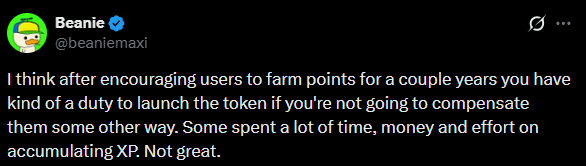
- The "Beanie Maxi" Intervention: Charles Moscoe, founder of GM Capital (operating as @BeanieMaxi on X), publicly challenges the Pudgy Penguins team. He asserts that the team has already profited significantly from PENGU sales and owes a debt of honor to the farmers.
- Present Day: A growing coalition, including groups like Kona DeFi, is organizing a "stimmy" campaign to pressure the team into redistributing a portion of the locked token supply to disenfranchised XP holders.
Supporting Data: The Economics of the Discontent
The core of the dispute lies in the tokenomics of PENGU. Currently, the total supply of PENGU stands at 88.88 billion tokens. Of this, roughly 70.7% has been unlocked and is currently circulating. This leaves approximately 26 billion tokens—or 29.3% of the total supply—locked.
At current market valuations, this locked reserve is worth roughly $212 million. While it is standard practice for a portion of this supply to be reserved for the core team, liquidity providers, and treasury operations, the farmers argue that the project’s failure to launch the L2 should trigger a "redemption event."

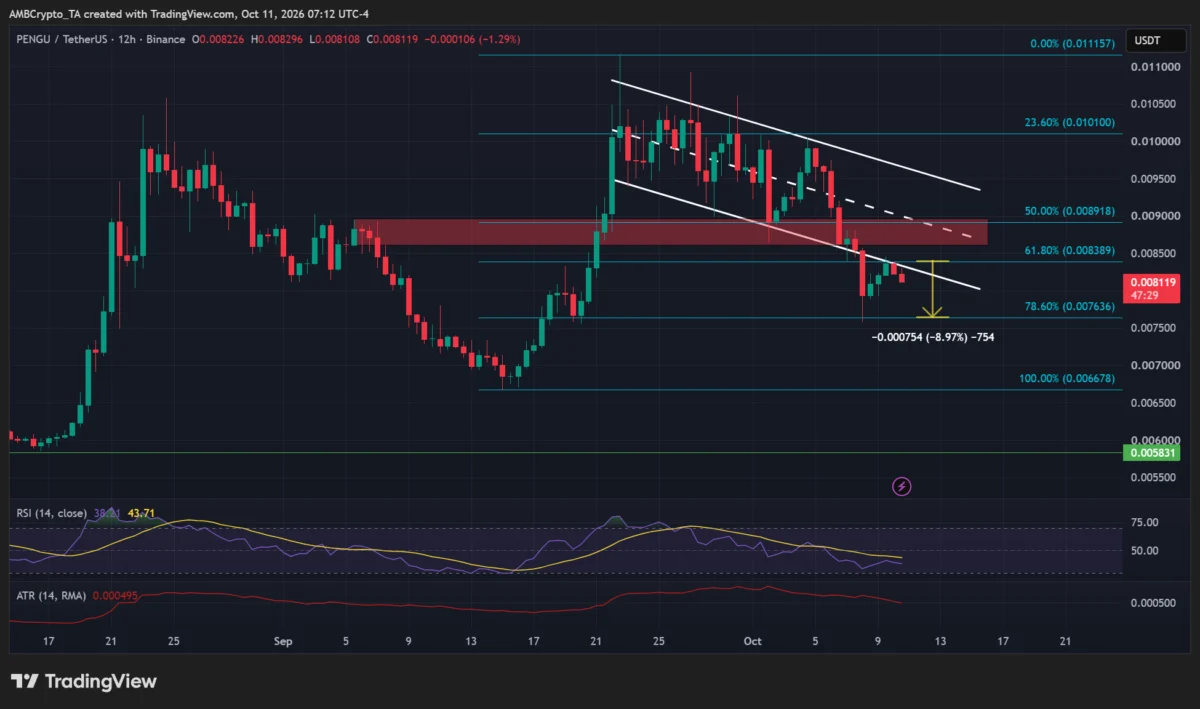
The market has reacted negatively to the internal strife. Following the news and the subsequent public outcry, PENGU experienced an initial 2% drop in value. Technical analysts warn that if the conflict persists and the team fails to provide a satisfactory resolution, the asset could see an extension of this decline by up to 9%, potentially retesting key support levels at $0.0076.
Official Responses and the "Silent Treatment"
To date, the core team behind the Pudgy Penguins/Abstract ecosystem has remained largely insulated, offering little in the way of direct communication to the XP farmers. Their silence is being interpreted by the community as a form of dismissal.
In contrast, the opposition is becoming increasingly organized. Charles Moscoe has positioned this as a moral failing:
"I always liked the Pudgy Penguins story. But I feel like the vibe is gone with how Abstract users are done dirty. It’s easily avoidable too. They’ve already made hundreds of millions of dollars selling PENGU. So why not just distribute the rest of the locked tokens to XP earners?"
The sentiment is echoed by others in the space. One prominent community member remarked, "Users got used and sidelined. I understand the shutting down aspect of business, but allowing loyal users to walk away with nothing after two years of daily grind? It’s not just ridiculous; it’s evil."
Implications: The Death of the "Point-Farming" Model?
The Abstract fallout serves as a cautionary tale for the broader crypto industry. The "point-farming" model, once a celebrated tool for bootstrapping network effects, is facing a crisis of legitimacy.
1. Erosion of Trust in "Airdrop Culture"
The primary implication is the potential collapse of trust in future airdrop campaigns. If users perceive that their time, effort, and capital are being used to inflate vanity metrics for a project that might be discarded at the first sign of headwinds, they will be less likely to participate in future ecosystems. This creates a "chilling effect" on new protocol adoption.
2. Legal and Regulatory Precedents
While the crypto space remains largely decentralized and often outside the purview of traditional securities law, the demand for "repayment" suggests a move toward treating token allocations as quasi-contractual obligations. If these farmers are successful in pressuring the team, it could set a precedent where developers are held accountable for the "promises" implied by their reward programs.
3. The Future of the Pudgy Penguins Brand
Pudgy Penguins has long been a darling of the NFT space, successfully transitioning from a collection of digital avatars into a brand with global toy distribution and intellectual property deals. However, this incident threatens to alienate the "hardcore" crypto-native segment of their audience. If the brand is seen as a "rug-puller" of its own loyalists, the long-term impact on the floor price of their NFTs and the sentiment surrounding their brand could be devastating.
4. Governance and Community Activism
The emergence of campaigns like the one proposed by Kona DeFi—which aims to create its own incentive structures for the displaced XP holders—highlights the shift toward "grassroots governance." When centralized teams fail to deliver, the community is increasingly willing to self-organize to reclaim value, regardless of the team’s official stance.
Conclusion
The Abstract shutdown is more than a failure of a specific blockchain project; it is a flashpoint for a larger existential debate in Web3. As the deadline for the shutdown approaches, the pressure on the Pudgy Penguins team will likely intensify.
Whether the team chooses to compromise by releasing a fraction of the $212 million in locked tokens or chooses to stand their ground, the outcome will have lasting consequences. For now, the "airdrop farmers" remain the victims of an industry that often prioritizes venture capital exit strategies over the very users who provide the foundation for growth. The question remains: in a decentralized world, can a brand survive if it loses the trust of its most dedicated participants? The coming weeks will likely provide the answer.
