

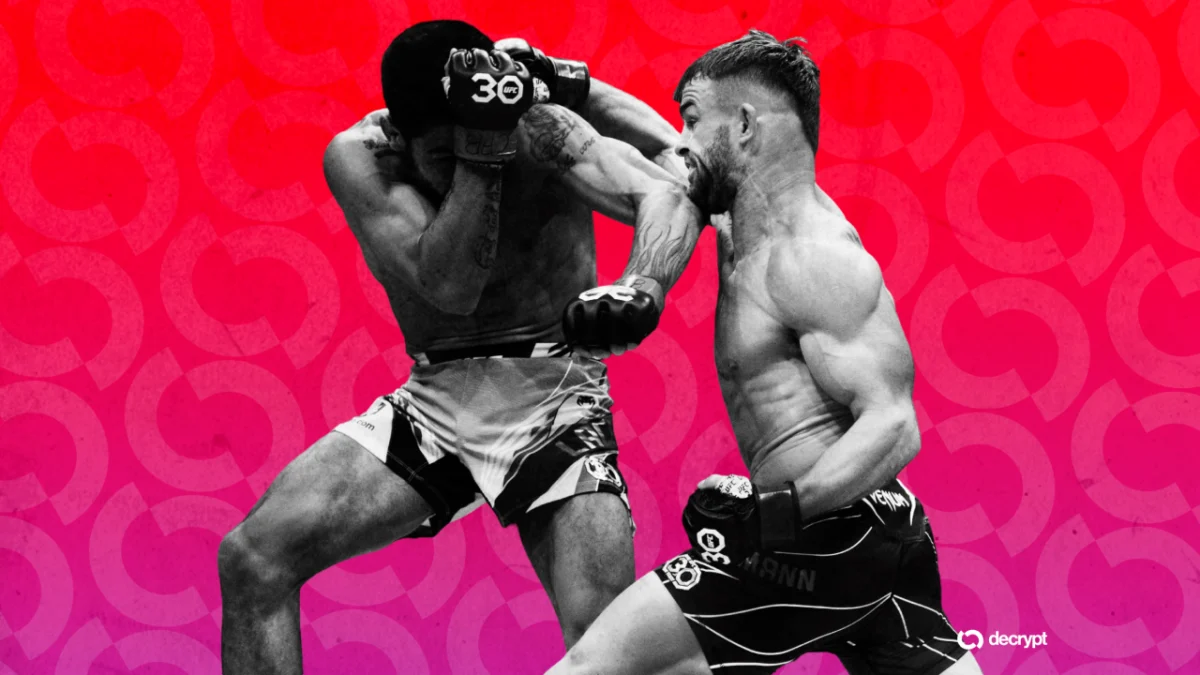
This Sunday, the United States will witness an unprecedented convergence of political spectacle, athletic competition, and digital finance. As President Donald Trump celebrates his 80th birthday, the White House South Lawn will be transformed into an arena for "UFC Freedom 250." Beyond the physical combat, the event serves as a massive, high-visibility stage for the cryptocurrency industry, signaling a deepening entrenchment between the current administration’s pro-crypto agenda and the commercial interests of major digital asset firms.
The Main Facts: A Convergence of Power and Digital Assets
The UFC’s arrival at the White House is not merely a cultural event; it is a branding milestone. According to photographic evidence surfaced on social media by freelance photographer Andrew Leyden, the iconic UFC Octagon—typically reserved for arenas in Las Vegas or international fight capitals—has been outfitted with prominent digital signage for several major crypto players.
VeChain, the decentralized supply chain platform; Polymarket, the decentralized prediction market; and Stake, the betting platform, are among the entities featured on the Octagon’s apron. This visual dominance is supported by Crypto.com, which serves as the co-presenting partner for the event. The presence of these brands on the grounds of the executive mansion represents an unusual intersection of government property and corporate marketing, sparking debate regarding the boundaries of presidential events and the influence of the burgeoning digital asset sector.
Chronology of a Controversy: From Legal Challenges to the Main Event
The road to the South Lawn has not been without friction. The event, which serves as the centerpiece of President Trump’s 80th birthday celebrations, faced immediate pushback from critics who questioned the legality of hosting a for-profit combat sports event on federal grounds.
- Mid-May: Initial announcements regarding the "UFC Freedom 250" event prompted public outcry from ethics watchdogs and residents of the District of Columbia.
- Early June: A lawsuit was filed by two Virginia residents seeking an emergency injunction to block the fight. The plaintiffs argued that the federal government was improperly utilizing public land for a private, for-profit commercial enterprise.
- Friday, June 12: U.S. District Judge Amit Mehta, an Obama appointee, delivered a decisive ruling. Mehta denied the request for an injunction, noting that the plaintiffs lacked the necessary legal standing to challenge the event’s venue. Furthermore, the judge cited a failure to seek intervention in a timely manner, effectively clearing the path for the event to proceed on Sunday.
- Ongoing: The controversy remains a point of contention among ethics experts who monitor the potential for conflicts of interest within the Trump administration, particularly given the President’s vocal support for the crypto industry.
Supporting Data: The Financial Stakes of the Octagon
The financial scale of "UFC Freedom 250" is as substantial as its political symbolism. UFC CEO Dana White has elevated the stakes of the evening by announcing that the "Fight of the Night" bonus will reach unprecedented levels.
In a statement made at a press conference weeks ago, White confirmed that athletes would receive a record-breaking $1 million bonus, denominated entirely in CRO, the native token of the Crypto.com ecosystem. This move serves as a massive, real-world utility demonstration for the exchange’s asset, placing crypto directly into the hands of elite athletes in front of a global television audience.
Furthermore, the ecosystem of support surrounding this event is extensive. Last year, Trump Media—the parent company of Truth Social—signaled a strategic shift toward the crypto sector. The company has engaged in multiple joint ventures with Crypto.com, ranging from the development of prediction markets to the launch of exchange-traded funds (ETFs) and the establishment of a publicly traded treasury firm dedicated to the acquisition of CRO. These ventures are backed by significant financial history, including Crypto.com’s donation of millions of dollars to MAGA Inc., a pro-Trump super PAC.
Official Responses: Navigating the Optics
The involvement of major crypto firms in a government-hosted event has prompted various responses from the industry, with companies taking pains to frame their participation as professional rather than political.
Polymarket’s Perspective:
A spokesperson for the prediction market, which counts Donald Trump Jr. among its advisors, emphasized the community-centric nature of their sponsorship. "We are a proud sponsor of UFC Freedom 250," the spokesperson stated. "We are representing the shared spirit of competition, participation, and civic engagement that prediction markets bring to life." Notably, the firm has also organized a community award to honor military personnel, law enforcement, and first responders, effectively linking their brand to the patriotic themes of the event.
Exodus’s Stance:
Exodus, recently named the official payments partner of the UFC, adopted a more neutral tone when questioned about the political optics of the event. A company representative clarified that their sponsorship arrangement is tied to the UFC’s league-wide contract and is "not connected to any political party, candidate, or policy agenda." The firm stated that their goal is strictly to engage with a global audience through fan-experience activations at the venue.
The Administration’s Position:
The White House has remained steadfast in its denial of any conflicts of interest. Despite ongoing allegations from political opponents regarding the closeness of the President’s family to specific crypto-startups, the administration maintains that these dealings are legitimate business activities that do not compromise the integrity of the executive office.
Implications: A New Era of State-Industry Integration
The spectacle on the South Lawn is, in many ways, an evolution of a trend that began last year. During the U.S. Army’s 250th anniversary military parade, Coinbase—the largest U.S.-based crypto exchange—secured a prime sponsorship spot. The sight of the Coinbase logo flanking military hardware drew significant scrutiny from the crypto-libertarian community, which has historically prioritized decentralization and skepticism toward state power.
However, the industry’s pivot toward the federal establishment suggests that the sector has moved into a new phase of maturity—or perhaps, institutionalization. By aligning with high-profile national events, crypto firms are seeking the "stamp of approval" that comes with being associated with the U.S. government.
The "Trump Effect" on Crypto Policy
The implications of this integration are profound. By embedding crypto branding into the most recognizable backdrops of American power, the administration is normalizing digital assets as a cornerstone of the national economy. For proponents, this is a long-overdue legitimization that will pave the way for clearer regulatory frameworks and mass adoption.
For critics, the sight of private crypto exchanges sponsoring state-sanctioned events on the White House lawn raises fundamental questions about the "revolving door" between the crypto industry and the political elite. Whether this strategy will yield long-term regulatory wins or lead to a backlash regarding corporate influence remains to be seen.
The Path Forward
As Sunday’s event unfolds, the eyes of both the financial world and the political class will be focused on the Octagon. The combination of an 80th birthday, a landmark military/athletic venue, and the high-octane branding of digital assets serves as a definitive statement: in the current political climate, cryptocurrency is no longer a fringe financial experiment. It has become a central, visible, and unapologetic player in the American experience.
Whether this represents a strategic triumph for the industry or a dangerous blurring of lines will be debated for years to come. For now, the logos on the mat are clear: crypto is not just participating in the conversation; it is sponsoring the arena where the conversation takes place.
