

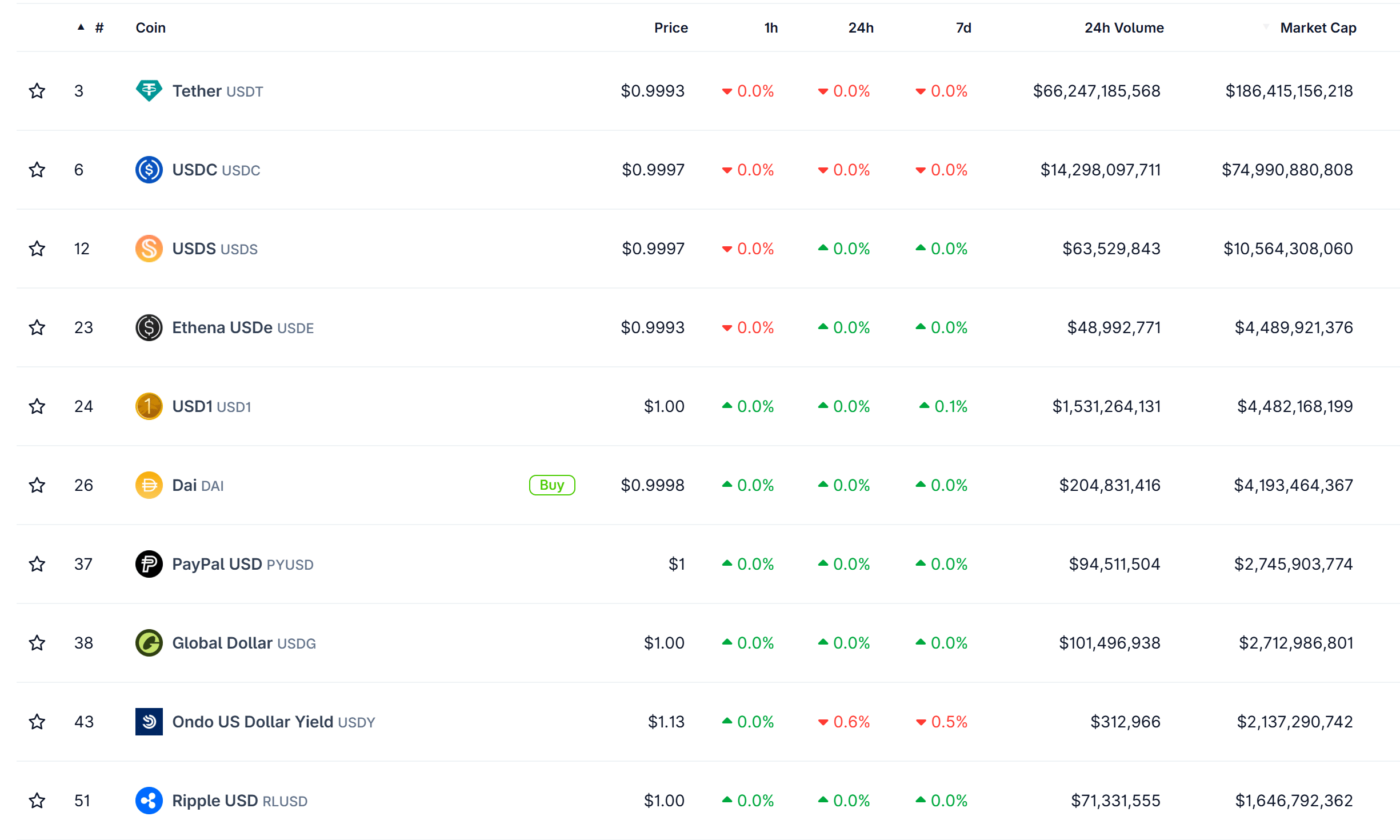
Ripple USD (RLUSD) has officially crossed the $1.64 billion market capitalization threshold, marking a significant inflection point for the stablecoin within the competitive landscape of digital assets. This achievement is not merely a quantitative figure; it represents a qualitative shift in how the Ripple ecosystem is positioning its native dollar-pegged asset to compete with industry titans like Tether (USDT) and USD Coin (USDC). By prioritizing deep liquidity, enterprise-grade utility, and strategic exchange integration, Ripple is carving out a distinct niche that transcends simple issuance-led growth.
Main Facts: The Rise of a New Contender
The climb to a $1.64 billion market cap underscores the rapid adoption of RLUSD since its inception. While the broader stablecoin market remains heavily concentrated, with Tether (USDT) boasting an approximate $186.4 billion valuation and Circle’s USDC maintaining a stronghold at nearly $75 billion, RLUSD is demonstrating a trajectory characterized by consistent, organic growth rather than speculative volatility.
At the time of this report, RLUSD recorded a daily trading volume of $71.3 million. This figure serves as a vital health metric, signaling that the asset is not being hoarded in dormant wallets but is actively circulating through payment and settlement rails. The steady velocity of the coin confirms its role as a functional medium of exchange, essential for Ripple’s broader objective of facilitating frictionless cross-border payments.
A Chronology of Strategic Expansion
The evolution of RLUSD has been marked by a series of calculated milestones designed to transition the asset from a nascent project to a core component of the XRP Ledger (XRPL) ecosystem.
- Initial Launch Phase: Ripple introduced RLUSD as a strategic counter-measure to the fragmented liquidity often found in alternative layer-1 ecosystems. By grounding the asset in the reliability of the U.S. dollar, Ripple aimed to provide developers and institutional users with a stable bridge.
- The Ecosystem Integration: Unlike many stablecoins that launch in a vacuum, RLUSD was engineered to be the primary liquidity provider for the XRPL. It quickly captured dominance, currently controlling 98% of the XRPL stablecoin market, which equates to roughly $760 million in liquidity on the ledger itself.
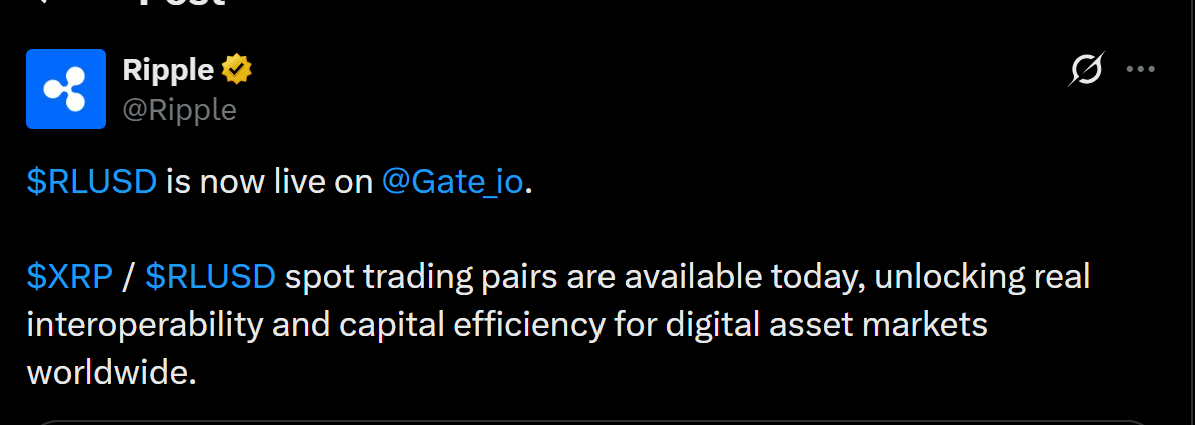
- Expansion Beyond the Ledger: A pivotal moment occurred on June 15, when Ripple announced the listing of RLUSD on Gate.io. This move was transformative, as it introduced direct trading pairs for BTC, ETH, and USDT. By integrating with a major global exchange, Ripple effectively "broke the walls" of the XRPL, allowing the stablecoin to flow freely into the broader crypto-economy.
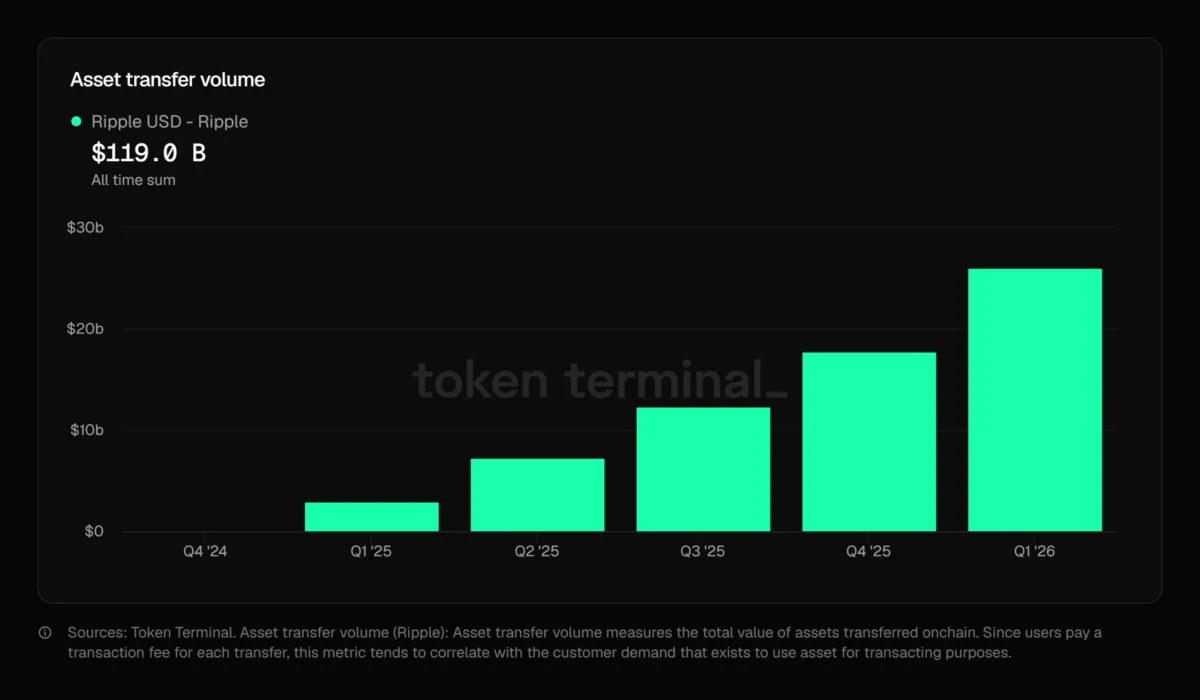
- Quarterly Growth Spikes: Q1 data provided the first clear evidence of sustained utility. With transfer volumes exceeding $26 billion and daily transaction counts consistently clearing the two-million mark, the network proved it could handle the rigorous demands of high-frequency trading and cross-border settlement.
Supporting Data: Why Utility Matters
To understand the significance of the $1.64 billion cap, one must look at the underlying data provided by platforms such as DeFiLlama and TokenTerminal. These metrics reveal a stark contrast between RLUSD and its competitors.
Market Liquidity and Transaction Velocity
While USDT and USDC are the "gold standards" for off-chain and centralized exchange (CEX) liquidity, RLUSD has focused on "on-chain utility." The 98% dominance within the XRPL ecosystem is a critical statistic. It suggests that if an entity is building a decentralized finance (DeFi) application on Ripple’s ledger, RLUSD is the default choice. This network effect creates a "moat" that is difficult for competitors to penetrate.
Furthermore, the $26 billion in Q1 transfer volume is a testament to the institutional interest Ripple has been cultivating. Institutional users prioritize speed, settlement finality, and regulatory transparency. By maintaining a 1:1 reserve ratio and transparent auditing practices, Ripple has convinced enterprise partners that RLUSD is a safe harbor for capital movement.
The Comparison Landscape
| Stablecoin | Market Cap (Approx) | Primary Use Case |
|---|---|---|
| USDT | $186.4 Billion | Global Reserve & Trade Settlement |
| USDC | $75.0 Billion | Institutional DeFi & Fiat On/Off-Ramp |
| RLUSD | $1.64 Billion | XRPL Ecosystem Utility & Cross-Border Payments |
The gap between RLUSD and its rivals remains vast. However, market analysts argue that the growth of RLUSD is not intended to "flip" USDT, but rather to dominate the specific segment of settlement-focused digital finance where XRP has already established a decade-long presence.
Official Perspectives and Strategic Vision
Ripple’s leadership has maintained a consistent narrative: RLUSD is designed to bridge the gap between traditional finance and the decentralized future. In recent communications, Ripple executives have emphasized that the stablecoin is a "force multiplier" for the XRP Ledger.
By facilitating a more efficient movement of value, RLUSD reduces the friction often associated with volatility in the XRP token itself. For institutional partners, the ability to settle transactions in a stable, dollar-pegged asset while leveraging the speed of the XRPL is a compelling value proposition. Official responses to recent growth milestones suggest that Ripple plans to continue its "distribution-led growth" strategy—prioritizing more exchange listings, expanded partnerships with payment providers, and deeper integration into institutional treasury management systems.
Implications for the Future of Finance
The rise of RLUSD to $1.64 billion has several long-term implications for the blockchain sector and the broader financial industry:
1. The Death of Speculative-Only Stablecoins
The success of RLUSD reinforces a trend: the market is moving away from stablecoins that lack transparent reserves or clear utility. Users and institutions alike are demanding assets that serve a specific purpose, whether it is remittances, B2B settlements, or DeFi liquidity. RLUSD’s focus on being "utility-first" suggests that future stablecoin success stories will be defined by their ecosystem integration rather than their marketing spend.
2. Strengthening the XRP Ecosystem
The symbiotic relationship between RLUSD and the XRP Ledger cannot be overstated. As the stablecoin gains more liquidity, it makes the entire ledger more attractive to developers. Lower slippage and faster, cheaper transactions for stable-asset swaps create a virtuous cycle that inevitably draws more traffic to the XRPL. This, in turn, boosts the overall ecosystem’s value, potentially benefiting the native XRP token through increased network usage.
3. Institutional Adoption Curves
For traditional financial institutions, the biggest barrier to entry in the crypto space has been the "trust gap." By providing a stablecoin that operates on a mature, regulated, and high-performance network like Ripple’s, the barrier for institutional adoption is lowered. If the current growth continues, we may see major banks and payment processors integrating RLUSD as a backend for real-time gross settlement (RTGS) systems, which would be a game-changer for the efficiency of international trade.
Conclusion: The Road Ahead
While $1.64 billion is a commendable milestone, it is merely the beginning for RLUSD. The true test for the stablecoin will be its ability to maintain its peg during periods of extreme market volatility and its capacity to scale its infrastructure as daily transaction volumes increase.
The strategy of shifting from pure issuance to distribution-led growth through exchanges like Gate.io is a bold step that indicates Ripple is ready to compete on a global scale. As the world moves toward the tokenization of real-world assets and the digitisation of fiat currencies, RLUSD is positioning itself to be more than just a coin—it is aiming to be the backbone of a new, global, and decentralized financial architecture. Whether it can eventually challenge the dominance of the current market leaders will depend on its continued reliability, its expanding list of global partners, and its ability to prove that it can handle the weight of a multi-billion dollar daily transaction volume without faltering. The market is watching closely, and the figures from the first half of the year suggest that the foundation is stronger than ever.
