

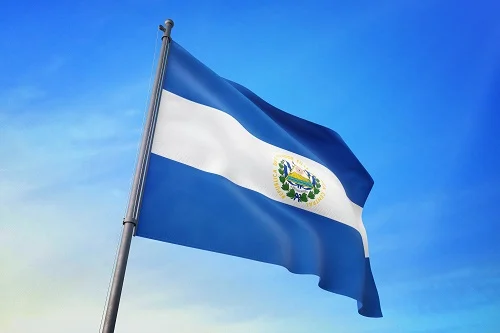
In a significant stride for global cryptocurrency adoption and regulatory integration, Binance, the world’s largest digital asset exchange by trading volume, has officially been granted two pivotal licenses in El Salvador. This development marks a historic milestone for the Central American nation—which famously became the first country in the world to adopt Bitcoin as legal tender in 2021—and signals a deepening commitment from Binance to align with international regulatory frameworks despite a challenging global legal environment.
The exchange confirmed that it has secured both the Bitcoin Services Provider (BSP) license, issued by the Central Reserve Bank of El Salvador (Banco Central de Reserva), and the non-provisional Digital Assets Services Provider (DASP) license, granted by the National Commission of Digital Assets (Comisión Nacional de Activos Digitales).
Main Facts: A Dual-License Achievement
The acquisition of these two licenses positions Binance as the first fully licensed cryptocurrency exchange in El Salvador. While other entities operate within the country, Binance holds the distinction of being the first to receive non-provisional status, a move that validates its operational compliance with the nation’s rigorous digital asset laws.
The Bitcoin Services Provider (BSP) license allows the exchange to facilitate transactions involving Bitcoin, the cornerstone of El Salvador’s financial strategy under President Nayib Bukele. Concurrently, the Digital Assets Services Provider (DASP) license provides a broader mandate, enabling the exchange to offer a comprehensive suite of digital asset services beyond Bitcoin, potentially including various altcoins and blockchain-based financial products.
This dual-licensing structure represents the culmination of extensive due diligence conducted by Salvadoran financial regulators, ensuring that the platform meets the nation’s standards for security, transparency, and consumer protection.
A Chronology of El Salvador’s Crypto Journey
To understand the significance of this move, one must view it through the lens of El Salvador’s unique history with digital assets:
- September 2021: El Salvador officially adopts Bitcoin as legal tender, a move that sparked intense debate within global financial institutions like the International Monetary Fund (IMF) and the World Bank.
- 2022: The Salvadoran government begins building out its regulatory infrastructure to manage the influx of crypto-related investment, focusing on creating a legal framework that balances innovation with financial stability.
- Early 2023: The National Commission of Digital Assets is fully empowered, providing a specialized regulatory body to oversee the registration and supervision of crypto-service providers.
- August 2023: After months of rigorous vetting, the Central Reserve Bank and the National Commission of Digital Assets grant Binance its dual licenses, marking the first time a major global exchange has cleared the full regulatory hurdle in the country.
Supporting Data: Binance’s Global Regulatory Strategy
While Binance has faced significant headwinds in Western markets—most notably a high-profile lawsuit from the U.S. Securities and Exchange Commission (SEC) in June 2023—the company has maintained an aggressive expansionist strategy in regions with clearer or more welcoming regulatory frameworks.
The El Salvador licensing follows a string of successful regulatory applications globally. Binance has successfully secured registration or licensing in:
- Europe: France, Italy, Spain, and Sweden.
- Middle East: Dubai (VARA license).
- Asia: Japan (following its acquisition of Sakura Exchange BitCoin).
These actions serve as a counter-narrative to the prevailing sentiment that Binance is "evading" regulation. By actively seeking licenses in jurisdictions with varied legal requirements, Binance is attempting to position itself as a compliant global entity, capable of operating within established financial perimeters. The Salvadoran market, though smaller than the U.S. or European markets, serves as a critical test case for how a top-tier exchange can integrate with a national economy that has already institutionalized Bitcoin.
Official Responses and Strategic Vision
The sentiment from Binance’s leadership reflects a dual focus on regional growth and global legitimacy.
Min Lin, Binance’s Head of Latin America, emphasized the collaborative nature of the achievement. “We are honored to be granted this license, as Binance continues to work collaboratively with regulatory agencies around the world to support global standards for the crypto and blockchain industry,” Lin stated.
Daniel Acosta, Binance’s General Manager for Colombia, Central America, and the Caribbean, underscored the practical benefits for the Salvadoran populace. According to Acosta, the licenses provide the necessary framework to expand product offerings tailored specifically to the needs of local users. “It is also a great opportunity to collaborate closely with government authorities to support the adoption of crypto assets in the country, foster financial inclusion, innovation, and ensure customer protection,” he noted.
The announcement was initially teased by Binance CEO Changpeng Zhao (CZ) via his X (formerly Twitter) account, where he reiterated the company’s commitment to making cryptocurrency more accessible on a global scale.
Implications: What This Means for the Future
The arrival of a fully-licensed Binance in El Salvador has several profound implications for the digital asset landscape:
1. The Validation of the "Bukele Model"
For the government of El Salvador, the entry of the world’s largest exchange acts as a seal of approval for its Bitcoin-centric economic policy. By bringing a major global player into the fold, the government demonstrates that its regulatory environment is maturing and that it is capable of attracting high-profile international investment in the fintech sector.
2. Financial Inclusion and Infrastructure
El Salvador’s experiment has been criticized for low adoption rates among its own citizenry. The entry of Binance, which provides a more robust, user-friendly interface and a wider array of financial tools than some local alternatives, could accelerate the grassroots adoption of digital assets. Increased competition and better service infrastructure are likely to drive down costs for remittances—a vital component of the Salvadoran economy—and provide banking-like services to the unbanked.
3. Regulatory Arbitrage vs. Compliance
Critics argue that Binance’s pivot to emerging markets like El Salvador, while simultaneously retreating from countries like the Netherlands or Canada, represents a form of regulatory arbitrage. However, supporters view it as a pragmatic evolution. As the regulatory climate in the U.S. remains hostile, Binance is essentially "voting with its feet," moving resources into jurisdictions where there is a clear, written roadmap for crypto-asset regulation.
4. A Template for Emerging Economies
Other developing nations, particularly in Latin America and Africa, will be watching the Binance-El Salvador partnership closely. If the venture proves successful in terms of both economic growth and regulatory safety, it could serve as a template for other nations looking to integrate digital assets into their national financial systems without compromising sovereignty or financial integrity.
Conclusion: A New Chapter for Crypto
The issuance of these licenses is more than just a bureaucratic update; it is a signal of the maturation of the cryptocurrency industry. As the sector transitions from the "Wild West" era of early adoption to a phase defined by institutional oversight, the partnership between Binance and El Salvador highlights a fundamental shift in how crypto-exchanges and sovereign nations interact.
For Binance, the licenses provide a necessary win in a year defined by legal battles. For El Salvador, the presence of a global industry leader validates its bold, controversial decision to embrace Bitcoin. As the dust settles, the success of this endeavor will be measured not by the press releases, but by the tangible improvements in financial access and economic innovation for the people of El Salvador. Whether this model can scale to larger economies remains an open question, but one thing is certain: the global map of crypto-regulation has officially been redrawn.
