

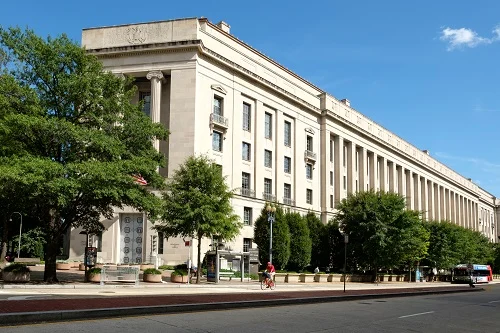
The legal odyssey of Sam Bankman-Fried, the disgraced founder and former CEO of the collapsed cryptocurrency exchange FTX, reached a critical inflection point this week. Following months of relative freedom under a restrictive $250 million bond agreement, the U.S. Department of Justice (DOJ) has formally petitioned the Southern District of New York to revoke Bankman-Fried’s bail and remand him to custody ahead of his high-stakes criminal trial, currently scheduled to commence in October.
The government’s aggressive motion stems from a pattern of behavior that prosecutors argue constitutes flagrant witness tampering and an attempt to manipulate public sentiment before a jury is even empaneled. As the legal noose tightens, the question is no longer whether Bankman-Fried will face trial, but whether he will be allowed to remain in his parents’ Palo Alto home while preparing for the most significant white-collar criminal case of the decade.
A Pattern of Interference: The Prosecution’s Case
The catalyst for the DOJ’s request for detention was a recent incident involving the private diary of Caroline Ellison, the former CEO of Alameda Research and Bankman-Fried’s one-time romantic partner. Ellison, who has already entered a plea deal with federal authorities and is expected to serve as a key witness for the prosecution, had her private writings leaked to the New York Times.
Prosecutors allege that Bankman-Fried was the source of the leak, intending to portray Ellison in a negative light and undermine her credibility before the public. The DOJ argues that this act was not merely a breach of decorum but a calculated effort to intimidate a cooperating witness.
During a hearing held on July 26, the prosecution presented a stern argument to Judge Lewis Kaplan. They contended that Bankman-Fried has repeatedly demonstrated a disregard for court-imposed constraints and that no combination of bail conditions—including electronic monitoring or limitations on internet usage—could prevent him from interfering with the integrity of the judicial process.
Chronology of a Collapse and a Legal Battle
To understand the gravity of the current situation, one must look back at the rapid deterioration of Bankman-Fried’s empire and his subsequent legal entanglement:
- November 2022: FTX, once valued at $32 billion, files for Chapter 11 bankruptcy protection following a liquidity crisis. Revelations of commingled funds between FTX and Alameda Research spark global outrage.
- December 2022: Bankman-Fried is arrested in the Bahamas at the request of U.S. authorities. He is subsequently extradited to the United States.
- December 22, 2022: Bankman-Fried is released on a $250 million personal recognizance bond, secured by his parents’ home. The conditions of his release include house arrest and strict monitoring.
- February 2023: Prosecutors express concern over Bankman-Fried’s use of a Virtual Private Network (VPN), which leads to tighter restrictions on his electronic communications.
- July 2023: The DOJ files a motion to revoke bail after the New York Times publishes excerpts from Caroline Ellison’s private journals, citing the leak as a clear act of witness tampering.
- July 26, 2023: A contentious hearing takes place in the Southern District of New York, where the government makes its formal plea for detention.
- August 3, 2023: A deadline is set for parties to finalize a comprehensive "gag order" aimed at preventing further extrajudicial commentary by the defendant.
The Defense’s Perspective: Due Process and Defense Preparation
Bankman-Fried’s legal team has mounted a vigorous defense against the motion for detention. Their primary argument centers on the practical reality of mounting a defense against a massive, document-heavy federal case.
Defense attorneys assert that if Bankman-Fried is sent to a detention center, his ability to access the millions of pages of discovery material—crucial for building his case—will be severely hampered. They argue that the complexity of the crypto-financial data requires constant, unmonitored access to computer systems and legal counsel, which the constraints of a jail environment cannot provide.
Furthermore, the defense has attempted to frame Bankman-Fried’s interactions with the media as an exercise of his First Amendment rights, arguing that he is merely attempting to defend his reputation against a barrage of negative press. However, Judge Kaplan has appeared increasingly skeptical of this framing, reminding the defendant that his right to speak is not absolute when it infringes upon the right of the court to conduct a fair trial.
Implications of the "Gag Order"
While Judge Kaplan did not immediately grant the DOJ’s request to remand Bankman-Fried into custody during the July 26 hearing, he issued a stern warning that signaled his waning patience. The judge explicitly told Bankman-Fried to "take this seriously," noting that his conduct was pushing the boundaries of what the court would tolerate.
The court has directed both the prosecution and the defense to work toward a mutually acceptable gag order. This order, expected to be in place by early August, would strictly limit what Bankman-Fried can say to the press, effectively silencing him for the duration of the trial proceedings.
The implications of this are twofold:
- For the Defendant: A gag order would strip Bankman-Fried of his primary tool for shaping public perception, forcing him to rely entirely on his legal team to communicate his narrative.
- For the Trial: By limiting out-of-court statements, the court hopes to prevent the "poisoning" of the jury pool. If the gag order is violated, the court has made it clear that detention would become the most likely outcome.
The Broader Context: Justice in the Digital Age
The case against Sam Bankman-Fried has become a lightning rod for broader discussions regarding the intersection of cryptocurrency, white-collar crime, and the American justice system. The DOJ is under significant pressure to ensure that this high-profile case is handled with absolute impartiality, particularly given the scale of the financial losses incurred by retail investors worldwide.
Critics of the current bail system have pointed to the perceived disparity between the treatment of Bankman-Fried and other defendants who might have been remanded to custody immediately upon arrest. The prosecution’s recent motion is seen by many legal analysts as an attempt to rectify this perception and demonstrate that the court is not susceptible to the influence of wealth or status.
Moreover, the use of private diaries and digital communications as evidence of witness tampering highlights the unique challenges of prosecuting crimes that occur largely in the digital realm. The court is essentially having to rewrite the rules of decorum for a defendant who is accustomed to using social media and news outlets as a direct line to his stakeholders and the public.
Conclusion: A High-Stakes October
As the clock ticks toward the October trial date, the atmosphere surrounding the proceedings has become increasingly volatile. The government’s move to revoke bail is a strategic maneuver designed to ensure that the trial is decided in the courtroom, not in the court of public opinion.
Should Judge Kaplan eventually decide to revoke bail, it would represent a significant escalation in the government’s efforts to secure a conviction. For now, Bankman-Fried remains under the watchful eye of the court, living in the shadow of a potential prison sentence that could span decades if he is found guilty of the various fraud and conspiracy charges leveled against him.
The coming weeks will be decisive. Whether the defendant remains free to prepare his defense or finds himself in a cell at the Metropolitan Detention Center, one thing remains clear: the era of Sam Bankman-Fried operating outside the reach of conventional legal consequences is rapidly coming to an end. The integrity of the October trial—and the reputation of the U.S. judicial system in handling crypto-sector giants—depends on the court’s ability to maintain order in the face of unprecedented media maneuvering.
