


October 2026 — The digital asset market has entered the fourth quarter with renewed vigor, marked by an aggressive expansion in global on-chain liquidity. Driven by a robust multi-month accumulation trend, the total stablecoin market capitalization has smashed through previous resistance levels to hover comfortably above $310 billion.
This upward trajectory has intensified over the opening days of October, with the broader cryptocurrency market capitalization experiencing a synchronized upswing. Industry analysts view this rapid injection of capital—adding over $1 billion in stablecoin liquidity in less than 72 hours—as a decisive bullish signal heading into the final quarter of the year.
At the center of this liquidity boom are strategic maneuvers by the two heavyweights of the stablecoin industry: Tether and Circle. Both issuers are making aggressive plays to bridge traditional stablecoin liquidity directly into the Bitcoin ecosystem, setting the stage for what could be a transformative period for decentralized finance (DeFi) and Bitcoin-native utility.
1. Main Facts: A Billion-Dollar Influx and Ecosystem Expansion
The macro-liquidity narrative for Q4 is defined by three primary developments:
- The $310 Billion Milestone: The aggregate stablecoin market cap has extended a two-month growth streak, adding more than $1 billion in liquidity in a 72-hour window at the start of October.
- Tether’s Return to Bitcoin: Through a strategic partnership with Utexo, Tether is officially bringing its flagship USDT stablecoin back to the Bitcoin network, creating a fresh channel for capital deployment within Bitcoin’s architecture.
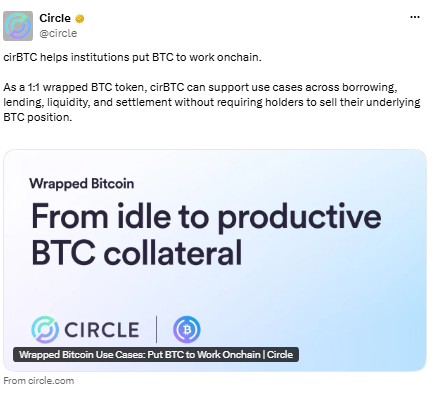
- Circle’s cirBTC Launch: Circle is introducing cirBTC, a 1:1 backed wrapped Bitcoin token engineered specifically to help institutional investors put their idle BTC to work in lending, borrowing, and on-chain settlement without liquidating their underlying Bitcoin holdings.
These parallel developments point to a structural shift in how liquidity circulates across Layer-1 networks, moving away from fragmented island chains toward deeply integrated, multi-asset financial hubs.

2. Chronology: How the Q4 Liquidity Wave Formed
The foundation for October’s bullish start was laid steadily over the course of the third quarter, tracking a distinct timeline of institutional adoption and regulatory adaptation:
- Late Q3 (August – September 2026): Stablecoin supplies experienced steady, organic growth across major protocols. According to data compiled by the RWA Foundation, digital dollars saw massive inflows as investors positioned themselves defensively yet liquidly ahead of macro economic catalysts.
- Mid-September 2026: On-chain metrics revealed record-shattering engagement. Stablecoin card spending hit an unprecedented monthly high of $789 million in September, highlighting real-world utility acceleration. Simultaneously, Circle finalized pivotal strategic pivots toward compliance under Europe’s Markets in Crypto-Assets (MiCA) framework, bolstering its institutional appeal.
- October 1–3, 2026: The stablecoin market cap officially breached $310 billion, fueled by a sudden $1 billion surge in under 72 hours. Concurrently, announcements regarding Tether’s integration with Utexo and Circle’s rollout of cirBTC went live, catching the market’s attention and establishing a narrative of Bitcoin-DeFi convergence for Q4.
3. Supporting Data: Q3 Stablecoin Growth Metrics
A closer examination of data provided by the RWA Foundation highlights the mechanics behind the Q3-to-Q4 transition. The figures demonstrate that liquidity expansion was not isolated to a single asset, but rather distributed across a healthy ecosystem of competing and complementary stablecoins:
- Circle’s USDC Leads the Pack: USDC experienced the single largest nominal increase among major stablecoins during the final 90 days of Q3, pulling in an impressive $881 million in net new supply.
- Alternative Stablecoins Surge:
- RLUSD followed closely behind, capturing $765.3 million in new deposits.
- United States’ U token expanded by $474.2 million.
- USDe recorded a solid influx of $419.1 million.
This data illustrates that Circle enters Q4 with dominant momentum, capturing the lion’s share of institutional inflows. This widespread liquidity growth provides the exact fuel needed to support ambitious secondary products like Circle’s upcoming cirBTC.
4. Official Responses and Industry Perspectives
Market observers, foundational researchers, and institutional stakeholders have weighed in heavily on what these synchronized liquidity expansions mean for the broader crypto economy.
Financial analysts point out that the decision by Tether to re-introduce USDT to the Bitcoin network—facilitated by Utexo—solves a long-standing friction point. For years, Bitcoin holders looking to access DeFi had to rely on complex, sometimes risky cross-chain bridges. By enabling native USDT flows and pairing it with Circle’s institutional-grade wrapped assets, the friction of moving capital between Bitcoin and smart-contract-enabled environments is drastically reduced.
Furthermore, Circle’s proactive alignment with the European Union’s MiCA framework has drawn praise from traditional financial institutions operating within the Eurozone. By securing a clear regulatory runway in Europe, Circle has positioned USDC as the preeminent compliant digital dollar, opening the floodgates for corporate treasuries and regulated fund managers to deploy capital on-chain safely.
5. Implications: What This Means for Bitcoin’s Q4 Momentum
As the crypto market settles into the final quarter of the year, the confluence of rising stablecoin supplies and new Bitcoin-centric utility tokens carries profound implications:
Deepening DeFi Flows within Bitcoin
For years, Bitcoin has been criticized as "lazy capital"—a massive store of value that sits idle in cold storage rather than participating in yield generation. Circle’s cirBTC aims to change this paradigm. By allowing institutions to utilize a 1:1 wrapped BTC token for lending, borrowing, and settlement without unwinding their underlying exposure, cirBTC could unlock billions of dollars in dormant Bitcoin capital.
A Catalyst for Q4 Price Action
Historically, expansions in stablecoin market caps have been a leading indicator of bullish price action. Stablecoins represent dry powder waiting to be deployed into risk assets. With the total stablecoin supply sitting comfortably above $310 billion—and expanding by the billions each week—the market possesses ample liquidity to absorb selling pressure and fuel sustained upward momentum across major crypto assets.
The Macro Liquidity Test
As Q4 progresses, the ultimate test will be whether this incoming liquidity translates into sustainable, long-term transaction volume or if it remains speculative. If the current trajectory holds, the synergy between Tether’s network expansions, Circle’s MiCA-compliant growth, and innovative cross-asset tools like cirBTC may very well define a new golden era for Bitcoin-driven decentralized finance.
