

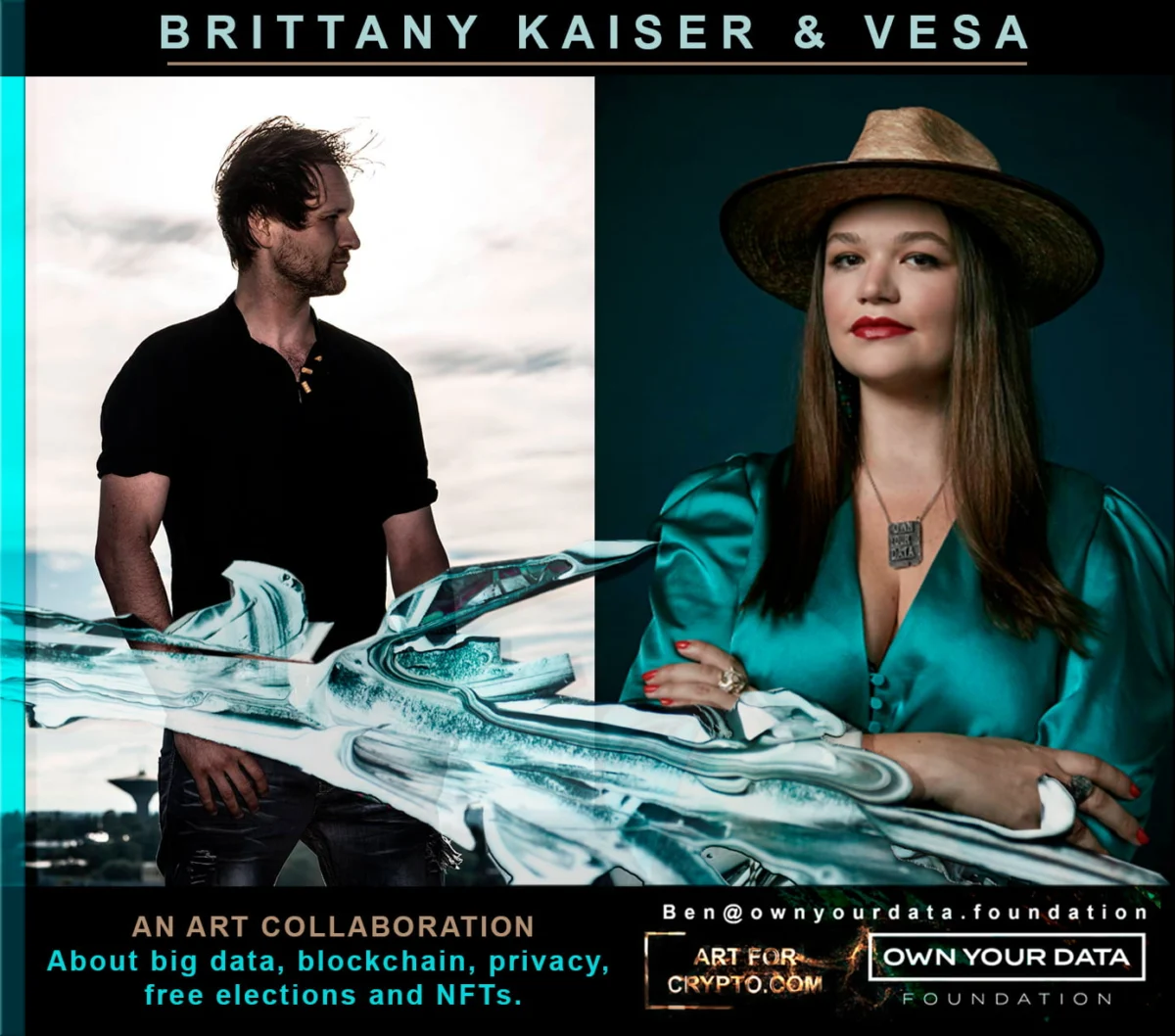
In the modern digital era, the phrase "data is the new oil" has evolved from a catchy marketing slogan into a profound socio-political reality. As the world grapples with the fallout of massive data harvesting, the discourse surrounding digital sovereignty has moved from the fringes of tech policy to the forefront of human rights. At the center of this movement is Brittany Kaiser, the renowned Cambridge Analytica whistleblower, whose transition from political operative to data-rights advocate has culminated in a groundbreaking intersection of high-concept art and blockchain technology.
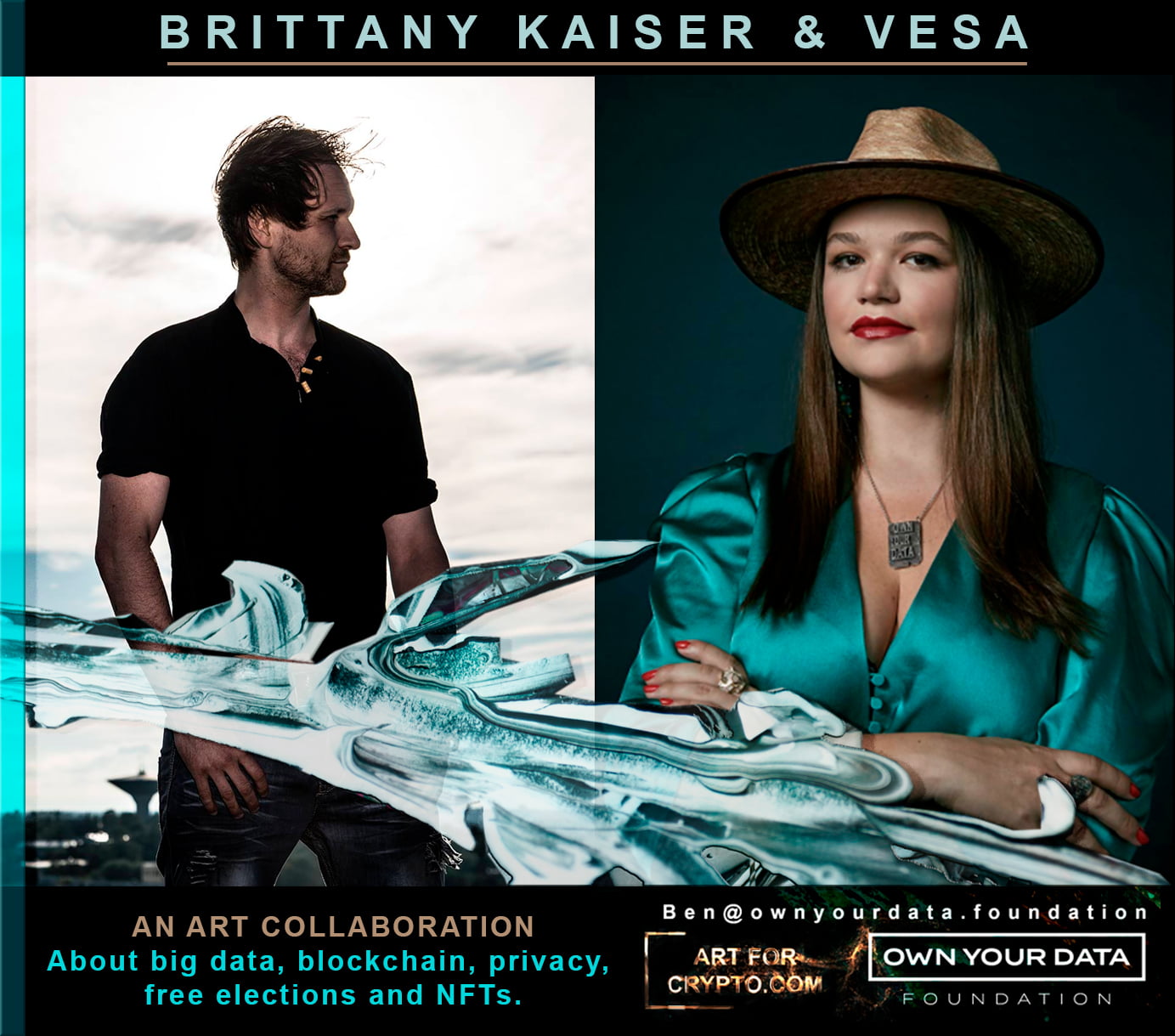
In a collaborative project with acclaimed crypto-artist VESA, Kaiser is set to challenge the status quo of how personal information is perceived, owned, and monetized. By transforming complex narratives of big data, information security, and corporate surveillance into tangible mixed-media art and Non-Fungible Tokens (NFTs), this initiative seeks to redefine the relationship between the individual and their digital footprint.
The Genesis of a Movement: From Whistleblower to Advocate
To understand the weight of this collaboration, one must acknowledge the pivotal role Brittany Kaiser played in exposing the mechanisms of the digital surveillance economy. As a former business development director at Cambridge Analytica, Kaiser witnessed firsthand how psychographic profiling could be weaponized to manipulate democratic processes. Her journey from the inner circles of big data to becoming a vocal critic of the industry was immortalized in the Netflix documentary The Great Hack.
With nearly 100 million views, the documentary shed light on the clandestine practices of data strip-mining, earning accolades including BAFTA and Academy Award nominations. Yet, for Kaiser, the documentary was merely the beginning. Her focus shifted toward structural solutions, leading her to co-found the Own Your Data Foundation. The foundation operates on a singular, powerful premise: data must be treated as personal property, protected by the same legal frameworks that govern physical assets.
As Kaiser has frequently stated: "If we want protection, we need to start thinking of our data as our property, because, if no one has noticed, property is held up and protected legally."
Chronology of a Visionary Collaboration
The intersection of art and blockchain is not merely an aesthetic choice; it is a strategic alignment of medium and message. The collaboration between Kaiser and VESA represents a fusion of traditional fine art techniques and the immutable, decentralized nature of blockchain technology.

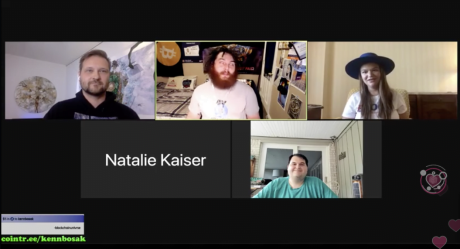
- Initial Conception: The project emerged from a series of high-level discussions, including a launch podcast featuring Kenn Bosak, where the concept of "tokenizing" the human experience of data was first explored.
- Production Phase (January 2021): The creative team convened in Helsinki to begin the production of a series of mixed-media physical artworks. These pieces were designed to bridge the gap between the tangible world of physical ownership and the abstract, borderless nature of digital assets.
- Digital Integration: Utilizing the infrastructure of platforms like Crypto Voxels, the project aims to create a metaverse-based gallery space, allowing global audiences to interact with the art in a virtual environment.
- The Global Exhibition Tour: The project’s roadmap included a red-carpet debut in London, followed by a secondary auction circuit in New York, designed to bring the narrative of data sovereignty to the heart of the global financial and cultural centers.
The Art of the Blockchain: Bridging the Gap
The artwork produced by VESA and Kaiser acts as a "bullseye Ikigai"—a focal point where the interests of the blockchain community intersect with the broader global concerns regarding digital privacy. Each piece is designed to be a conversation starter, utilizing advanced digital technologies to illustrate the invisible architecture of the web.
Why NFTs?
The choice of NFTs is symbolic. By minting these artworks on the blockchain, the creators are making a meta-commentary on the nature of digital ownership. If data can be mined and stolen, it can also be reclaimed and tokenized. The blockchain provides a transparent, immutable record of ownership, mirroring the goal of the Own Your Data Foundation: to ensure that individuals—not corporations—have the final say over their digital assets.
Implications for the Digital Economy
The implications of this project extend far beyond the art market. By framing data as a form of intellectual and personal property, Kaiser is attempting to shift the legal and ethical landscape.
1. Legal Recognition of Data Rights
Currently, most "data rights" are buried in complex Terms of Service agreements that favor corporations. Kaiser’s advocacy, bolstered by the cultural impact of her art, seeks to push legislators toward a model where data is legally treated as an extension of the individual’s identity.
2. The Democratization of Information
By using blockchain, the project bypasses traditional, gatekept art and finance structures. This mirrors the broader decentralization movement: if you control the infrastructure of your data, you control the economic value generated by that data.
3. Awareness Through Art
Art has a unique capacity to simplify complex, intimidating topics. By transforming the "data-mining" narrative into visual media, the project reaches audiences who might otherwise be disengaged from the technical aspects of cybersecurity or blockchain, thereby fostering a more informed public discourse.
Official Stance and Future Outlook
The Own Your Data Foundation maintains a rigorous commitment to its core mission: to provide the education and tools necessary for citizens to navigate the digital age safely. The collaboration with VESA serves as the cultural arm of this mission.
"The goal is to ensure that the average user understands that their digital life has value," says Benjamin Leff, Director of Communications at the foundation. "When we allow our data to be used without compensation or consent, we are essentially giving away our most valuable asset. This project serves as a wake-up call."
As the project continues to evolve, the team is actively seeking partnerships and sponsorship opportunities that align with their vision of a transparent, equitable digital future. For those interested in the nexus of policy, art, and technology, the work being done by Kaiser and VESA stands as a landmark effort in the fight for digital autonomy.

Conclusion: A Call to Action
The story of Brittany Kaiser is far from finished. Her pivot from the epicenter of the Cambridge Analytica scandal to the forefront of the digital rights movement is a testament to the power of personal agency. By leveraging the blockchain to tell her story, she is not only reclaiming her own narrative but providing a blueprint for others to do the same.
As we move further into an age defined by artificial intelligence, machine learning, and pervasive tracking, the question of who owns our "digital selves" will become the defining human rights issue of our time. Through art, technology, and unyielding advocacy, the Own Your Data project is ensuring that the answer to that question remains firmly in the hands of the individual.
For further information regarding the Own Your Data Foundation or inquiries regarding the upcoming exhibition series, interested parties are encouraged to reach out to the project’s communication leads to participate in this ongoing dialogue about the future of property in a digital world.

Disclaimer: The information contained in this article is for educational purposes only and does not constitute financial or investment advice. Investing in digital assets carries significant risk. Readers are encouraged to conduct their own independent research and consult with qualified professionals before making any financial decisions. The views expressed by the subjects in this article are their own and do not necessarily reflect the position of this publication.
