

In a significant development for the decentralized finance (DeFi) sector, Lido Finance, the dominant liquid staking protocol, has officially activated its long-awaited automatic LDO token buyback program. Known as the Network Economic Support Token (NEST) initiative, this mechanism represents a pivot in how the protocol manages its treasury and interacts with its native token’s market dynamics. While the rollout marks a major milestone for the DAO, it has also sparked a nuanced debate regarding the scale, timing, and philosophy of token buybacks in the current macroeconomic environment.
Main Facts: How NEST Functions
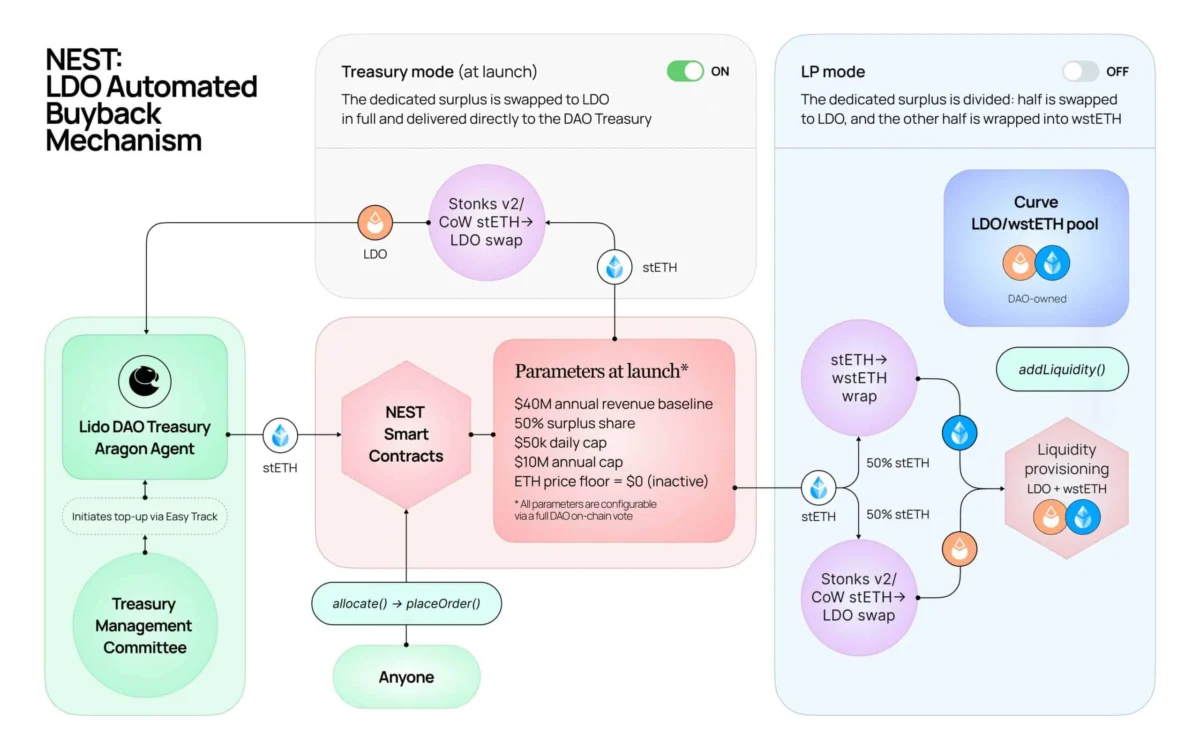
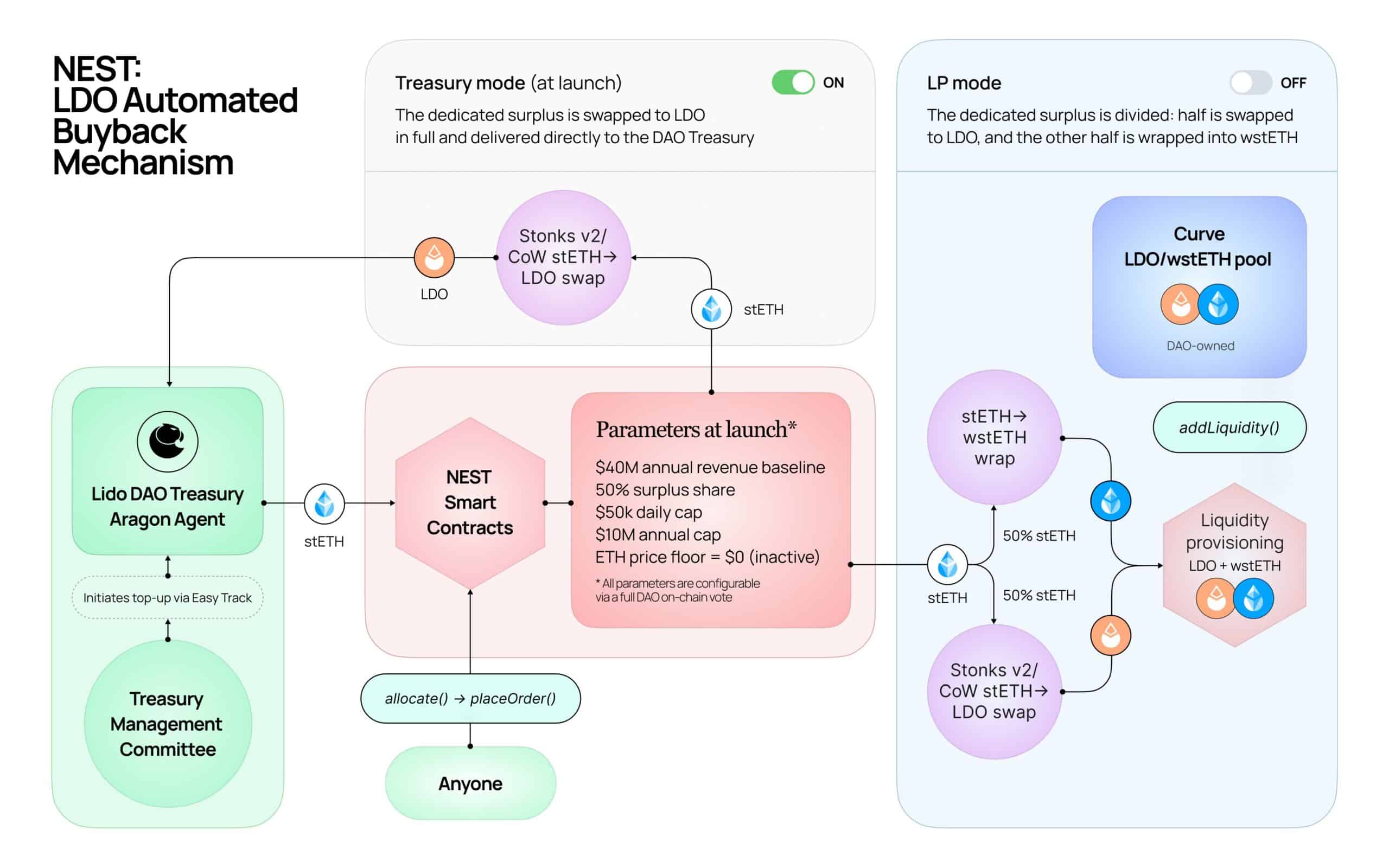
The NEST program is designed as a rules-based, automated system intended to provide consistent support for the LDO token by utilizing a portion of the protocol’s staking revenues. Under the current parameters, the program is live on the mainnet with clearly defined constraints: a daily purchase limit of $50,000 and an annual cap of $10 million.
The mechanism is explicitly "dynamic," meaning it does not operate in a vacuum. It is tethered directly to the protocol’s daily performance. Specifically, only 50% of the daily staking revenue that exceeds the $109,000 threshold will be allocated toward buybacks. This creates an effective revenue baseline of $40 million per year. If the protocol’s daily revenue falls below $109,000, the buyback mechanism remains dormant.
It is crucial to note that the tokens acquired through this program are not burned or removed from circulation. Instead, they are funneled directly into the Lido DAO treasury. This strategy allows the DAO to accumulate its own native asset, potentially for future governance initiatives, liquidity provisioning, or ecosystem grants, rather than pursuing a deflationary supply shock.
Chronology of the Initiative
The journey toward NEST was not an overnight decision. It emerged from months of governance discussions and community proposals throughout the previous year.

- Initial Proposal: The concept was first introduced to the community as a means to better align the protocol’s economic success with its governance token.
- Refinement Phase: Over several months, the DAO debated the appropriate thresholds. Critics argued that the initial figures were too conservative, while proponents emphasized the need for fiscal responsibility and maintaining a robust runway for ongoing development.
- Approval: Following extensive community consensus and governance voting, the parameters for NEST were finalized, setting the stage for technical deployment.
- Mainnet Activation: As of August 2026, the smart contracts governing the NEST program have been deployed to the Ethereum mainnet, officially transitioning the protocol from a manual treasury management approach to an automated, algorithmic one.
Supporting Data: Lido vs. The Industry
The launch of NEST has inevitably led to comparisons with other major DeFi protocols. Critics of the program have pointed out that, on a relative basis, the $10 million annual cap is modest.
For perspective, the competitive landscape for treasury-backed buybacks is aggressive. Platforms such as Hyperliquid maintain annual buyback programs approaching $100 million. Similarly, protocols like Uniswap and Aster operate at a $40 million annual scale, while newer entrants like PUMP have set their sights on $35 million. Compared to these figures, Lido’s $10 million target is significantly smaller—by a factor of three to ten.
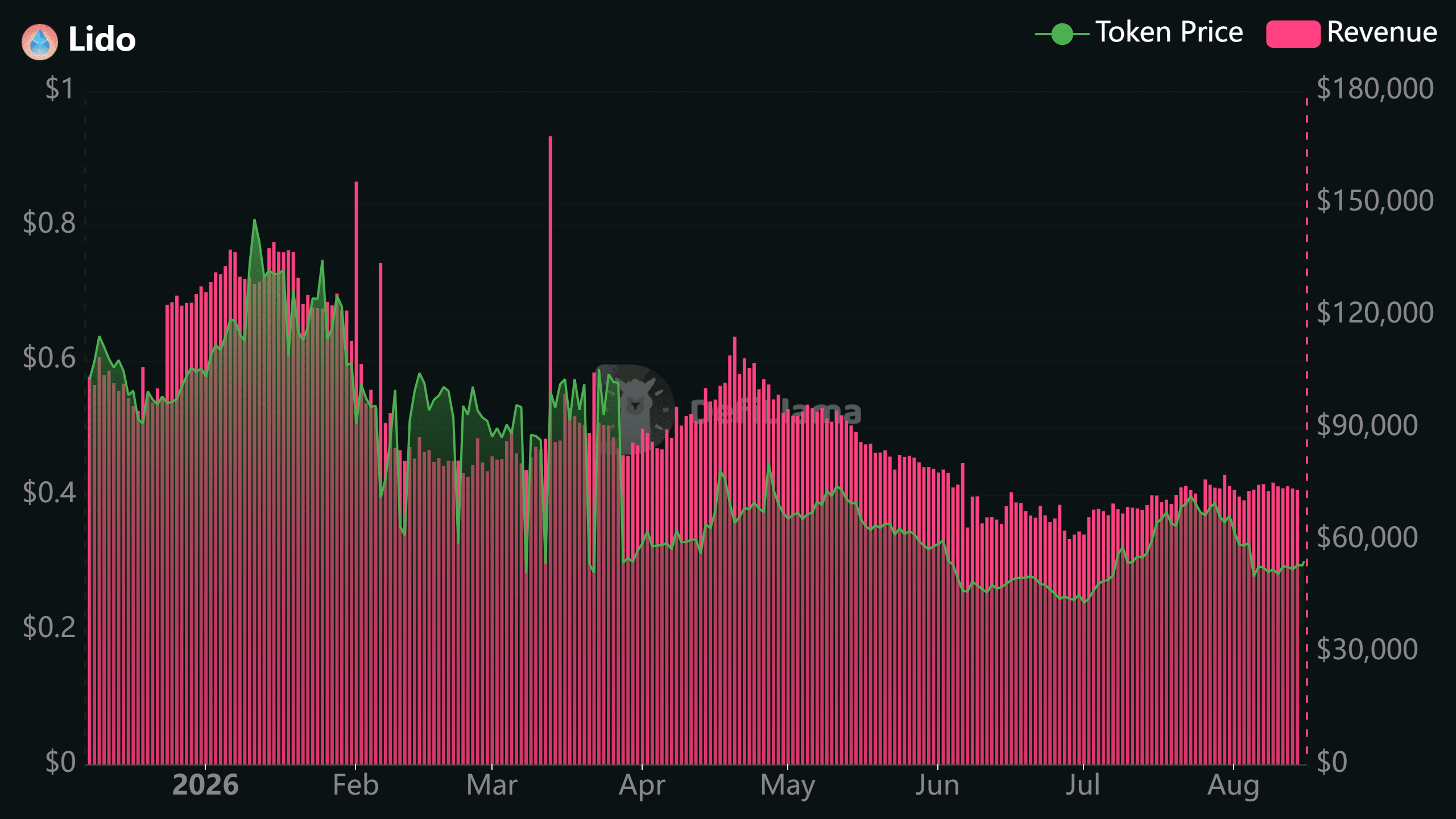
Furthermore, the current market climate presents a challenge for immediate activation. According to data from DeFiLlama, Lido’s daily revenue for August 2026 has been hovering around the $75,000 mark. Because this falls below the $109,000 trigger threshold, the NEST program has effectively launched in a state of hibernation. The last time the protocol consistently exceeded this threshold was in April 2026, during a period of broader market optimism and increased on-chain activity. Consequently, for NEST to begin executing buybacks, the protocol requires a sustained uptick in market participation and staking volume.
Official Responses and Expert Commentary
The reception of the NEST program has been divided, reflecting the broader philosophical divide in the crypto industry regarding tokenomics.
Proponents of the program, including notable legal and DeFi analysts, have praised the mechanism for its transparency and algorithmic discipline. Gabriel Shapiro, a well-known attorney in the crypto space, lauded the structure, stating, "This is how buybacks should be." His sentiment reflects a belief that automated, revenue-linked buybacks represent a more professionalized, "adult" approach to DAO governance compared to discretionary spending.
However, the program is not without its detractors. Critics often argue that buybacks in a bear or sideways market are an inefficient use of capital. They contend that the $10 million could be better deployed toward protocol R&D, security audits, or incentivizing new integrations—the lifeblood of any DeFi protocol. This school of thought is best exemplified by the experience of other projects like Helium, which opted to terminate its buyback program entirely, citing the need to preserve capital for core development over artificial price support.
Implications for LDO and the Market
The implications of the NEST program are twofold: one for the LDO token’s market performance and the other for the governance maturity of the Lido DAO.
Price Action and Market Sentiment
On the technical front, LDO has struggled to find a definitive trend. Having defended the $0.28 support level throughout August, the token has shown resilience, but it remains trapped below critical technical indicators, including the 50-day and 200-day Exponential Moving Averages (EMAs).
Analysts suggest that a meaningful recovery would require a sustained breakout above the $0.33 resistance level. While the activation of NEST serves as a fundamental signal of the DAO’s intent to support its token, it is unlikely to act as a primary catalyst for a short-term price surge given that the buyback mechanism is not yet active. Instead, the market is likely waiting for macroeconomic shifts that could increase Ethereum staking yields and, in turn, push Lido’s daily revenue above the $109,000 threshold.
Governance Maturity
Beyond the price charts, NEST is a litmus test for the Lido DAO’s governance. By automating a portion of its treasury operations, Lido is signaling a shift away from human-led, potentially politicized, spending toward a programmatic, predictable framework. This is a crucial step for a protocol of Lido’s size. As the largest liquid staking provider, Lido must balance its immense influence with the need to remain decentralized and responsive to market conditions.
If the program succeeds in building a track record of consistent buybacks when market conditions permit, it could become a blueprint for other large-scale DAOs looking to implement similar "Network Economic Support" models. Conversely, if the thresholds are perceived as perpetually out of reach, the DAO may face pressure to revisit the NEST parameters to ensure the program remains relevant to stakeholders.
Conclusion: A Measured Start
The activation of the NEST program marks a significant, albeit measured, step in the evolution of Lido Finance. By formalizing a link between protocol revenue and treasury-led token support, Lido has embraced a model that emphasizes long-term alignment between the protocol’s growth and the LDO token.
While the current market lull keeps the program in a state of standby, the existence of the infrastructure is a signal of the protocol’s long-term conviction. Whether the $10 million annual cap will be viewed as a prudent starting point or an under-ambitious constraint will depend largely on the performance of the Ethereum ecosystem in the coming quarters. For now, the crypto community will be watching closely to see if and when the daily revenue thresholds are breached, and how the market responds to the first automated buybacks triggered by the NEST system. As with all things in DeFi, the success of this initiative will ultimately be measured not by the promise of the mechanism, but by the tangible impact it has on the protocol’s treasury and the long-term sustainability of the Lido ecosystem.
