

By Financial Markets Desk
Published: October 2026
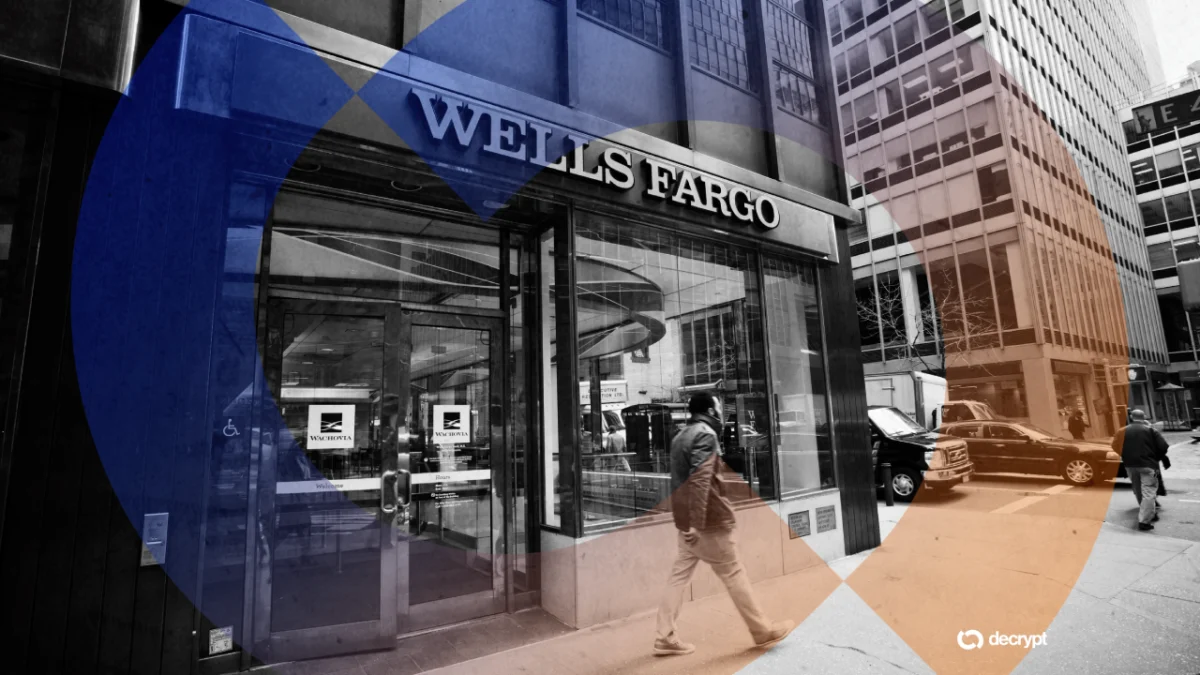
The roster of blue-chip corporations expressing formal opposition to having their shares traded on the upcoming tokenized stock venue developed by OKX and the Intercontinental Exchange (ICE) continues to expand rapidly. In an updated public notice released late last week, the OKX-ICE Tokenized Securities Venue (TSV) added six new corporate issuers to its restriction list, bringing the total number of objecting companies to 22.
The latest wave of pushback underscores a growing hesitation among traditional corporate giants regarding decentralized, blockchain-based trading environments. While proponents champion tokenized equities as a revolutionary leap toward around-the-clock liquidity and borderless investing, corporate boardrooms are increasingly signaling caution, highlighting lingering anxieties over market structure, regulatory grey areas, and blockchain-specific vulnerabilities.
Main Facts: The Growing Corporate Blocklist
The most recent update to the OKXICE TSV public notice, dated Friday, introduces six heavyweight additions:
- Wells Fargo
- Cisco Systems
- Marvell Technology
- Arm Holdings
- Moderna
- Intuit
These newly added firms join a pre-existing group of objecting issuers that already features some of the most capitalized companies in the global economy, including Microsoft, Alphabet, Goldman Sachs, Verizon, Broadcom, UnitedHealth Group, and Qualcomm. Notably, Wells Fargo’s inclusion pairs it alongside Goldman Sachs as the second major Wall Street banking institution to opt out. Meanwhile, the addition of Arm, Cisco, and Marvell further thickens a roster of semiconductor and networking leaders already wary of the platform.
Despite the mounting exclusions, the public filings issued by OKXICE TSV do not explicitly disclose the precise rationale behind each company’s decision to object. Furthermore, the practical legal and operational mechanisms—specifically, what definitive effect an issuer’s objection has on whether its shares can or will be forcefully traded on the platform—remain ambiguous under the current regulatory framework.
Chronology of the Tokenized Stock Dispute
The friction between traditional market issuers and the OKX-ICE initiative has escalated steadily over a compressed timeline:
- Early 2025–Mid 2026: OKX and ICE—the parent company of the New York Stock Exchange (NYSE)—quietly forge a partnership to explore blockchain-based securities infrastructure, eventually culminating in a 50-50 joint venture.
- September 2026: Following the stall of the Clarity Act in the United States Senate, the Securities and Exchange Commission (SEC) unveils a novel "innovation exemption" framework designed to foster digital asset experimentation.
- October 15, 2026: OKXICE TSV publishes its initial public notice, revealing an initial cohort of nine corporate issuers opting out of the tokenized venue.
- October 19, 2026: The objection list expands significantly, growing to 16 companies. Around this time, the platform clarifies that it possesses the technical capacity to list shares tokenized directly by issuers themselves or by authorized third-party entities.
- October 23–24, 2026: Nasdaq, a principal competitor that recently secured SEC approval for its own standalone tokenized securities pilot program, publicly announces that it will opt its own shares out of the SEC exemption framework.
- October 26, 2026: An updated OKXICE TSV notice is released, adding six more corporations—including Wells Fargo and Arm Holdings—bringing the total tally of objecting entities to 22.
Supporting Data and Platform Mechanics
The OKXICE TSV platform is engineered to bridge traditional equity markets with decentralized finance (DeFi) architecture. Designed as a 50-50 joint venture between NYSE-owner ICE and OKX’s U.S. holding entity, the venue aims to provide approved, qualified users with the ability to trade tokenized versions of U.S. equities on a 24/7 basis.
Under the hood, transactions are slated to run through Uniswap v4 liquidity pools deployed on OKX’s proprietary layer-2 blockchain, XLayer. Trading pairs will rely heavily on stablecoins, primarily USDC, to facilitate continuous settlement outside traditional banking hours.
However, the technical and risk disclosures outlined in the platform’s latest public notices reveal significant structural hurdles:
- Circuit Breakers and Halts: While trading will automatically pause if the underlying traditional asset is halted on its primary exchange, the venue lacks autonomous market-wide circuit breakers for extreme crypto-native volatility.
- Maximal Extractable Value (MEV): The platform currently possesses no enforced policies or technological safeguards to mitigate MEV—the profit miners or validators can capture by arbitrarily reordering, inserting, or censoring transactions within a blockchain block. This vulnerability opens retail and institutional participants up to potential front-running risks.
- Regulatory and Compliance Voids: Broker-dealers evaluating participation face unsettled questions regarding regulatory trade reporting obligations and "best execution" mandates, legal ambiguities that threaten to suppress institutional participation and dampen market depth.
- Smart Contract Governance: Venue administrators retain the technical ability to execute upgrades to the underlying smart contracts without advance notice to active users. Additionally, the specific smart contract governing access control—which dictates who is permitted to trade on the platform—has reportedly undergone only internal security audits rather than comprehensive third-party verification.
Official Responses and Market Context
Corporate issuers have largely kept their direct communications private, relying on formal legal notices and regulatory filings to signal their stance. However, the broader financial ecosystem is actively debating the viability of tokenized equities.
Traditional exchanges are charting divergent paths. While ICE is pushing forward with its OKX partnership under the SEC’s innovation exemption, rival exchange operator Nasdaq has taken a notably conservative stance. Having secured regulatory clearance for its own controlled tokenized securities pilot, Nasdaq leadership has explicitly chosen to opt its shares out of the OKX-ICE exemption framework, reflecting intense institutional rivalry and differing philosophies on how blockchain integration should be safely managed.
Meanwhile, external oversight bodies are attempting to measure the legitimate market appetite for these products. A recent research report published by the International Monetary Fund (IMF) acknowledged that there is undeniable global demand for tokenized stocks, particularly among retail and international investors seeking exposure to U.S. equities during off-hours when traditional stock exchanges are closed. Nevertheless, the IMF’s findings echoed corporate anxieties, warning that tokenized equity markets currently suffer from acute volatility, fragmentation, and structural illiquidity.
Broader Implications for the Future of Capital Markets
The standoff between major public companies and tokenized trading platforms highlights a fundamental ideological and structural clash in modern finance. On one side are crypto-native innovators and modern market infrastructure providers eager to collapse traditional settlement cycles (moving from T+1 to instantaneous settlement) and unlock continuous, global liquidity. On the other side are corporate issuers who carry fiduciary responsibilities to protect their share price stability, shareholder data integrity, and brand reputation from unproven technological systems.
As the list of objecting companies climbs past the score mark, several critical questions remain unanswered:
- Enforceability: Can a corporation legally prevent a third party from creating and trading a derivative token that tracks the price of its equity if the tokenization occurs outside the issuer’s direct control?
- Liquidity Fragmentation: If dozens of America’s most valuable corporations systematically block their shares from tokenization venues, will alternative tokenized platforms struggle to achieve the critical mass required for viable 24/7 trading?
- Regulatory Evolution: How will the SEC respond as the tension between issuers and experimental trading venues intensifies, particularly given that the current framework relies on temporary innovation exemptions rather than permanent statutory rules?
For now, the expansion of the OKXICE TSV blocklist serves as a stark reminder that while blockchain technology offers limitless programmatic potential, winning the trust of traditional corporate America remains a formidable uphill battle.
