

Executive Summary: The Rise of a Challenger
The digital asset landscape is witnessing a significant shift as Ripple USD [RLUSD] officially crosses the $1.64 billion market capitalization threshold. This milestone is not merely a numerical achievement; it signifies a critical maturation phase for Ripple’s native, U.S. dollar-pegged stablecoin. By establishing a widening gap over smaller market entrants and securing its footprint within the broader crypto-economy, RLUSD is transforming from a nascent project into a foundational pillar of the XRP Ledger (XRPL) ecosystem.
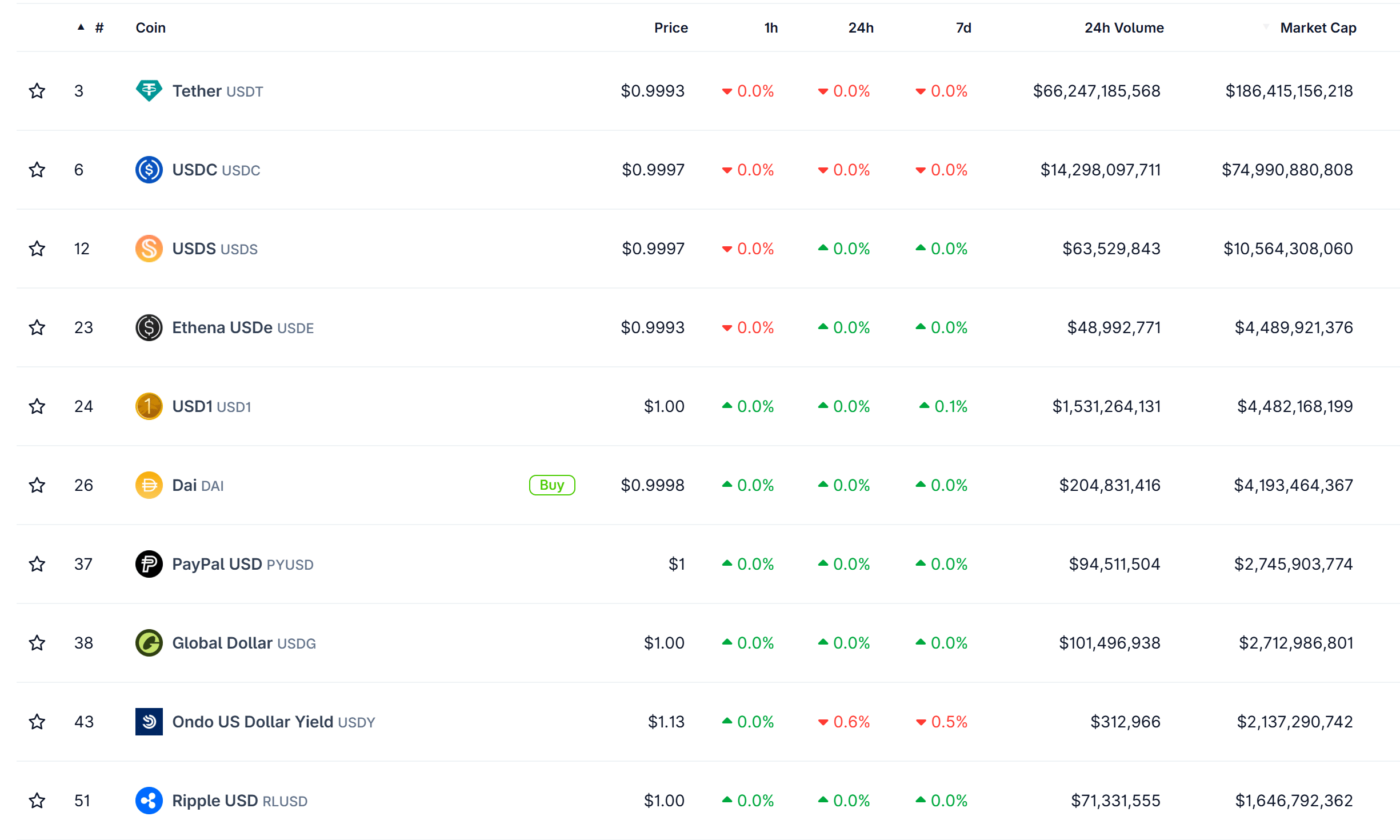
With a daily trading volume consistently hovering around $71.3 million, the asset demonstrates robust liquidity and steady market activity. As the stablecoin expands its reach through strategic exchange integrations and enterprise payment networks, it is positioning itself to challenge the traditional dominance held by established players like Tether (USDT) and USD Coin (USDC).
The Evolution of RLUSD: A Chronology of Growth
The trajectory of RLUSD has been defined by a measured, systematic rollout strategy designed to ensure compliance, stability, and liquidity from the outset.
Phase 1: Inception and Initial Deployment
Following months of speculation and development, Ripple introduced RLUSD as a strategic answer to the growing demand for a high-transparency, institutional-grade stablecoin. Unlike many predecessors, RLUSD was designed specifically to leverage the speed and low-cost efficiency of the XRPL, aiming to bridge the gap between traditional finance and decentralized settlement networks.
Phase 2: Building Liquidity and Infrastructure
Following its initial release, the focus shifted toward infrastructure. Ripple prioritized on-chain liquidity, ensuring that the asset could be efficiently swapped against major crypto-assets. This period saw the integration of RLUSD into key decentralized finance (DeFi) protocols on the XRPL, establishing it as the primary medium of exchange for the ledger’s burgeoning ecosystem.

Phase 3: The Expansion into Global Exchanges
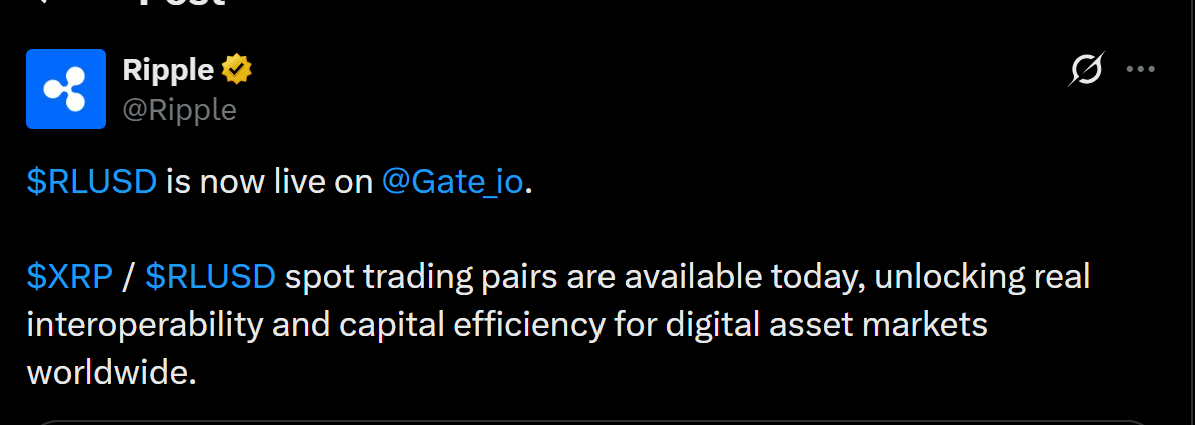
The most recent chapter in this chronology began in mid-June 2026, when Ripple accelerated its distribution strategy. By securing listings on high-traffic, global exchanges such as Gate.io, the project moved beyond its native environment. The introduction of trading pairs like XRP/RLUSD, alongside major assets like Bitcoin (BTC) and Ethereum (ETH), marked a pivotal transition from a "closed-loop" utility token to a widely accessible market asset.
Supporting Data: By the Numbers
The data surrounding RLUSD reveals a compelling narrative of adoption and utility that distinguishes it from speculative assets.
Market Capitalization and Liquidity
As of the latest reporting, RLUSD boasts a market cap exceeding $1.64 billion. While this remains modest compared to the industry giants—Tether, which commands a staggering $186.4 billion, and USDC, at roughly $75 billion—the velocity at which RLUSD has scaled is noteworthy.
Data from DeFiLlama underscores the internal strength of the asset: RLUSD currently controls approximately 98% of all stablecoin liquidity on the XRPL, representing a locked value of roughly $760 million. This level of dominance within its home ledger creates a "flywheel effect," where increased liquidity encourages more developers to build applications using the stablecoin, which in turn draws more capital.
Transactional Throughput
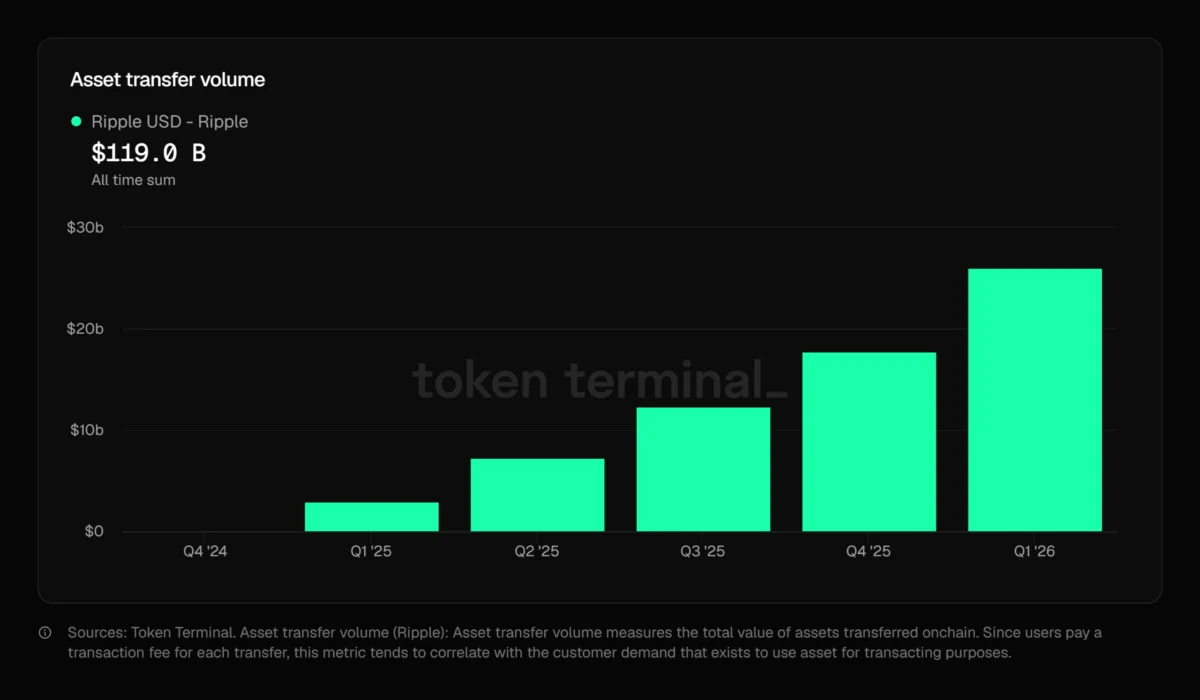
Beyond static holdings, the "real-world" usage of RLUSD is evidenced by its transactional volume. During the first quarter of the year, transfer volumes surpassed $26 billion. Perhaps even more telling is the frequency of activity; the network frequently records over two million daily transactions. This high frequency indicates that RLUSD is being used primarily for active settlement and payment purposes rather than serving merely as a vehicle for passive capital storage.
Strategic Implications: Beyond the XRP Ecosystem
The ascent of RLUSD carries profound implications for both the XRP ecosystem and the global stablecoin market.
The Institutional Settlement Frontier
Ripple has long positioned itself as a leader in cross-border payments. The integration of RLUSD into Ripple’s enterprise payment solutions provides a critical "growth engine." By utilizing their own stablecoin for settlement, institutional clients can avoid the volatility of native crypto-assets while bypassing the friction and latency of traditional SWIFT-based banking. If enterprise adoption continues its current upward trend, RLUSD could become the standard for high-volume, low-cost international remittances.
Challenging the Duopoly
The stablecoin market has long been defined by a duopoly. However, recent regulatory shifts and the market’s demand for diversification have opened a window for new, compliant entrants. By emphasizing transparency and capital reserves, Ripple is effectively courting institutional investors who might have been wary of the opacity surrounding other stablecoin issuers. The success of RLUSD suggests that there is a significant appetite for an "enterprise-first" stablecoin that bridges the gap between Web3 and legacy finance.
Official Perspective and Future Outlook
While Ripple leadership maintains a disciplined approach to communications, their recent actions speak volumes. The expansion to Gate.io and other platforms is part of a calculated effort to create "additional liquidity routes."
However, industry analysts caution that the road ahead is not without challenges. For RLUSD to transition from a successful niche asset to a global contender, it must solve for three critical factors:
- Regulatory Harmonization: As global regulators (such as those under MiCA in Europe) finalize frameworks for stablecoins, RLUSD must ensure continued compliance to remain attractive to institutional liquidity providers.
- Cross-Chain Interoperability: While the XRPL is a powerful engine, the future of finance is multi-chain. To compete with the likes of USDT, RLUSD will likely need to expand its presence across other major Layer-1 and Layer-2 blockchains.
- Sustained Wallet Activity: While the current transaction counts are impressive, the long-term success of the project will depend on the continued growth of a diverse, global user base that uses RLUSD for daily commerce rather than just speculative trading.
Conclusion: The Path Toward Maturity
The climb of RLUSD to a $1.64 billion market capitalization is a testament to the power of utility-driven development. By focusing on deep liquidity, institutional integration, and high-speed settlement, Ripple has created a stablecoin that does more than just track the dollar—it provides the infrastructure for a more efficient, interconnected financial system.
As we look toward the remainder of the year, the focus will shift from "can it grow?" to "how will it scale?" The foundation is set, the liquidity is established, and the institutional interest is mounting. Whether RLUSD can successfully capture a larger share of the $200B+ stablecoin market will be one of the most closely watched stories in the cryptocurrency sector. For now, the numbers suggest that the era of Ripple USD is well underway, and its influence on the digital economy is only just beginning to take shape.
