

Ripple’s foray into the stablecoin sector has officially hit a significant inflection point. Ripple USD (RLUSD), the U.S. dollar-pegged stablecoin issued by the blockchain payments giant, has surpassed a market capitalization of $1.64 billion. This milestone serves as a testament to the coin’s rapid integration into both retail and institutional financial workflows, signaling a maturing landscape for the XRP Ledger (XRPL) ecosystem.
As the stablecoin market continues to be dominated by industry titans like Tether (USDT) and USD Coin (USDC), RLUSD is carving out a specialized niche. While the gap between RLUSD and the multi-billion-dollar giants remains substantial, the velocity of its adoption suggests that Ripple’s strategy of combining high-utility infrastructure with strategic exchange partnerships is yielding tangible results.
The Core Data: Quantifying the Growth
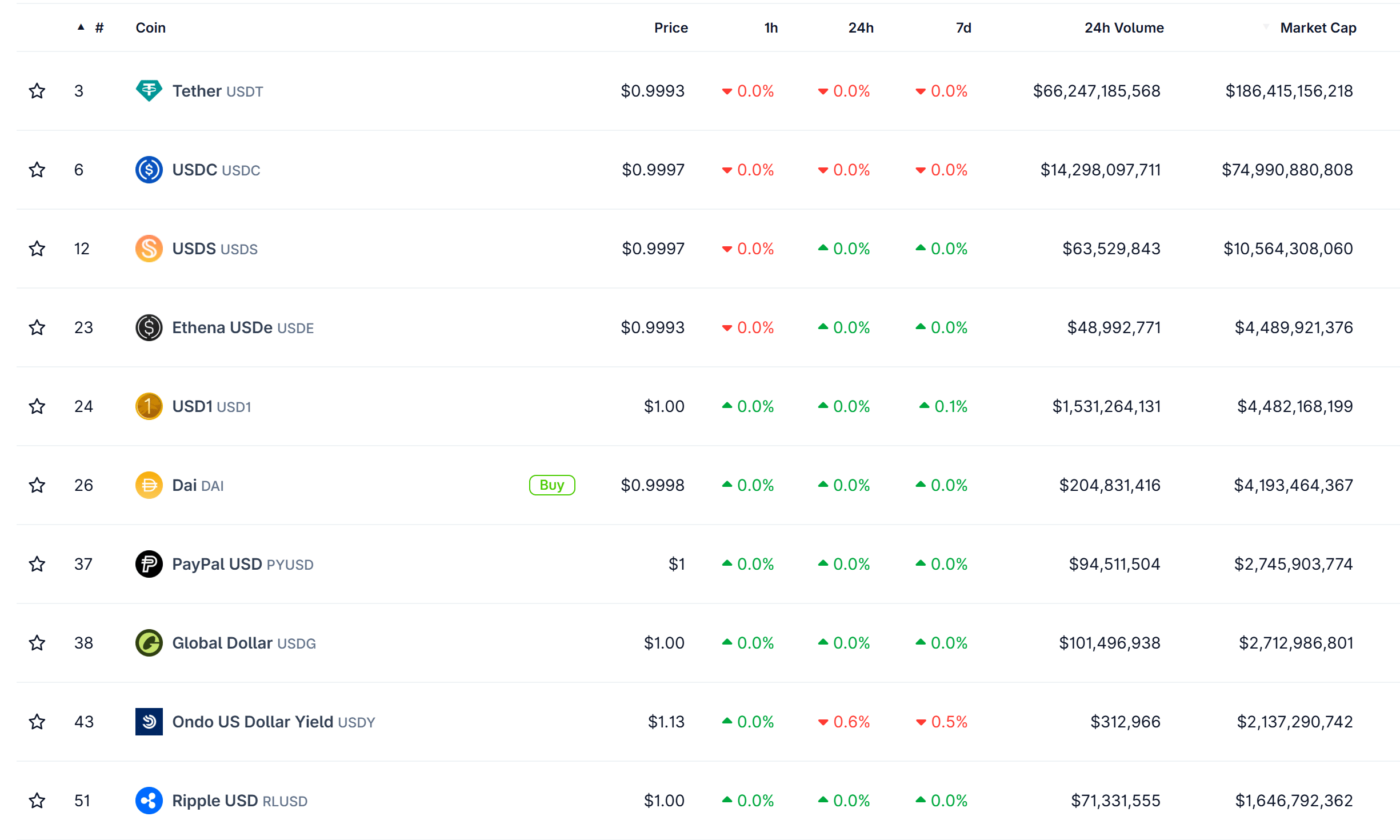
The surge in RLUSD’s market cap is not merely a byproduct of initial issuance but a reflection of robust on-chain demand. At the time of reporting, RLUSD maintains a daily trading volume of approximately $71.3 million. This figure indicates consistent liquidity, ensuring that traders and institutional partners can move capital efficiently across various digital asset pairs.
Comparative Market Positioning
To understand the scale of this achievement, one must look at the competitive hierarchy of the stablecoin market:
- Tether (USDT): Maintains a dominant market cap of roughly $186.4 billion, serving as the global liquidity layer for crypto markets.
- USD Coin (USDC): Holds nearly $75 billion, favored primarily by regulated institutions and DeFi protocols.
- Ripple USD (RLUSD): Now firmly above $1.64 billion, positioning itself as a challenger within the XRPL ecosystem and cross-border settlement corridors.
While the disparity between RLUSD and its predecessors is clear, the focus for Ripple is not immediate total market dominance, but rather the creation of a stable, compliant, and high-performance asset that anchors the XRP Ledger.
A Chronology of Expansion: From Concept to Global Distribution
The rise of RLUSD is a story of calculated deployment. Unlike many stablecoins that launch with massive, centralized liquidity injections, Ripple has taken a methodical approach to distribution.

Phase 1: Foundational Integration
Following its initial announcement, RLUSD was integrated into the XRPL, leveraging the ledger’s inherent speed and low-cost settlement capabilities. This period focused on testing the stability of the peg and ensuring that the underlying reserve management systems were resilient under load.
Phase 2: Expanding Liquidity Routes
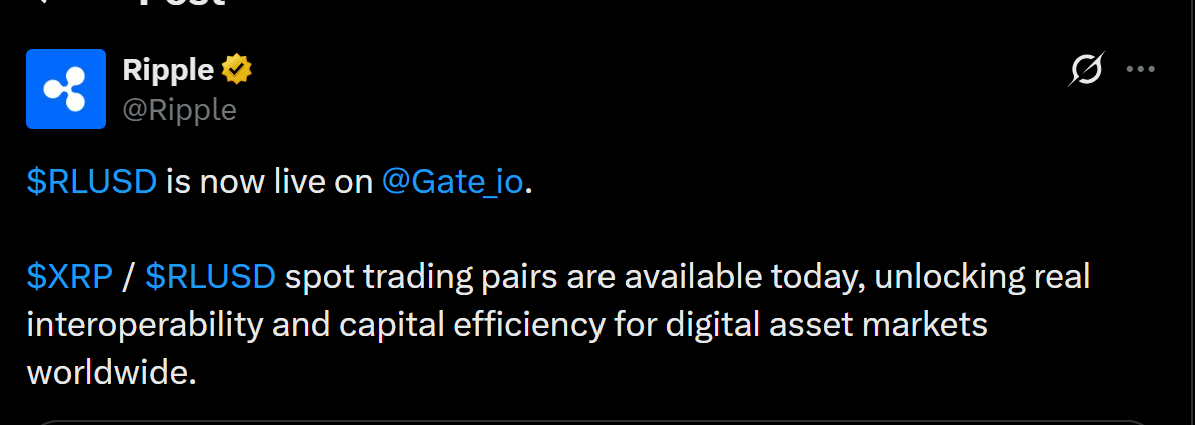
A pivotal moment in the stablecoin’s timeline occurred on June 15, when Ripple confirmed the listing of RLUSD on Gate.io. This move was not just a simple listing; it provided new trading pairs (XRP/RLUSD, BTC/RLUSD, ETH/RLUSD, and USDT/RLUSD), effectively weaving the stablecoin into the fabric of broader crypto-market liquidity. By providing these pairs, Ripple has significantly lowered the friction for traders who wish to cycle in and out of volatile assets while maintaining exposure to the dollar within a compliant ecosystem.
Phase 3: The Enterprise Pivot
Current developments suggest that Ripple is moving into a phase of "utility-led growth." The focus has shifted from simple issuance to securing partnerships with payment gateways, enterprise settlement providers, and institutional custody solutions that require a reliable on-chain USD proxy.
Supporting Data: Why the Numbers Matter
Beyond the headline market cap, the internal metrics of the XRPL offer a deeper look at the health of the RLUSD network.
Dominance on the Ledger
According to data from DeFiLlama, RLUSD now commands approximately 98% of all stablecoin liquidity on the XRPL. This equates to nearly $760 million in value locked within the ledger’s native DeFi and liquidity protocols. This centralization of liquidity on its home chain is a strategic win, as it makes the XRPL a more attractive destination for decentralized applications (dApps) and automated market makers (AMMs).
Transaction Velocity
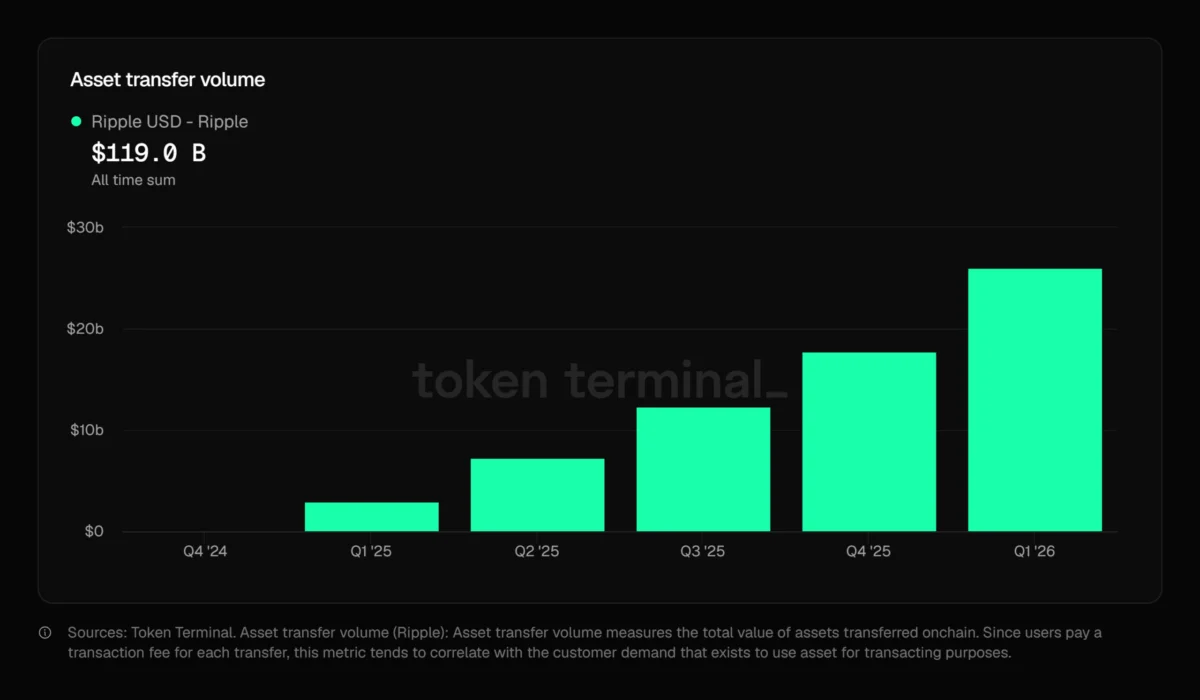
During the first quarter of the year, transfer volumes for RLUSD exceeded $26 billion, with daily transactions consistently topping the two-million mark. These numbers are crucial; they indicate that the stablecoin is not sitting idle in stagnant wallets. Instead, it is being used as a medium of exchange, a store of value during market volatility, and a vehicle for cross-border remittances—the primary use case for which Ripple was originally designed.
Official Perspectives and Strategic Implications
While Ripple executives have kept their cards close regarding future expansion, the roadmap is increasingly clear. The company views RLUSD as the "glue" that holds the Ripple ecosystem together.
The Regulatory Advantage
Ripple has consistently emphasized that RLUSD is designed with compliance at its core. In an era where stablecoin regulation is becoming a global priority for central banks, Ripple’s insistence on transparency and institutional-grade reserves is designed to appeal to traditional financial institutions that have been hesitant to touch crypto-native assets.
Enterprise Settlement
The long-term goal for RLUSD appears to be the disruption of traditional SWIFT-based settlement. By enabling companies to settle payments in seconds using a stable, USD-pegged asset on the XRPL, Ripple is positioning itself to capture a significant share of the multi-trillion-dollar global remittance market. If institutional adoption of this settlement layer accelerates, the current $1.64 billion market cap may eventually be viewed as a mere "proof of concept" phase.
Challenges and Future Outlook
Despite the momentum, the path forward for RLUSD is not without hurdles.
Market Saturation
The stablecoin market is notoriously difficult to penetrate. USDT and USDC benefit from deep network effects; most centralized exchanges and DeFi protocols already have their liquidity pools heavily weighted toward these two assets. For RLUSD to climb higher, it must demonstrate superior utility—either through faster settlement, lower costs, or unique integration with enterprise banking software.
The Need for External Adoption
While RLUSD dominates the XRPL, its true test will be its utility outside the Ripple ecosystem. To achieve long-term relevance, it must become a preferred asset on major exchanges, within lending protocols on Ethereum or Solana, and as a preferred method for global B2B payments.
Maintaining the Peg
As the market cap grows, so does the responsibility of the issuer to maintain a 1:1 reserve ratio with high-quality, transparent assets. Any deviation from the peg or lack of transparency in reserve reporting would be a catastrophic blow to the project’s reputation. Thus far, Ripple has managed this aspect with high levels of institutional rigor, but the stakes will only grow as the market cap continues to climb.
Final Synthesis
The trajectory of Ripple USD represents a significant shift in the blockchain narrative. We are moving away from the era of speculative token growth and into an era of functional, institutional-grade financial infrastructure.
With over $1.64 billion in market cap, a dominant presence on the XRPL, and an expanding footprint across major global exchanges, RLUSD is no longer a peripheral project. It is a central component of Ripple’s broader mission to "Internet-ify" the movement of value.
As we look toward the remainder of the year, the metrics to watch will be:
- Institutional Adoption: Will major banks or payment processors begin using RLUSD for cross-border settlements?
- Cross-Chain Interoperability: Will Ripple seek to bridge RLUSD to other major blockchains to challenge USDC’s dominance?
- Liquidity Depth: Will the daily trading volume continue to grow in tandem with the market cap, or will we see a stabilization period?
Ultimately, the success of RLUSD will be defined by its utility. If it can continue to lower the cost of capital and increase the speed of global payments, it will cement its place as one of the most critical stablecoins in the digital age. The current figures are just the beginning; the real test lies in the ongoing effort to displace legacy systems with the speed and transparency of the XRPL.
