

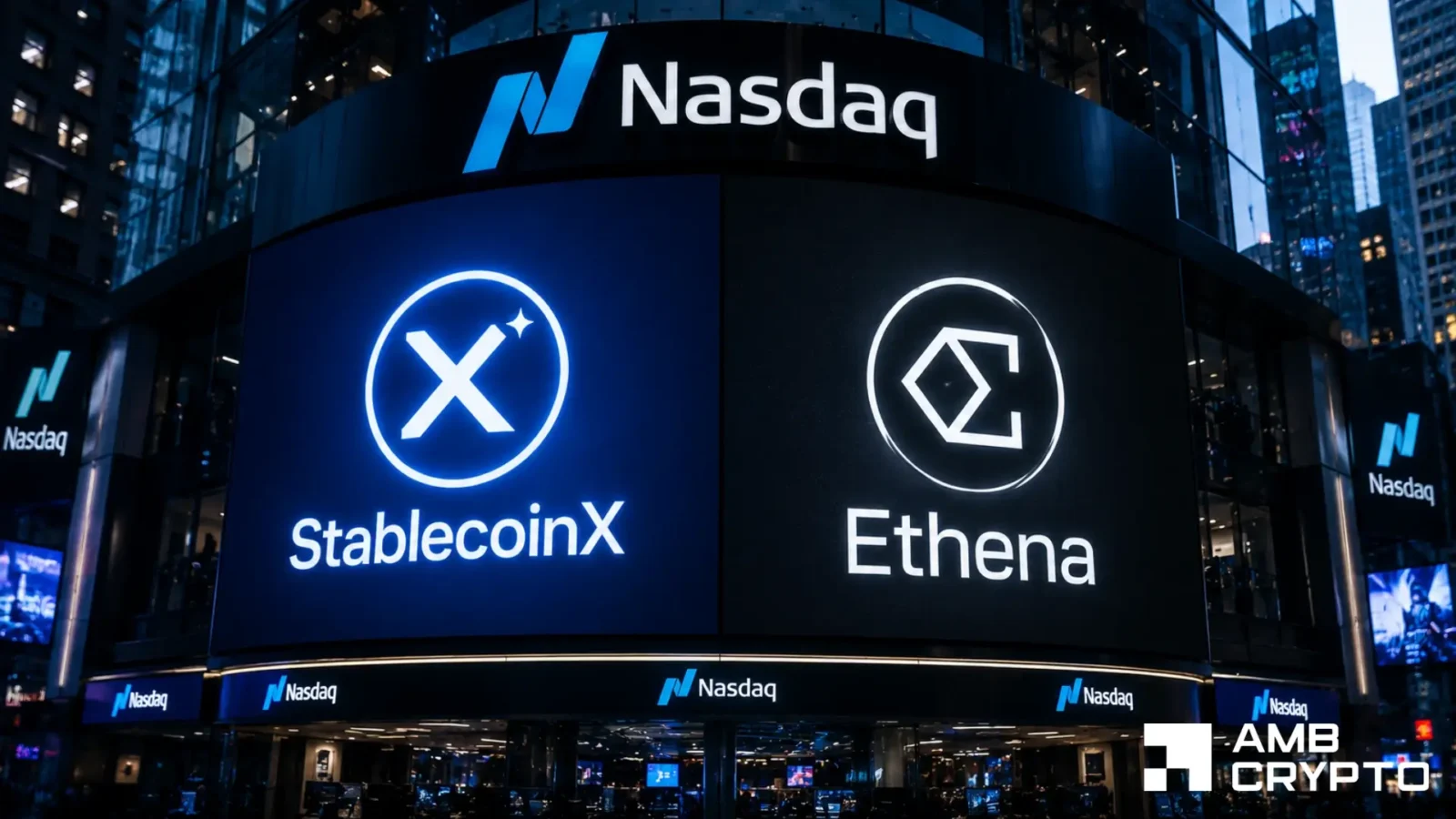
In a landmark development for the intersection of decentralized finance (DeFi) and traditional capital markets, StablecoinX officially commenced trading on the Nasdaq Capital Market on June 26. The listing follows the successful completion of a business combination with TLGY Acquisition Corp, a Special Purpose Acquisition Company (SPAC). By entering the public markets under the ticker symbol USDE, StablecoinX has positioned itself as the first publicly listed infrastructure firm dedicated specifically to the Ethena ecosystem, signaling a new chapter in how investors gain exposure to the rapidly evolving stablecoin sector.
The Genesis of a Public Entity: A Chronological Overview
The journey toward this Nasdaq listing represents the culmination of a rigorous strategic process designed to align the company with the regulatory transparency of public markets.
- Initial Announcement: The intent to merge with TLGY Acquisition Corp was revealed several months prior, setting the stage for a strategic pivot toward public oversight.
- Regulatory Scrutiny: Over the subsequent quarters, the company navigated the complex compliance requirements necessary for a SPAC merger, ensuring that its governance structures were equipped for public scrutiny.
- The Final Vote: TLGY Acquisition Corp shareholders formally approved the transaction, validating the strategic thesis that a public vehicle for Ethena-related infrastructure was highly sought after by institutional and retail investors alike.
- The Nasdaq Bell: On June 26, the ticker USDE went live, marking the formal integration of StablecoinX into the ecosystem of publicly traded digital asset firms.
This chronology underscores the growing maturity of the cryptocurrency industry. As the regulatory landscape hardens, companies that demonstrate a willingness to adopt the reporting standards of the SEC are finding a receptive audience among institutional capital allocators who remain hesitant to engage with private, opaque crypto entities.
Supporting Data: The Treasury as a Strategic Moat
At the heart of the StablecoinX investment thesis is its significant treasury holding, which serves as a foundation for its operational strategy. Upon the completion of the merger, the company reported the acquisition of approximately 3.03 billion ENA tokens.
Valued at roughly $275 million at the time of the transaction, this position accounts for approximately 20% of the total circulating supply of Ethena’s native token. This massive treasury serves three distinct purposes:
- Direct Market Exposure: For shareholders, the USDE ticker functions as a proxy for the Ethena ecosystem, allowing those who may not be comfortable navigating decentralized exchanges or managing private wallets to gain exposure to the ENA token.
- Ecosystem Governance: By holding 20% of the token supply, StablecoinX effectively positions itself as a primary stakeholder in Ethena’s governance. This ensures that the company has a seat at the table when the community deliberates on protocol upgrades, fee structures, and future roadmaps.
- Financial Resilience: The treasury provides the liquidity necessary to fund the development of the company’s planned operational segments, moving StablecoinX beyond a mere "holding company" into an active infrastructure provider.
Strategic Vision: Beyond Token Accumulation
A common criticism of crypto-focused public companies has been their reliance on the volatility of their own holdings. StablecoinX aims to decouple its valuation from mere price appreciation by building out three core business segments designed to generate sustainable revenue:
1. Protocol Infrastructure Development
StablecoinX plans to dedicate engineering resources toward enhancing the stability and scalability of Ethena’s underlying technology. This includes building developer tools and API layers that allow traditional financial institutions to interface with Ethena’s digital dollar products without requiring an in-depth understanding of blockchain internals.
2. Cross-Chain Verification Services
As the digital dollar economy expands, the ability to bridge assets across different blockchain networks becomes a significant security and efficiency challenge. StablecoinX intends to leverage its treasury to fund and operate validator nodes and verification services, ensuring that the movement of capital across disparate chains remains trustless and secure.
3. Institutional Gateway Services
Perhaps the most ambitious arm of the company, this segment focuses on helping traditional banks and payment processors integrate stablecoin payment rails. By providing a regulated, publicly traded interface, StablecoinX seeks to lower the barrier to entry for institutions looking to settle transactions using Ethena’s synthetic dollar.
Official Responses and Executive Outlook
The leadership at StablecoinX has been clear about their mission to professionalize the sector. In a statement released shortly after the market opened on June 26, CEO Edward Chen emphasized the importance of the merger as a validation of the broader digital asset space.
"Closing this transaction marks an important milestone for both StablecoinX and the broader digital asset industry," Chen stated. "We believe Ethena has emerged as one of the most important platforms powering the next generation of digital dollars. By bringing this infrastructure to the Nasdaq, we are providing the transparency and accountability that the next wave of institutional adoption demands."
The sentiment reflects a broader industry shift. Where crypto companies once prided themselves on being "outside the system," the current leadership class—represented by the likes of StablecoinX—is focused on becoming the system. They argue that for stablecoins to reach the multi-trillion-dollar scale, they must be underpinned by entities that answer to shareholders and regulators.
Broader Market Implications: The Convergence of Finance
The launch of StablecoinX coincides with a pivotal moment in the global financial landscape. With the total stablecoin market capitalization having recently surpassed the $300 billion threshold, these assets have evolved from niche speculative tools into critical components of the global payments infrastructure.
The Institutional Appetite
Institutional investors are increasingly viewing stablecoins not just as tools for crypto trading, but as highly efficient settlement layers for global commerce. However, these investors have long cited a lack of "investable infrastructure" as a barrier. StablecoinX addresses this by providing a familiar, equity-based vehicle that avoids the counterparty risks associated with holding uncollateralized or poorly audited digital tokens.
Regulatory Trajectories
Regulators worldwide, from the SEC in the United States to the European Securities and Markets Authority (ESMA), are actively formulating frameworks for stablecoin issuers. By proactively choosing the public market route, StablecoinX is effectively "self-regulating." They are inviting auditors and government oversight into their books, which may prove to be a significant competitive advantage as global regulations tighten.
The "Fee Switch" and Future Yields
A crucial component of the long-term strategy for StablecoinX involves the potential activation of a "fee switch" within the Ethena protocol. Should Ethena move to distribute protocol revenues to token holders, StablecoinX’s massive treasury would theoretically transition from an asset-heavy holding to a yield-generating machine. This potential for future cash flow generation is likely a key factor in why investors have responded with such enthusiasm to the USDE listing.
Conclusion: A New Benchmark for Digital Assets
The Nasdaq listing of StablecoinX is more than a simple corporate merger; it is a signal that the "wild west" era of crypto is rapidly yielding to a period of institutional consolidation. By anchoring its business model in the robust Ethena ecosystem, StablecoinX has created a hybrid entity that balances the high-growth potential of DeFi with the governance and transparency of the public markets.
As the company moves forward, its success will likely hinge on its ability to execute its infrastructure roadmap and prove that its operational segments can generate value independent of the ENA token’s market price. For now, the successful debut of USDE on the Nasdaq stands as a testament to the fact that the gap between Wall Street and Silicon Valley’s blockchain innovators is closing faster than many anticipated.
Investors and regulators alike will be watching closely to see if StablecoinX can deliver on its promise to bring the efficiency of the digital dollar into the heart of the global financial system. If successful, it may well serve as the blueprint for the next generation of publicly listed crypto-infrastructure firms.
