

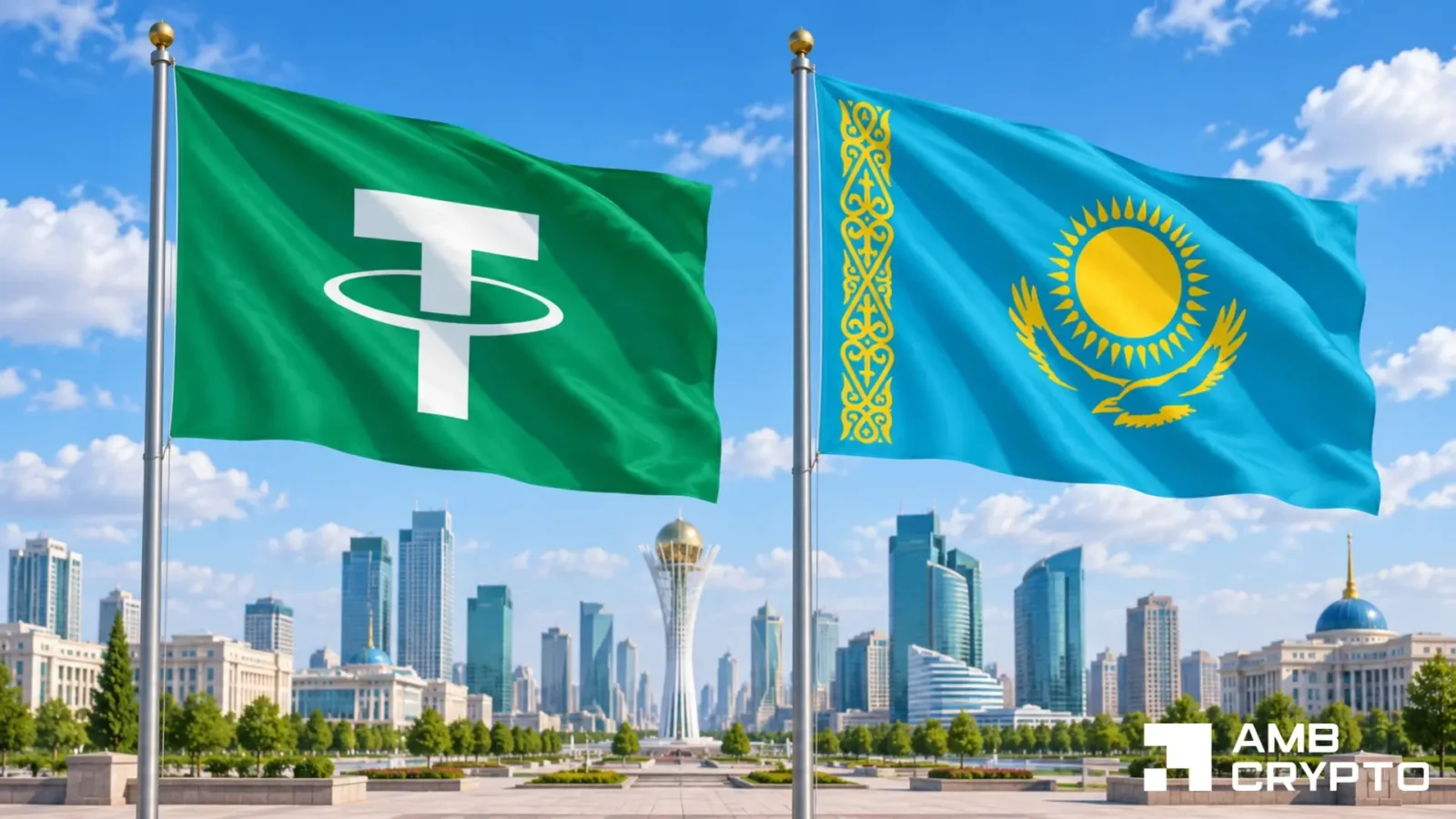
ASTANA/ALATAU — In a significant move bridging traditional central banking with decentralized finance, stablecoin issuer Tether has entered into a formal memorandum of understanding (MoU) with the National Bank of Kazakhstan (NBK) and the Alatau City Authority. The tri-party agreement establishes a framework to thoroughly explore the feasibility, operational mechanics, and potential real-world applications of a digital asset pegged to the Kazakhstani tenge.
While the initiative stops short of committing to an immediate commercial rollout, the collaboration marks a pivotal step in Central Asia’s evolving digital currency landscape. Beyond the exploration of a fiat-backed stablecoin, the partnership encompasses comprehensive educational initiatives for government regulators and an ambitious framework for real-world asset (RWA) tokenization leveraging Tether’s newly unveiled technological infrastructure.
Main Facts
The core of the newly minted partnership centers on the research, development, and eventual testing of blockchain-based financial instruments within the Central Asian republic.
- The Tenge Stablecoin Exploration: Tether, the National Bank of Kazakhstan, and the Alatau City Authority have officially agreed to study the viability of a stablecoin pegged directly to the Kazakhstani tenge. The proposed digital asset aims to mirror the value of the national currency on a blockchain network, providing a transparent, efficient digital medium of exchange.
- Current Status of the Token: As of this announcement, no stablecoin has been minted or released. The current phase is strictly exploratory. The signatories will analyze international stablecoin models, assess potential use cases within the domestic economy, and formulate proposals for a controlled pilot program.
- Absence of Technical Specifics: The initial agreement does not specify which blockchain network would support the token, who the official issuer would be, or the exact composition of the reserve assets that would back the circulating digital currency.
- Asset Tokenization and Alatau City: Alongside the currency project, the agreement outlines a plan to establish a framework for converting traditional, real-world assets into digital blockchain tokens. This initiative is slated to explore a localized pilot project within Alatau City.
- Technological Infrastructure: The asset tokenization efforts will be supported by Tether’s "Hadron" platform—a modular tool designed to help institutions tokenize, manage, and secure a wide array of conventional assets on-chain.
- Capacity Building and Education: As part of the knowledge-sharing agreement, Tether will conduct specialized workshops and training sessions for central bank officials and government employees, focusing on stablecoin mechanics, reserve management strategies, and the tokenization of conventional financial assets.
Chronology of Events and Kazakhstan’s Digital Journey
To understand the weight of Tether’s agreement with Kazakhstan, it is essential to trace the country’s progressive stance on digital assets, blockchain technology, and central bank digital currency (CBDC) development over recent years.
The Rise of Crypto Hubs in Central Asia
Kazakhstan first gained global prominence in the cryptocurrency sector around 2021, when it emerged as one of the world’s leading destinations for Bitcoin mining following regulatory crackdowns in China. Recognizing the economic potential of the sector, the Kazakhstani government quickly moved to establish a regulated ecosystem. The Astana International Financial Centre (AIFC) and its independent regulator, the Astana Financial Services Authority (AFSA), created progressive frameworks designed to attract international crypto exchanges, custodians, and fintech innovators.
The Digital Tenge Initiative
Concurrently, the National Bank of Kazakhstan began laying the groundwork for its own Central Bank Digital Currency (CBDC), known as the digital tenge. Years of conceptual research culminated in phased pilot programs testing the retail and wholesale capabilities of the digital currency in collaboration with local commercial banks and payment giants like Visa and Mastercard.
Previous Stablecoin and Private Sector Experiments
Kazakhstan’s experimentation with digital tokens has not been limited exclusively to state-backed CBDCs. In September 2025, the local financial ecosystem witnessed a notable pilot project designed to bridge traditional payment systems with public blockchain rails. That initiative involved local crypto exchange Intebix, global payments giant Mastercard, Eurasian Bank, and the Solana blockchain network.
The introduction of Tether into the national dialogue represents a departure from—or perhaps an expansion upon—those earlier commercial experiments. By engaging directly with the central bank and municipal authorities in Alatau City, Tether brings the weight of the world’s largest stablecoin issuer into direct dialogue with state monetary planners.
Supporting Data and Technological Frameworks
Evaluating the partnership requires a closer look at the tools and players involved, specifically Tether’s strategic expansion into enterprise-grade tokenization and institutional consulting.
Understanding Tether’s Hadron Platform
A critical element of the Kazakhstan agreement is the integration of Tether’s "Hadron" platform. Historically known almost exclusively for issuing USDT—the dominant dollar-pegged stablecoin in the global digital asset economy—Tether has increasingly diversified its technological offerings.
Hadron by Tether is positioned as an all-in-one platform designed to simplify the tokenization of real-world assets (RWAs). Whether an institution or government wants to tokenize commodities, equities, debt securities, or loyalty points, Hadron provides the necessary infrastructure for issuance, compliance, cap-table management, and secondary market tracking. By introducing Hadron to Kazakhstani authorities, Tether aims to position its technology as the backbone for the nation’s broader asset digitization strategy.
The Alatau City Context
The inclusion of the Alatau City Authority in the MoU is no accident. Alatau is envisioned as a modern, forward-thinking urban development designed to act as an economic and technological hub within the region. By selecting Alatau City as the prospective testing ground for both the tenge stablecoin pilot and real-world asset tokenization frameworks, the partners hope to create a localized regulatory sandbox. In this controlled environment, fintech innovations can be tested without immediately exposing the entire national economy to unforeseen systemic shocks.
Official Responses and Stakeholder Perspectives
The partnership has drawn comments from key executives and institutional leaders, highlighting the dual objectives of regulatory compliance and technological modernization.
Paolo Ardoino on Infrastructure and Transparency
Commenting on the agreement, Tether CEO Paolo Ardoino emphasized the company’s broader mission to assist sovereign nations in building resilient digital architectures.
"Tether is committed to helping build efficient, transparent, and sustainable digital finance infrastructure around the globe," Ardoino stated. "Through this collaboration with the National Bank of Kazakhstan and the Alatau City Authority, we are laying the groundwork for empowering local economies with cutting-edge blockchain tools, robust educational initiatives, and secure tokenization frameworks."
Central Bank and Municipal Perspectives
For the National Bank of Kazakhstan, the partnership represents an opportunity to study private-sector stablecoin models alongside its ongoing CBDC research. Central banks globally are increasingly grappling with how privately issued, fiat-referenced stablecoins interact with sovereign monetary policy. By engaging directly with Tether, NBK officials can gain granular insights into reserve management practices, liquidity dynamics, and the operational security required to maintain a stable digital currency peg.
Similarly, municipal leaders in Alatau City view the collaboration as a catalyst for attracting foreign investment and establishing the city as a regional fintech capital. Utilizing blockchain technology for property rights, municipal bond issuance, or local commerce could drastically reduce administrative friction and enhance economic transparency.
Implications for Kazakhstan’s Financial Ecosystem and Regional Geopolitics
The signing of the memorandum of understanding carries profound implications for the domestic financial landscape of Kazakhstan, the broader Central Asian region, and the global stablecoin market.
1. The Interplay Between CBDCs and Private Stablecoins
One of the most fascinating questions raised by this agreement is how a potential Tether-backed tenge stablecoin would coexist with Kazakhstan’s official digital tenge. While a CBDC is a direct liability of the central bank, a stablecoin is typically issued by a private entity backed by reserves held in commercial accounts or short-term government debt.
If a tenge stablecoin proves viable, it could offer distinct advantages in terms of interoperability with international public blockchains (such as Ethereum, Tron, or Solana), where global liquidity resides. However, it also introduces regulatory complexities regarding anti-money laundering (AML) compliance, capital controls, and monetary sovereignty. The joint workshops and research phases outlined in the MoU are specifically designed to address these regulatory tightropes.
2. Broadening Real-World Asset Tokenization
The tokenization component of the agreement could fundamentally transform Kazakhstan’s capital markets. Emerging economies often suffer from liquidity constraints in traditional real estate and commodity markets. By utilizing Tether’s Hadron platform to fractionalize and digitize real-world assets, the country could unlock billions of dollars in dormant capital, allowing retail and institutional investors to trade fractional shares of physical assets securely on-chain.
3. Geopolitical and Regional Positioning
Kazakhstan has strategically positioned itself as a neutral, forward-looking economic bridge between Europe and Asia. By embracing cutting-edge financial technologies and collaborating with major global crypto entities like Tether, Kazakhstan signals to international investors that its regulatory environment is adaptive and open to innovation. If the Alatau City pilot succeeds, it could serve as a blueprint for other emerging economies seeking to integrate blockchain technology into their national infrastructure without losing regulatory control.
Conclusion and Future Outlook
The memorandum of understanding between Tether, the National Bank of Kazakhstan, and the Alatau City Authority is a foundational document rather than a finished product. No tenge-backed stablecoin has been launched, and the realization of any pilot program remains contingent upon thorough research, comprehensive risk assessments, and evolving regulatory frameworks.
Nevertheless, the agreement underscores the undeniable convergence of traditional fiat systems and decentralized blockchain infrastructure. As workshops commence and technical studies get underway, the global financial community will be watching closely to see how Kazakhstan navigates the delicate balance between technological innovation, monetary sovereignty, and financial stability. Whether this partnership culminates in a fully functioning tenge stablecoin and a thriving asset-tokenization ecosystem will depend on the findings of the upcoming pilot proposals—marking yet another chapter in the rapid evolution of digital finance in Central Asia.
